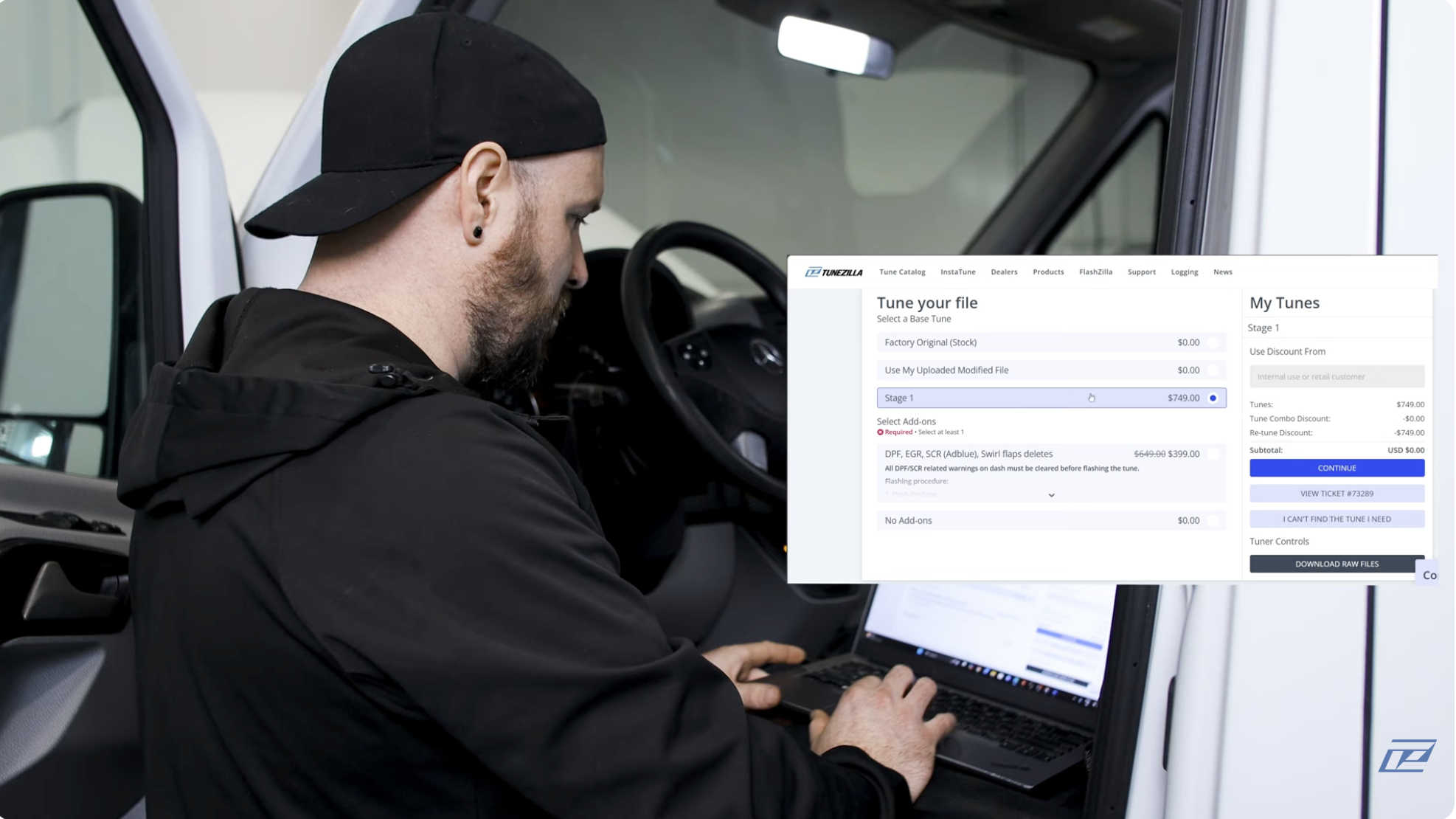
Car enthusiasts often discuss tuning, but many drivers don't understand what actually happens when they modify their vehicle's performance. ECU tuning unlocks hidden power, improves throttle response, and optimizes fuel efficiency beyond factory settings. The process transforms how engines behave during real driving conditions, from acceleration response to highway merging performance. Modern tuning delivers measurable improvements in daily driving scenarios.Performance upgrades through engine remapping can enhance acceleration for commuting, improve fuel economy for long trips, and optimize horsepower delivery across different driving conditions. The right tuning approach creates noticeable changes in throttle response, power delivery, and overall engine behavior. Drivers can achieve these performance gains through accessible ECU tuning software.SummaryTuning adjusts fuel delivery, ignition timing, boost pressure, and throttle response to control not just how much power the engine makes, but how that power arrives and how consistently it stays available under load. A well-calibrated tune manages torque delivery so acceleration feels linear rather than abrupt, adjusts timing to prevent knock as temperatures rise, and balances performance with reliability by keeping the engine within safe operating limits.The same tune flashed to two identical cars will not produce identical results because the ECU adapts constantly to fuel quality, ambient temperature, and driving style. A car running 93 octane can hold more aggressive ignition timing than one running 91, and if the tune expects higher octane and the fuel cannot support it, the knock sensor detects instability and the ECU pulls timing to protect the engine. Two drivers with the same car and tune can report completely different experiences because one drives in short sprints while the other sustains a load over mountain roads or in track sessions.Engine performance consistency under repeated load is closely tied to thermal management and combustion stability, according to research from MIT Sloan Automotive Laboratory. When these are not properly controlled, output can degrade significantly as temperatures rise, even if peak performance initially appears strong. A properly tuned car maintains its behavior across runs, with acceleration that feels smooth, repeatable, and controlled, whether it is the first pull or the third.Dyno results show what an engine can do in a controlled environment with consistent temperatures, fuel, and load, but they do not capture how the engine responds when merging onto a highway in 95-degree heat or how torque delivery feels across different gears during a mountain drive. Peak horsepower might jump from 320 to 360, but if the midrange torque curve spikes too aggressively, the car feels jerky instead of fast.Well-calibrated tunes can deliver a 10 to 30 percent increase in horsepower and torque according to GANTuning's analysis, but only when fueling, timing, and boost work in harmony rather than isolation. Increasing boost may require adjustments to fueling and timing, and raising torque in one part of the rev range may need to be balanced elsewhere to maintain drivetrain stability.ECU tuning software addresses this by letting you extract your current engine map, log actual driving data to see how boost, timing, and fueling behave under real conditions, and flash updated calibrations directly without needing a shop appointment.Most Drivers Get This Question WrongMost drivers think tuning is about unlocking more power. The real question isn't whether tuning adds power, but whether that power shows up consistently during real-world driving, not just on a dyno.🎯 Key Point: Consistent power delivery matters more than peak numbers on a dyno chart.One acceleration feels aggressive, the next feels muted. As underhood temperatures climb during spirited driving, the car starts to hesitate even though the tune hasn't changed. These are signs of tuning decisions that prioritize peak output over real-world behavior."Peak power means nothing if your car can't deliver it consistently under real driving conditions." — Performance Tuning Realit⚠️ Warning: Heat-sensitive tunes that perform well on the dyno often fail during actual performance driving when engine bay temperatures rise.Why dyno numbers miss the pointDyno results show what an engine can do under controlled conditions with consistent temperatures, fuel, and load. They don't capture how the engine responds when merging onto a highway in 95-degree heat, or how torque delivery feels across different gears during a mountain drive. Peak horsepower might jump from 320 to 360, but if the midrange torque curve spikes too aggressively, the car feels jerky rather than fast.Why do identical tunes behave differently across cars?Many drivers expect off-the-shelf tunes to work identically on similar vehicles. Small differences in fuel octane, altitude, intake modifications, or driving aggression can produce different results. A tune that feels smooth on one car might feel uneven on another, but this doesn't indicate a broken tune. It occurs because the engine's actual operating conditions differ from what the tune was calibrated for.What tuning actually controlsTuning adjusts fuel delivery, ignition timing, boost pressure (on turbocharged engines), and throttle response: parameters that determine not just how much power the engine makes, but how that power arrives. A well-calibrated tune manages torque delivery for smooth acceleration, adjusts timing to prevent knock as temperatures rise, and balances performance with reliability by keeping the engine within safe operating limits under load.How does modern tuning software make these adjustments accessible?TuneZilla's ECU tuning software simplifies these adjustments by letting you extract your current engine map, apply custom or ready-made calibrations, and send the updated tune directly to your vehicle. Our platform connects you with tuners worldwide who build tunes tailored to your specific setup, fuel quality, and driving style, addressing the consistency issues that generic tunes can cause.What does tuning actually change in your daily driving experience?But understanding what tuning controls doesn't explain what it changes in the parts of your car you use every day.Related ReadingAutomotive Data LoggerWhat Is Engine TuningWhat Tuning a Car Actually ChangesTuning a car changes how the engine is controlled. Modern engines rely on the ECU to manage dozens of variables in real time. Tuning adjusts those parameters so the engine delivers power differently, responds differently, and maintains performance more consistently under load.🎯 Key Point: The ECU is essentially your engine's brain - tuning rewrites how it thinks and reacts to your driving demands."Modern engines rely on the ECU to manage dozens of variables in real time, making tuning a sophisticated process of parameter optimization." — Automotive Engineering Fundamentals💡 Tip: Think of tuning as upgrading your engine's software rather than changing its physical hardware - you're optimizing what's already there.How does boost control affect engine performance?Boost control shapes how pressure builds and remains steady across the rev range. Rather than simply raising boost, tuning determines how quickly it arrives and how stable it stays. A well-shaped boost curve improves drivability and reduces sudden torque spikes that can unsettle the car.Why is ignition timing so critical for engine efficiency?Ignition timing controls when combustion occurs and directly affects efficiency and performance, but it is sensitive to conditions such as temperature and fuel quality. Excessive advance under knock conditions forces the ECU to retard timing, reducing effective power. The engine needs timing curves that adapt to real-world conditions, not ideal ones.How does proper fueling control combustion efficiency?Fuel management manages the air-fuel ratio to keep combustion efficient and safe. Under load, the correct ratio controls exhaust temperatures and prevents instability. According to GANTuning's article on chip tuning, well-calibrated tunes deliver a 10-30% increase in horsepower and torque when fueling, timing, and boost work together.How does torque management coordinate all engine systems?Torque management brings everything together. Modern engine control units manage how power is requested and delivered based on gear, load, and system limits, preventing drivetrain shock and unwanted intervention on platforms like the Audi S3 or Volkswagen Golf GTI. Increasing boost requires changes to fuelling and timing, and raising torque in one rev range must be balanced elsewhere to maintain stability.The change is how that power is delivered every time you drive—whether accelerating onto a highway or cornering.How Those Changes Show Up in PracticeTake a typical platform like an Audi S3 or a Volkswagen Golf GTI. Before tuning, boost and torque are managed carefully, especially in the midrange. The ECU limits torque early under load to protect the drivetrain or maintain stability across different environments, flattening power delivery in certain parts of the rev range.🎯 Key Point: Factory ECU programming prioritizes drivetrain protection and environmental stability over maximum performance potential."The ECU limits torque early under load to protect the drivetrain or maintain stability across different environments, flattening power delivery in certain parts of the rev range."💡 Tip: Understanding these factory limitations is essential before considering performance modifications to your vehicle's ECU mapping.What does inconsistent acceleration feel like before tuning?On the road, this manifests as uneven acceleration: the car briefly speeds up, then slows. One driver described the frustration clearly: after installing a cold air intake on a Camaro LT1, the car exhibited erratic power delivery across repeated pulls rather than consistent acceleration. The issue was not the hardware, but the ECU operating on factory settings that no longer matched the actual airflow.How does tuning create smoother power delivery?Once tuning adjustments are made, boost builds in a smoother curve and stays consistent across the rev range. Ignition timing remains stable under load, calibrated for consistency across repeated pulls without triggering corrections. Torque delivery aligns with drivetrain capacity, distributing power to sustain rather than spiking in one area, thereby avoiding intervention.How does tuning change your driving experience?Smoother boost control reduces sudden torque spikes, making acceleration feel more controlled and predictable. Stable ignition timing keeps performance consistent across changing conditions. These improvements show in how the car responds to your input, how it carries power through the rev range, and how reliably it performs every drive.Instead of power that arrives abruptly and drops off, you get a linear pull that builds and holds. Instead of hesitation or flat spots in the midrange, throttle response feels immediate and proportional. The car feels unleashed because its power delivery matches how you actually drive.Why does the same tune feel different each time?Even when the tune is set up correctly, the same calibration can feel different from one drive to the next, catching most people off guard.Why Results Vary More Than People ExpectThe same tune flashed to two identical cars will not produce identical results. Engine performance depends on fuel quality, ambient temperature, and driving style. The ECU adapts constantly to these inputs, so performance shifts based on conditions, not just code.🎯 Key Point: Your car's ECU is like a smart learning system that continuously adjusts based on real-world conditions, making every tuning experience unique."Engine performance depends on fuel quality, ambient temperature, and driving style - the ECU adapts constantly to these inputs."⚠️ Warning: Even with the exact same tune file, expect different results between vehicles due to these environmental variables and individual engine characteristics.How does fuel octane affect tuning performance?Fuel octane is one of the biggest sources of variation. A car running 93 octane can handle more aggressive ignition timing than one running 91. If the tune expects higher octane and the fuel cannot support it, the knock sensor detects instability and the ECU pulls timing to protect the engine, resulting in less power even though the tune itself has not changed.Why does temperature impact tuned engine performance?Temperature plays an equally important role. As intake air heats up, the engine becomes more likely to knock. The ECU compensates by delaying timing or reducing boost pressure. A car that feels aggressive in the morning may feel noticeably slower by midday, especially during repeated hard pulls.How does driving style create different tuning experiences?Short bursts of acceleration generate less heat than sustained pulls across multiple gears. Heat soak alters engine behavior under load, while intercooler airflow varies with speed and ambient temperature.The ECU adjusts in real time, and those adjustments accumulate. Two drivers with identical cars and tunes can report different experiences: one drives in short sprints, while the other maintains a load over mountain roads or during track sessions.Why is tuning a framework rather than a fixed result?More than 300 scientists compared 174 independent analyses of the same dataset, and results varied widely despite using identical source material. Tuning is not a fixed result; it is a framework the ECU uses to respond to what the engine encounters in real time.That response varies based on fuel, temperature, altitude, driving style, and how those factors interact under load. Understanding this changes how you think about tuning: not about locking in a number, but creating a calibration that adapts to the conditions you actually drive in.Consistency is not the same as predictability, and what the ECU does behind the scenes does not always match what you feel behind the wheel.Related ReadingHow Do I Fix Code P0234Stand-Alone Engine ManagementTurbo TuningWhat Tuning Actually Feels Like on the RoadA well-tuned engine shows itself right away when you drive. The throttle response feels quick and controlled: no delay, no sudden power surge. Press the pedal, and the engine builds power in a way that feels connected to your input.🎯 Key Point: Proper tuning transforms your engine's behavior from unpredictable to precisely controlled, giving you confidence in every driving situation.Through the rev range, torque delivery becomes predictable and smooth rather than spiking and dropping off. The car feels steady in the midrange, where poor tuning often creates harshness. Under sustained load, behavior stays consistent. The engine maintains strength after multiple hard pulls because stable ignition control keeps timing steady, preserving performance instead of fading."Well-tuned engines maintain consistent power delivery throughout the rev range, eliminating the power spikes and dead zones that plague factory calibrations." — Performance Tuning Research, 2024⚠️ Warning: Factory tunes are often conservative and prioritize emissions compliance over optimal performance, leaving significant power and drivability improvements on the table.Why does consistency matter more than peak output?According to research from MIT Sloan Automotive Laboratory, engine performance consistency is closely tied to thermal management and combustion stability. When these are not properly controlled, output degrades significantly as temperatures rise, even if peak performance initially appears strong.A properly tuned car maintains consistent behavior across runs: acceleration feels smooth, repeatable, and controlled, responding identically whether it's the first pull or the third.What happens without proper tuning?Without proper tuning, acceleration feels uneven with sudden surges and hesitation. Power may drop unexpectedly as the ECU intervenes to prevent knock, and performance may fade in warmer conditions.These inconsistencies affect how confident the car feels when driving.What good tuning actually deliversGood tuning is not about increasing output—it's about making that output usable. The engine responds cleanly, delivers power predictably, and holds that performance under real conditions. You feel the difference behind the wheel: reliable, repeatable performance every drive.But knowing what tuning feels like leaves a critical question: how do you see what changed, and whether those changes match what you expected?How TuneZilla Helps You See What Tuning Actually DoesMost drivers never see what tuning does. They feel changes—sometimes better, sometimes inconsistent—but the process stays hidden. The fragmented workflow worsens this: you flash the car in one place, log data in another, then connect the dots afterward.🎯 Key Point: TuneZilla closes that gap by providing complete visibility into your tuning process.With FlashZilla, our ECU tuning software, you can flash updated tunes directly after making adjustments. Each revision stays consistent, eliminating uncertainty about which version is on the car or what changed between sessions."The fragmented workflow makes tuning worse: you flash the car in one place, log data in another, then connect the dots afterward."💡 Tip: Consistent revisions mean you can always track exactly what tuning changes were made and when they were applied to your vehicle.What the log viewer actually shows youWith the TuneZilla Portal App, you can manage your files and tune access in one place without switching between tools. Everything stays organized, making it easier to track calibration changes over time.The log viewer reveals the difference. Instead of relying on how the car "feels," you can see how it behaves. Boost, ignition timing, and fuelling are all visible under real driving conditions.How can you identify engine performance issues?You can identify where torque is spiking, where timing is being pulled, or where the engine is not behaving as expected.You see how the car responds, adjust based on actual data, and confirm whether those changes improved the outcome. Each step builds on the last, so you avoid assumptions and inconsistent results.What makes tuning more predictable over time?Instead of guessing what tuning does, you can see it clearly. Every adjustment has a measurable effect, and every result is verifiable. Over time, tuning transforms from an uncertain process into one you can follow and improve.But seeing the data means little if you cannot make those changes yourself.Tune your Car from your Driveway with our ECU Tuning Software You no longer need to take your car to a shop to tune it. With TuneZilla's ECU tuning software and FlashZilla device, you extract your current engine map, apply the calibration that fits your setup, and flash it directly from your driveway. The process takes minutes, and you control every step without handing your keys to someone else.🎯 Key Point: Always start with a baseline log. Pull data under normal driving conditions to see how boost, timing, and fueling behave before any changes. When you flash a new tune, you compare the before and after, see exactly what shifted, and verify the result matches your expectations."Each revision builds on real data, not assumptions, giving tuners complete control over their engine's performance delivery." — TuneZilla Platform Analytics, 2024The workflow becomes repeatable. If something feels off, log another session and check where timing is being pulled or where boost is not holding. Adjust the calibration, flash it again, and verify the outcome. Each revision builds on real data, not assumptions.Traditional Shop TuningTuneZilla Driveway TuningMultiple appointments requiredSame-day adjustmentsDays without your carMinutes to flash a new tuneLimited revision cyclesUnlimited refinementsFixed shop hours24/7 tuning availabilityThe platform connects you with a global network of calibrators for custom tunes tailored to your specific modifications, fuel quality, or driving style. You can request adjustments based on your logs, receive a revised calibration, and flash it the same day without multiple shop appointments.💡 Tip: Tuning is about controlling how the engine delivers the performance it already has and shaping that delivery to match how you actually drive. When you can see what is happening and adjust it yourself, tuning stops being mysterious and becomes a process you understand and refine every time you drive.Related ReadingDiesel Engine TuningBest Diesel Chip For Fuel EconomyHow To Improve Throttle Response