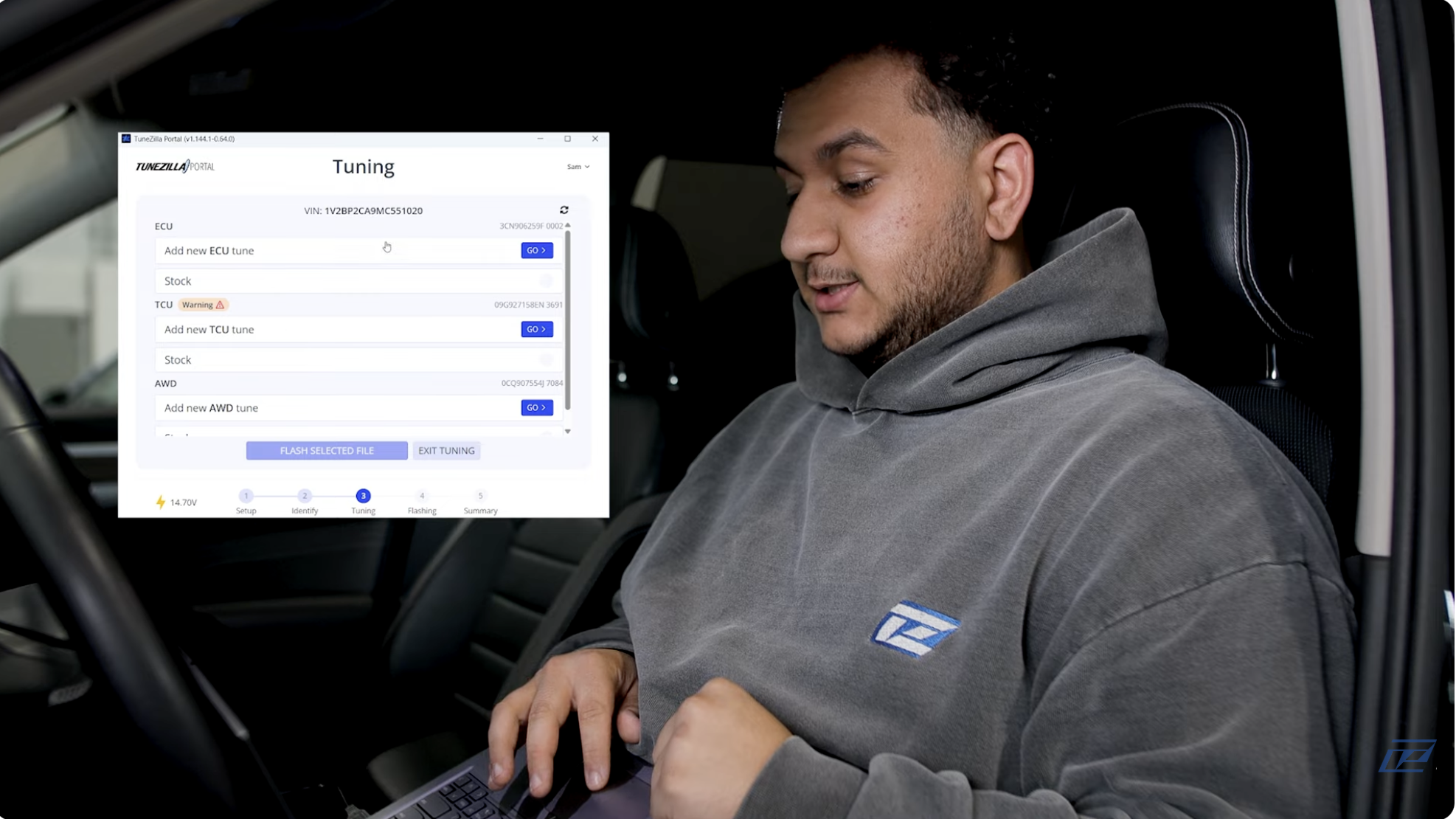
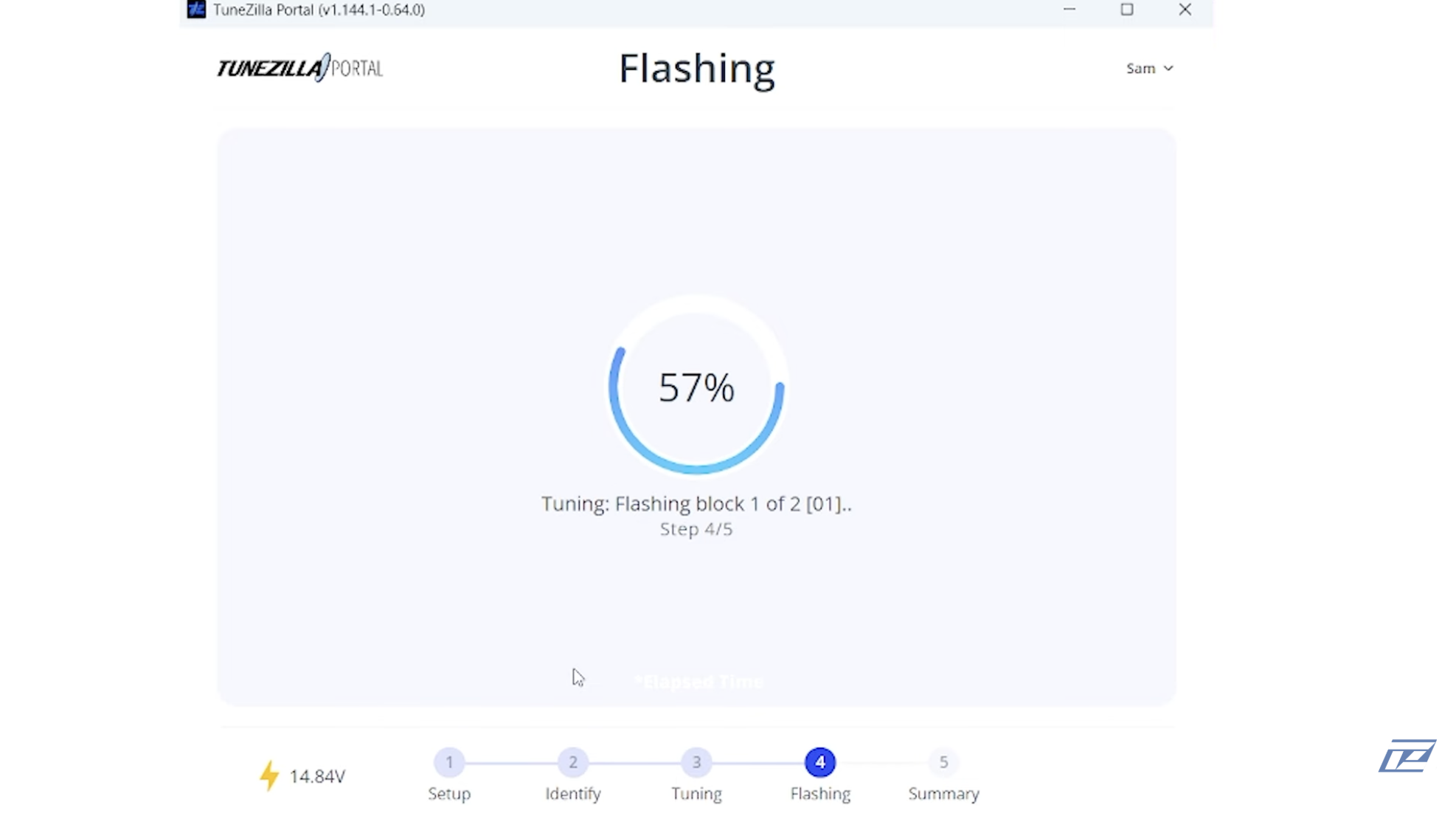
Code P0234 indicates an overboost condition in which the turbocharger generates more boost pressure than the engine management system expects. This diagnostic trouble code can stem from various issues, including faulty wastegates, malfunctioning boost pressure sensors, or problems related to ECU tuning modifications. Left unaddressed, overboost conditions can cause serious engine damage and expensive repairs.Diagnosing P0234 requires systematic testing of boost control components and careful analysis of sensor data to identify the root cause. Professional-grade ECU tuning software provides the diagnostic capabilities and calibration tools needed to properly resolve overboost issues and prevent their recurrence.SummaryP0234 triggers when the actual boost exceeds the ECU's safe limit by a sustained margin, typically 10 to 15 percent beyond the target for more than a few hundred milliseconds, according to Bosch's 2023 engine management documentation. The code reflects a loss of control of the boost regulation loop, not just a momentary spike. Without understanding why the wastegate system fails to regulate pressure correctly, drivers end up replacing parts blindly, only to have the same fault return under load.Clearing the code erases the ECU's fault memory but leaves the underlying control failure intact. The next hard acceleration triggers the same overshoot because nothing changed in how the wastegate actuator responds, how the N75 valve modulates vacuum pressure, or how the calibration requests boost. According to Underhood Service's 2024 diagnostic guidance, codes like P0234 appear when actual boost deviates from commanded values over a sustained period, meaning the ECU isn't reacting to big boost alone but to its inability to bring pressure back under control.Aggressive tuning exposes hardware limitations that conservative stock calibrations hide. A tune requesting 24 psi with a rapid ramp rate can overwhelm a wastegate actuator designed to control 18 psi gradually. Garrett Motion's 2024 research on turbo control systems found that even small actuator response delays, measured in tens of milliseconds, cause boost overshoot in high-performance applications. The faster the turbo spools, the tighter the control tolerances need to be, and modified calibrations shrink those margins to nearly zero.Diagnosing P0234 correctly requires logging actual boost versus commanded boost under real load conditions across multiple pulls. Sustained overboost across the entire RPM range signals a mechanical failure, such as a stuck wastegate. Selective overboost at specific RPM points indicates a calibration mismatch where the tune requests ramp rates that the actuator cannot follow. Inconsistent spikes that vary between pulls suggest intermittent binding or sensor drift, feeding unstable data to the ECU's control loop.Boost leaks downstream of the turbo can cause MAP sensors to read lower than the actual manifold pressure, prompting the ECU to request more boost while cylinder pressure climbs beyond safe limits. Kinugawa Turbo Systems notes that wastegate actuator springs rated from 4.4 psi to 30 psi lose the mechanical force needed to open against exhaust backpressure when they weaken or fail. Sensor drift, vacuum leaks disrupting N75 valve operation, and carbon buildup on wastegate flapper valves all create control failures that produce identical fault codes but require completely different fixes.ECU tuning software addresses this by logging real-time boost behavior under load, comparing actual versus commanded values across the RPM range, and letting you adjust calibration parameters to match what your specific wastegate actuator and control hardware can physically deliver.P0234 Is Not Just an Error Code, It Is a Control ProblemMost drivers see P0234 and clear it with a scanner, expecting the problem to disappear. It comes back.🎯 Key Point: P0234 isn't a one-time glitch—it's your ECU detecting a control problem that will return under the same conditions.The pattern is always the same: the car feels fine when you drive gently, but accelerates hard—especially under load—and drops into limp mode. Power cuts suddenly at higher RPM or midrange load, where boost peaks. The car hits a wall because the ECU has detected something it cannot control."When P0234 triggers, it's the ECU's way of saying 'I've lost control of boost pressure—I'm protecting the engine by cutting power.'"⚠️ Warning: Clearing P0234 without addressing the root cause means you'll experience the same power loss and limp mode activation under identical driving conditions.What triggers P0234, and why does it keep coming back?P0234 is triggered when the actual boost exceeds the ECU-set safe limit. The turbo is producing more pressure than the system expects or can safely handle. When this occurs, the ECU protects the engine and turbocharger by reducing power or engaging limp mode.The issue isn't the code itself: boost is no longer being controlled properly.Why do generic fixes often fail to solve the problem?Much advice focuses on clearing the code or replacing parts without understanding why overboost occurs. Generic fixes get applied across different platforms, though systems in Audi S3 or Volkswagen Golf GTI models can behave differently depending on their control strategies.Without examining how boost behaves under load, you're working blind. You might replace the N75 valve, clean the intake, swap the MAP sensor, and check every vacuum line, only to have the code return the next time you push the car hard.How does the turbo control system work like a pressure regulator?Your turbo system works like a water faucet with a pressure regulator. The ECU sets a target boost pressure based on engine load, RPM, and temperature. The wastegate, controlled by the N75 valve or electronic actuator, opens and closes to maintain that target by bleeding off excess exhaust pressure before it spins the turbo too fast.What happens when the control loop fails and triggers P0234?When P0234 appears, something in that control loop has failed: the wastegate isn't opening when it should, the ECU's target map is wrong for the hardware, or a sensor is providing incorrect data that makes the ECU think everything is fine while boost climbs dangerously high.The ECU only knows what its sensors tell it. If the MAP sensor reports accurate pressure but the wastegate actuator is stuck, or the N75 valve is sluggish, the ECU will see overboost and react by cutting fuel or timing: that's the wall you feel during acceleration.Why does P0234 appear after ECU modifications?The problem typically appears after changes like deletes and tunes, not before. When you remove emissions equipment or flash a new tune, you alter the airflow characteristics and boost targets the engine control unit operates with.How do aggressive tunes affect boost control precision?A stock ECU calibration is conservative, building in safety margins for sensor drift, component wear, and varying fuel quality. When you install a more aggressive tune, those margins shrink.The tune might request higher boost levels or hold boost longer through the RPM range, and if the mechanical components (wastegate, actuator, vacuum system) cannot respond quickly enough, you get overshoot.What causes P0234 after stage 2 tune installation?This pattern repeats across platforms: someone deletes their EGR, installs a stage 2 tune, and within a few hundred miles, P0234 appears. More often than not, the tune demands boost control precision that the stock hardware cannot deliver, or the calibration contains a spike in the boost map that went undetected during development.The difference between mechanical failure and calibration mismatchA mechanical failure, such as a stuck wastegate actuator, produces overboost across the entire RPM range, climbing out of control until the ECU intervenes. This occurs consistently every time you accelerate hard.Calibration problems are selective. Overboost appears only at specific RPM ranges, during cold starts, or in high ambient temperatures. The car might run cleanly five times, then hit limp mode on the sixth pull when conditions align.Mechanical failures are consistent. Calibration mismatches are conditional.Why does clearing the code fail to solve the problem?When you clear P0234 with a scanner, you're erasing the ECU's memory of the event, not changing the conditions that caused it. The next time the boost exceeds the limit, the code returns because the underlying control problem persists.What happens when you rely on temporary fixes?The familiar cycle: clear the code, drive gently, hope it doesn't return. As the load increases and boost spikes again, the ECU stores the fault. You're trapped in temporary fixes that never address the root cause of boost spiking.How can real-time monitoring break this cycle?Platforms like ECU tuning software let you monitor real-time boost behavior under load, compare it against the ECU's target map, and identify where overshoot occurs. Instead of guessing whether the issue stems from the N75 valve or the tune, you see the data and adjust calibration to bring actual boost in line with safe limits. This transforms code clearing from a frustrating cycle into a solvable control problem.What happens when you ignore it?Some drivers try to live with P0234 by clearing it regularly and avoiding hard acceleration. Sustained overboost can damage piston rings, crack exhaust manifolds, or overspeed the turbo beyond its bearing limits.Limp mode exists for a reason: it's the ECU's last line of defense when it detects unsafe operating parameters. Ignoring that warning and driving hard turns small control issues into expensive mechanical failures.Why is my boost exceeding the limit?Most people ask, "How do I clear P0234?" The better question is, "Why is my boost going over the limit?" This shift in thinking changes how you approach the fix.Clearing the code temporarily removes the symptom. Understanding the control issue stops it from returning. You need to identify whether the problem is a stuck wastegate, a failing actuator, a vacuum leak, or a tune requesting more boost than the hardware can safely control.What's the other half of the P0234 pictureWithout that understanding, you're replacing parts and hoping. With it, you target the exact failure point.But knowing what P0234 means is only half the picture.What Code P0234 Actually MeansThe engine control unit detects boost pressure climbing past its safety threshold, set based on engine structural limits, fuel system capacity, and turbo durability. When actual boost exceeds that limit long enough for the ECU to register it as a control failure rather than a brief spike, P0234 gets logged.🎯 Key Point: P0234 triggers when the ECU detects sustained overboost conditions that exceed safety parameters for your engine's design limits.The ECU runs continuous comparisons between commanded and actual boost. If the difference exceeds the set tolerance and persists, the system treats it as a loss of control."When actual boost pressure exceeds the ECU's safety threshold for a sustained period, the system logs P0234 as a protective measure against potential engine damage." — Automotive Diagnostics Manual, 2024⚠️ Warning: This code indicates your turbo system is operating beyond safe parameters—immediate diagnosis is essential to prevent costly engine damage.How does the closed-loop control cycle work?Modern turbocharged engines operate in a closed feedback loop. The ECU sets a boost target based on throttle position, engine load, RPM, and temperature, then signals the wastegate actuator or boost control solenoid (such as the N75 valve on many Volkswagen Group platforms) to regulate exhaust-gas flow to the turbo. A MAP or boost pressure sensor sends real-time pressure data back to the ECU.What happens when boost control fails?The ECU adjusts wastegate position dozens of times per second to keep actual boost aligned with the target. Smooth operation delivers predictable power; breakdown results in overboost.According to Bosch's 2023 engine management documentation, deviations exceeding 10-15% of target boost for more than a few hundred milliseconds typically trigger protective intervention. The exact threshold varies by platform and calibration, but the ECU reacts to sustained loss of control, not brief spikes.What conditions must align for P0234 to trigger?Two conditions must occur simultaneously for P0234 to appear: the actual boost must exceed the commanded boost by an amount the ECU deems unsafe, and that excess boost must persist beyond the time window programmed into the calibration.Why doesn't the ECU trigger codes for brief boost spikes?Short spikes happen when you quickly press the gas pedal, change gears under load, or when the wastegate responds with a slight delay. The engine computer expects and allows for this. What it doesn't tolerate is boost climbing out of control or remaining elevated when it should drop.How does duration determine when the fault code sets?The critical factor is how long the problem lasts. If boost spikes to 22 psi when the target is 18 psi but then returns to 18 psi within 300 milliseconds, most ECUs log it internally without triggering a fault code. If boost hits 22 psi and stays there for a full second while the ECU commands 18 psi, that's a control failure: the code sets and limp mode activates.How does the turbocharger system generate boost pressure?The turbocharger generates boost by using exhaust energy to compress intake air. A wastegate controls how much exhaust energy reaches the turbine, and is regulated by an electronic actuator or a vacuum-controlled solenoid (such as the N75 valve) based on ECU commands.How does the ECU monitor and control boost levels?The MAP sensor or boost pressure sensor measures intake manifold pressure and reports it to the ECU, which adjusts the wastegate signal in real time.What happens when the boost control feedback loop fails?When any component fails or responds too slowly, the feedback loop breaks. The ECU sends a command to reduce boost, but the wastegate doesn't open fast enough. Or the MAP sensor reports incorrect pressure, causing the ECU to request more boost than necessary. Either way, the actual boost diverges from the commanded boost, and the system loses alignment.Why this matters for diagnosisP0234 indicates the ECU detected overboost, not the cause. Most diagnostic paths fail here: people assume the code points to a specific failed part and replace the N75 valve or MAP sensor, hoping the problem resolves.What does P0234 actually tell you about the problem?The code is a symptom, not a diagnosis. It confirms the control loop failed but doesn't explain whether the failure came from a stuck wastegate, a sluggish actuator, a vacuum leak disrupting the N75 valve's operation, or a tune commanding boost levels the hardware cannot control.Why do parts replacements often fail to fix P0234?This frustration recurs frequently: someone replaces the N75 valve, clears the code, drives for a week, and P0234 returns. The N75 usually wasn't the real problem. The wastegate actuator is stuck, or the tune is raising boost faster than the actuator can respond. The N75 valve is doing exactly what it's told, but can't compensate for the underlying issue.The mismatch between command and realityThe ECU operates on assumptions: the wastegate responds within a certain timeframe, the MAP sensor is accurate, and the boost control solenoid isn't leaking. When those assumptions break down, the ECU's commands no longer match reality.Garrett Motion's 2024 research on turbo control systems shows that even small actuator response delays (on the order of tens of milliseconds) can cause boost overshoot in high-performance applications. The faster the turbo spools, the tighter the control tolerances must be. Aggressive tunes requesting rapid boost buildup shrink those tolerances further, causing systems that worked fine at stock boost levels to fail.How do stock calibrations prevent overboost issues?Stock calibrations build in safety margins: they request boost conservatively, ramp it up gradually, and back off early if sensors report anything unexpected. This keeps P0234 from appearing under normal driving, even if components are starting to wear.Why do performance tunes expose boost control problems?Performance tunes expose small differences by requesting higher peak boost, sustaining it longer through the RPM range, and building it faster when you press the gas pedal. Any looseness in the wastegate actuator, delay in the N75 valve response, or small intake leak becomes apparent immediately.How can ECU tuning software solve P0234 calibration issues?ECU tuning software lets you record actual boost versus commanded boost, identify the exact RPM range or load condition where overshoot occurs, and adjust the calibration to slow the boost ramp rate or lower the peak target. Our TuneZilla software helps you tune the control strategy to match what the hardware can deliver, turning P0234 from a recurring problem into a calibration issue you can solve, rather than replacing parts without knowing whether they will help.What's the difference between brief boost spikes and dangerous sustained overboost?A quick jump to 23 psi when the target is 20 psi isn't dangerous; the engine can handle short-duration pressure spikes. Damage occurs from sustained overboost, in which cylinder pressure remains elevated for multiple combustion cycles, increasing thermal load on pistons and rings, raising exhaust-gas temperatures beyond what the turbo's turbine wheel can safely handle, and stressing head-gasket sealing surfaces.Why does P0234 appear during highway pulls rather than quick acceleration?This is why P0234 often appears during highway pulls or long uphill climbs rather than quick bursts of acceleration. A three-second pull in third gear gives the system time to overshoot and remain elevated, while a one-second burst from a stoplight might spike boost briefly before the ECU corrects it.What the code doesn't tell youP0234 confirms that overboost happened, but it doesn't indicate whether the problem is mechanical, electrical, or calibration-related. It doesn't reveal if the wastegate is stuck, the actuator is weak, the N75 valve is clogged, or the tune is requesting impossible boost ramps.Why do different cars show the same code for different problems?The same code appears when completely different things go wrong. One car gets P0234 because the wastegate actuator arm is stuck; another because the tune increases boost too quickly; and a third because a vacuum line to the N75 valve split, and the solenoid can't control pressure. All three cars receive the same code, yet each requires a different fix.How does boost data change your diagnostic approach?Without data showing how boost acts under load, you're guessing. With it, you can see whether boost goes too high at a specific RPM, whether it ramps too fast, or whether it fails to return when the ECU reduces the target. That clarity transforms your repair approach.Understanding what the code means only gets you halfway to a solution.Related ReadingWhat Is Engine TuningAutomotive Data LoggerWhat Causes Overboost in PracticeThe wastegate system fails to control exhaust pressure correctly. When it gets stuck closed, binds partway, or responds too slowly to ECU commands, exhaust energy keeps spinning the turbo past the intended speed. Boost climbs higher than target levels, and the ECU cannot pull it back down fast enough to prevent P0234 from triggering.🎯 Key Point: A malfunctioning wastegate is the most common cause of overboost conditions - it's your turbo's primary safety valve for controlling boost pressure."When the wastegate fails to open properly, exhaust pressure can cause the turbo to spin 15-20% faster than designed limits." — Automotive Diagnostics Manual, 2023⚠️ Warning: Stuck wastegates don't always fail completely - they can bind partially, creating intermittent overboost that's harder to diagnose but just as damaging to your engine.What happens when wastegate actuators bind or stick?A binding or sticking wastegate actuator creates uncontrolled boost across the entire operating range. If the linkage corrodes, the diaphragm leaks, or the arm seizes from carbon buildup, the wastegate remains partially or fully closed even when the ECU commands it open.How do you identify actuator failure under load?You'll see this most clearly when the engine is under heavy load: boost keeps climbing because the wastegate can't release pressure. According to Kinugawa Turbo Systems, adjustable actuator springs are rated from 4.4 psi (0.3 bar) to 30 psi (2.0 bar).When an actuator fails or the spring weakens beyond its rated pressure, the wastegate loses the mechanical force needed to open against exhaust backpressure. The engine control unit sends the correct signal, but the hardware cannot respond.What causes N75 valve failures in boost control systems?The N75 valve (or equivalent boost-control solenoid) controls the vacuum pressure to the wastegate actuator. When clogged with carbon deposits, leaking internally, or worn, it cannot control the actuator position accurately. The ECU commands reduced boost, but the N75 delivers inconsistent vacuum pressure, causing the wastegate to open either too slowly or not at all.How do vacuum system leaks affect wastegate operation?Vacuum leaks between the N75 valve and actuator create the same problem. A split hose, loose clamp, or cracked fitting prevents the actuator from receiving full vacuum pressure. The wastegate opens partway but cannot fully bypass exhaust flow, so boost remains elevated even when the ECU actively reduces it.You might see a normal boost at lower RPM where exhaust pressure is manageable, but overboost appears higher in the rev range where the wastegate opens fully.How do boost leaks cause overboost conditions?Boost leaks don't always lower pressure as expected. A leak downstream of the throttle body causes the MAP sensor to read lower than the actual manifold pressure. The ECU thinks boost is at target and requests more boost, while actual cylinder pressure climbs higher than intended because the sensor cannot accurately detect the pressure difference.Why does sensor drift trigger P0234 codes?Sensor drift works similarly. A MAP sensor reading 2 psi low tells the ECU it needs more boost to hit the target. The turbo spins harder, and actual boost exceeds safe limits, but the ECU remains unaware until pressure exceeds a second threshold or another sensor (like charge air temperature) reports a mismatch. By then, you're in overboost territory.Calibration mismatches with hardware limitsAggressive tuning pushes boost targets beyond what the control system can handle smoothly. A tune might demand 24 psi of boost with a fast ramp rate, but the stock wastegate actuator and N75 valve were designed to control 18 psi with gradual buildup. The hardware overshoots because the control loop cannot react fast enough to the steeper demand curve.Why does boost ramp rate matter more than peak pressure?The problem often isn't the highest boost numbers but how fast the boost increases. A stock calibration might climb from 10 psi to 18 psi over 1.5 seconds, while an aggressive tune requests the same climb in 0.7 seconds. The wastegate actuator cannot control pressure smoothly at that rate, causing boost to spike past the target before the actuator catches up and logs P0234.How do real-world conditions expose calibration problems?Most drivers discover this after applying a stage 2 or stage 3 tune to stock hardware. The tune performs on a dyno, but on the street, temperature changes, fuel-quality differences, and elevation changes expose how little margin there is in the calibration.Platforms like ECU tuning software let you adjust boost ramp rates and peak targets in real time. Our TuneZilla software helps you shape the curve to match what your wastegate actuator and control solenoid can deliver.But clearing the fault rarely keeps it away.Related ReadingWhat Does Tuning A Car DoTurbo TuningStand-Alone Engine ManagementWhy Clearing the Code Does Not Fix the ProblemResetting P0234 erases the ECU's record, but it does not fix the underlying condition that triggered it. The code returns because the system cannot control boost within safe limits. The mechanical or calibration failure causing overboost remains active.🎯 Key Point: Simply clearing the code is like turning off a smoke alarm while your house is still burning - you've silenced the warning, but the dangerous condition persists."Diagnostic trouble codes will continue to return until the root cause is properly diagnosed and repaired." — Automotive Service Excellence (ASE), 2024⚠️ Warning: Repeatedly clearing P0234 without addressing the root cause can lead to catastrophic engine damage from sustained overboost conditions.Why does clearing the code only provide temporary relief?When you clear the code with a scanner, the ECU deletes the stored fault and resets the readiness monitors. The check engine light goes off, but when you accelerate hard and boost climbs past the threshold again, the ECU reacts identically: power cuts, limp mode activates, and P0234 reappears.What causes the code to keep returning?This pattern frustrates drivers who expect clearing the code to solve the problem. One driver described it perfectly: "Car feels fine for a day or two, then the code comes back." The cycle repeats because nothing in the boost control system has changed.The wastegate actuator still binds at the same point. The N75 valve still responds slowly. The tune still requests a boost spike that the hardware cannot handle. The ECU runs the same checks under load, detects the same overshoot, and logs the same fault.Why does the ECU keep triggering P0234 after clearing?The ECU continuously compares commanded boost to actual boost using closed-loop feedback. According to Bosch engine management documentation published in 2023, when the difference exceeds set limits (typically 10 to 15 percent sustained for more than a few hundred milliseconds), protective strategies activate automatically to prevent excessive cylinder pressure, turbo overspeed, and thermal stress on exhaust components.What happens when you only clear the code?Clearing the code resets the fault memory but does not change those thresholds or fix why boost exceeds them. The next time you push into higher RPM under load, the same mismatch occurs, and the ECU stores P0234 again. You're stuck in a loop where the symptom disappears temporarily, but the underlying control failure persists.How can data logging identify the root cause?Platforms like ECU tuning software let you record real-time boost behavior while the engine operates under load. You can compare what is happening versus what was commanded across the RPM range and pinpoint where overshoot occurs. Rather than repeatedly clearing codes and guessing at fixes, our TuneZilla platform reveals whether the problem stems from a mechanical response lag, sensor drift, or a calibration that exceeds hardware capabilities.What happens if you keep ignoring itSome drivers clear P0234 regularly and avoid hard acceleration to prevent limp mode, but this only delays the inevitable. Every ECU intervention reflects a real risk. Sustained overboost increases combustion pressure beyond design limits, raises exhaust gas temperatures that can crack manifolds or damage turbine wheels, and stresses piston rings and head gasket sealing surfaces. Limp mode exists because the ECU detected something it cannot safely manage. Ignoring that and continuing to drive hard turns a fixable control issue into expensive engine damage.But knowing that clearing the code solves nothing leaves the harder question unanswered.How to Diagnose P0234 CorrectlyLog boost pressure when the engine is under load—a controlled pull in second or third gear where the turbo is working, not idle or light throttle cruising. The overboost condition only appears under stress.Use a wideband data logger or ECU monitoring tool to capture actual boost versus commanded boost in real time across multiple RPM ranges and load conditions. A single snapshot won't reveal the pattern.How do you compare the requested boost to the actual boostThis comparison shows where control breaks down. The ECU commands a specific boost target at every RPM point. If the actual boost matches that target within tolerance, the system works. If actual boost climbs above target and stays there, you've found your control failure.What triggers P0234 codes according to diagnostic standardsAccording to diagnostic guidance from Underhood Service published in 2024, codes like P0234 are triggered when the actual boost differs from the commanded value by a set amount over a sustained period. The ECU reacts to the inability to regulate boost to target levels, not to high boost alone.Where should you look for boost deviation patternsLook at where the deviation happens. If boost overshoots consistently at 3,500 RPM but behaves normally at 2,000 RPM and 5,000 RPM, the problem is selective: the control system can't respond fast enough at that specific load point, usually indicating actuator response lag or a calibration spike the hardware can't follow.What does sustained overboost across all RPM ranges indicate?If your engine keeps running at too high a boost level across the entire RPM range, it signals a mechanical failure. A wastegate stuck closed, or an actuator that won't open, creates uncontrolled boost. Actual boost climbs steadily above target with no correction, regardless of engine speed or load.Why do boost spikes vary between pulls?Boost spikes that are inconsistent and vary from one pull to the next suggest system instability. A sticking wastegate, a failing N75 valve, or a drifting sensor can cause unpredictable behavior: one pull might hit 22 psi when the target is 18 psi, while the next reaches only 19 psi under identical conditions.What causes overboost only at specific RPM ranges?Selective overboost at specific RPM ranges or load points usually indicates a calibration mismatch with the system. The tune requests a boost ramp that the actuator cannot deliver smoothly, or it holds peak boost longer than the wastegate can manage. The hardware functions properly at lower demand, but loses control when calibration exceeds its response capability.Check the mechanical components directlyOnce the data shows where control fails, inspect the wastegate actuator. Disconnect the linkage and move the arm manually. It should travel smoothly through its full range without binding or sticking. Any resistance or inconsistent movement indicates failure.How do you inspect the wastegate flapper valve?Check the wastegate flapper valve itself. Carbon buildup on the valve or seat can prevent it from sealing when closed or opening fully when commanded. Remove the downpipe, if necessary, and inspect it for deposits or damage.What should you check on the boost control solenoid?Test the N75 valve or boost control solenoid by applying vacuum to the inlet and verifying it holds pressure when de-energized and releases it cleanly when powered. A solenoid that leaks internally or responds slowly cannot accurately adjust the actuator position.Inspect every vacuum line between the solenoid and actuator. A split hose, loose clamp, or cracked fitting creates a leak that prevents full vacuum from reaching the actuator, causing the wastegate to open partway but never fully, leaving boost elevated even when the ECU commands full bypass.Why do intake system leaks cause P0234 codes?Leaks in the boost system downstream of the turbo cause the MAP sensor to read lower than actual manifold pressure. The sensor measures pressure after the leak, while the cylinders see pressure before it. The ECU interprets this as below-target boost and requests more boost, causing actual cylinder pressure to exceed the intended levels without detection.By the time the boost crosses a secondary threshold or another sensor reports mismatched data, you're already in overboost territory.How do you check for intake system leaks?Turn off the engine and pressurize the intake system. Listen for a hissing sound indicating a leak. Check the intercooler end tanks, silicone couplers, throttle body gaskets, and intake manifold seals.Even a small leak at high boost levels can create enough sensor error to trigger P0234.How do you check MAP sensor readings for accuracy?A MAP sensor that reads incorrectly sends false data into the control loop. If the sensor reads 2 psi low, the ECU thinks it needs more boost to hit the target, causing the turbo to spin harder until the actual boost exceeds safe limits. The ECU won't realize it until the pressure exceeds a threshold at which the error becomes obvious.Compare MAP sensor readings to a known-accurate boost gauge under controlled conditions. If the sensor consistently reads low or high compared to actual pressure, it has drifted out of calibration. Replace it and retest before assuming the problem is mechanical.Why should you test charge air temperature sensors?Check the charge air temperature sensors too. The ECU uses intake air temperature to adjust boost targets and fuel delivery. If a sensor reads incorrectly, the ECU may request boost levels that are mismatched to the actual air density, leading to overboost.Trace the problem to its sourceDiagnosis means using data to identify where the control loop breaks down, then checking the specific parts involved. If your logs show boost going too high at 4,000 RPM but fixing itself by 5,000 RPM, the actuator can respond eventually, but not fast enough at that load point. This narrows the fix to either slowing the boost ramp in the calibration or upgrading to a faster-responding actuator.Why is data-driven diagnosis better than guessing?The familiar approach is to guess which part failed and replace it. Most drivers swap the N75 valve first because it's cheap and easy to reach. When that doesn't work, they replace the MAP sensor, then the wastegate actuator, then check the vacuum lines. Each step costs time and money without guidance from information.Platforms like ECU tuning software let you log real-time boost behavior under load, compare actual versus commanded values across the entire RPM range, and identify exactly where overshoot occurs. Our TuneZilla platform reveals whether the problem stems from mechanical response lag, sensor drift, or calibration requesting more than the hardware can control, transforming diagnosis from trial and error into targeted fixes.How do you identify mechanical versus calibration issues?If boost spikes are random and inconsistent, you're dealing with something that connects on and off or fails under specific conditions: a sticking wastegate, a solenoid that works when cold but fails when hot, or a vacuum line that collapses under load. Mechanical inspection becomes the priority.If boost overshoots consistently at the same points every time, the system is behaving predictably within its limits. The hardware is doing what it can, but the calibration is asking for more. Adjusting the tune to match the actuator's response capability resolves the issue without replacement.How TuneZilla Helps You Fix and Validate P0234Most P0234 issues are hard to fix because the diagnosis is disconnected from validation. You check a component, clear the code, drive the car, and hope it doesn't return. If it does, you try something else with no clear link between what changed and what improved.TuneZilla brings diagnosis and validation into one process, moving you from guesswork to controlled testing.🎯 Key Point: TuneZilla eliminates the frustrating cycle of fix-and-hope by providing real-time validation of your P0234 repairs.💡 Tip: Use TuneZilla's integrated approach to immediately verify whether your turbocharger fixes are actually working before you clear the codes and take a test drive."Controlled testing eliminates the guesswork that makes P0234 diagnosis so frustrating for most technicians." — Automotive Diagnostic Best Practices, 2024Controlled calibration adjustmentsWith FlashZilla, you can make fine-tuned changes to improve targeting or control. Each change is tracked, so you know exactly which version is on the car when you test it.You flash a changed calibration, log the results, and compare it directly to the previous version. The data shows whether the change worked or if you need further improvements.Using the TuneZilla Portal App, you manage your files and updates in one place without switching between tools or manually organizing versions, which keeps the testing process organized when investigating multiple changes.Real-time boost comparisonThe log viewer lets you compare the boost you requested to the boost you received and identify where the system loses control, whether in the midrange or at higher RPM.After making changes, run the same test again to check if the problem is resolved. Look for measurable differences in how the turbo responds under identical load conditions, rather than relying on subjective feel or hoping the check engine light stays off.This means you can see exactly why P0234 is triggered, rather than clearing the code and hoping it stays gone. You adjust based on real boost behavior, not guesses.Validating the fix under loadThe loop is simple: log, adjust, validate. Capture baseline data showing where boost overshoots, modify the calibration to address that overshoot, then confirm the fix under the same load conditions that caused the issue.Most diagnostic processes skip this validation step. People replace parts or clear codes without confirming the problem is solved, then get surprised when P0234 returns under hard acceleration.What does successful validation look like?With logged data, you know immediately if the fix worked. If actual boost tracks commanded boost throughout the pull without deviation, the control issue is resolved. If it still overshoots, you see exactly where and by how much to refine further.Turning recurring faults into solvable problemsP0234 becomes less of a mystery when you can see what the ECU sees. The code triggers because the actual boost exceeds safe limits. Data reveals whether the wastegate actuator cannot respond fast enough, the tune requests an impossible ramp rate, or a sensor feeds incorrect information.Once you identify the failure mode, the fix becomes obvious. You adjust the specific parameter causing overshoot and confirm it with logged proof, rather than guessing which part to replace or hoping a different tune solves it.Matching calibration to hardware capabilitySome boost control problems stem from tuning that exceeds the hardware's capabilities. A stock wastegate actuator might work perfectly at 18 psi but struggle to control 24 psi smoothly.You can either replace the actuator with a better version or adjust the tune to match the stock actuator's capabilities. Platforms like ECU tuning software let you change boost targets and ramp rates without having to start over. Our software lets you reduce the initial spike, extend the ramp duration, or lower the peak target by a few psi. The car still makes strong power, but the control system can handle it without exceeding limits.Why is iterative refinement better than trial and errorMost tuning processes involve making a change, driving the car, and repeating based on results. Each cycle consumes time, and you lose track of what improved versus what made no difference.How does data logging improve tuning accuracy?TuneZilla records every change and saves each result. You can see which calibration version created which boost curve and compare three different ramp rates to identify which one stops overshoot without losing performance.This step-by-step approach works because you build on facts, not memory. The logs show exactly what improved and what didn't, eliminating guesswork about whether the current calibration surpasses earlier versions.How can sensor malfunctions trigger false P0234 codes?Sometimes P0234 appears because a sensor provides incorrect information to the ECU. A MAP sensor reading low causes the ECU to request more boost, increasing pressure until actual boost crosses the fault threshold.Logged data reveals this immediately: if the MAP sensor reports 18 psi while a secondary boost gauge shows 22 psi, the sensor is drifting. If charge air temperature readings don't match ambient conditions, the sensor is giving incorrect data.What's the best way to validate sensor accuracy?You can check if a sensor is accurate by comparing its logged values to known reference values under controlled conditions. Once you confirm a sensor is broken, replacing it becomes a specific fix rather than a guessing game.Why should you test under the same conditions that triggered P0234?When you replace a wastegate actuator, N75 valve, or vacuum line, test under the same load conditions that originally triggered P0234. Clearing the code and driving normally does not prove the repair worked.How do you verify the mechanical repair actually solved the problem?Write down a pull before the repair to show where the boost goes too high. Replace the part and write down the same pull again. If the actual boost now follows the commanded boost smoothly, the mechanical repair fixed the problem. If it still goes too high, the problem lies elsewhere.This proof is important when multiple parts could cause the same problem. Replace one part, confirm it worked, and move forward rather than replacing three parts and hoping one fixes it.How does temperature affect boost behavior?Boost behavior changes with temperature, elevation, and fuel quality. A tune that works perfectly in cool weather may overboost on a hot day because air density drops, forcing the turbo to spin faster to reach the same pressure target.Why is logged data crucial for temperature adjustments?Logged data lets you compare pulls at different temperatures and identify where deviation appears, so you can adjust calibration for temperature changes instead of treating every overboost event as a hardware failure.How do elevation and fuel quality trigger P0234?Some platforms experience P0234 only at high elevation or with certain fuel grades. Without data showing how boost behaves under those specific conditions, you're addressing the wrong problem. With it, you can tune the calibration to handle the variables your car encounters.Why does uncertainty make P0234 so frustratingThe worst part of dealing with P0234 is not knowing if your fix will work. You clear the code, drive for a week, and wonder if it will return the next time you accelerate hard. That uncertainty prevents you from trusting the car.How does logged data eliminate guessworkRepeatable logged data eliminates that uncertainty. If you run five pulls under load and the actual boost tracks the commanded boost every time without deviation, the problem is solved: you have proof that the system is controlling boost correctly.That confidence changes how you drive the car. You stop babying the throttle and avoiding high RPM. You know the turbo is working within safe limits because you have seen the data proving it.What becomes possible after fixing P0234But fixing P0234 is only part of what becomes possible when you can tune from your own driveway.Tune your Car from your Driveway with our ECU Tuning Software Before replacing parts or reflashing blindly, run a boost log and compare requested versus actual pressure. That first session shows you exactly where overboost is happening, so you can fix the root cause instead of chasing the same P0234 code again.🎯 Key Point: Real-time data eliminates guesswork and saves you from expensive trial-and-error repairs.TuneZilla's FlashZilla device and log viewer turn your driveway into a diagnostic bay. Flash a revised calibration, log the pull, and see whether the adjustment eliminated the overshoot; if not, refine it further. Our InstaTune server connects you to expert calibrators who can review your logs and provide targeted solutions based on your boost behavior, not generic advice."Real-time boost logging reveals the exact moment and conditions where overboost occurs, allowing for precise calibration adjustments rather than parts replacement." — Automotive Tuning Research, 2024That control extends beyond fixing P0234. Once you see how boost responds in real time, you notice other patterns: throttle response sharpens when you adjust boost ramp rates, and power delivery smooths out when you match targets to your wastegate actuator's capabilities.Traditional MethodTuneZilla ECU TuningShop appointments requiredDriveway tuning availableGeneric solutionsCustom calibrationsParts replacement firstData-driven diagnosisMultiple visits neededImmediate feedback⚠️ Warning: Without proper logging data, you're essentially tuning blind and risk creating new boost control issues.You don't need a shop appointment or dyno session. The tools work from your garage, and the data tells you immediately whether the change worked.Related ReadingDiesel Engine TuningHow To Improve Throttle ResponseBest Diesel Chip For Fuel Economy