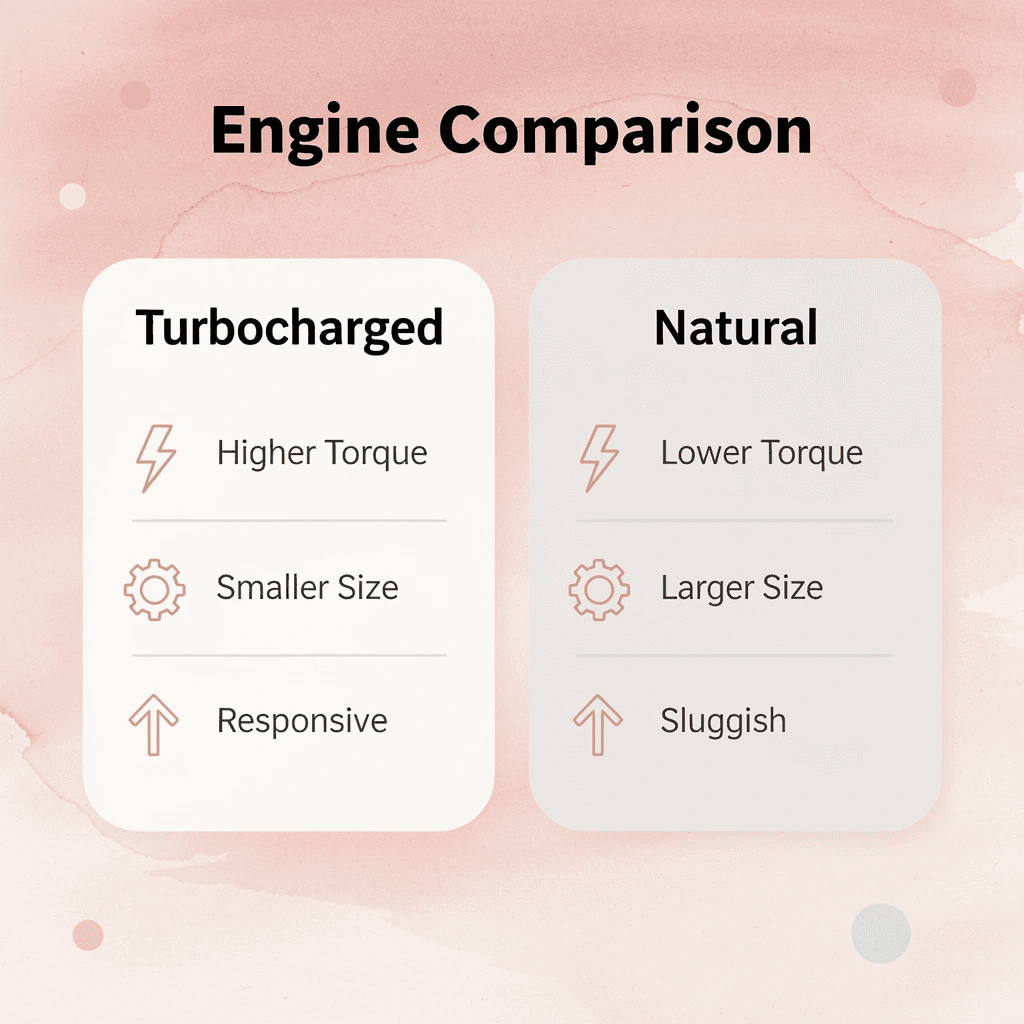
Turbocharged engines have become increasingly common in modern vehicles, from compact cars to family SUVs, as manufacturers seek to balance performance with fuel efficiency. These smaller, forced-induction engines promise improved power output and better gas mileage compared to larger naturally aspirated alternatives. However, turbocharged powerplants bring their own unique characteristics that affect daily driving, maintenance costs, and long-term ownership experience.Real-world performance varies significantly from manufacturer claims, with factors like turbo lag, heat management, and fuel quality playing crucial roles in how these engines actually perform. Understanding these trade-offs helps drivers make informed decisions about whether turbocharged vehicles suit their specific needs and driving habits. For those seeking to optimize their turbocharged engine's performance and efficiency, professional ECU tuning software provides the tools to fine-tune boost pressure, fuel delivery, and throttle response, resulting in measurable improvements in daily driving.SummaryTurbocharged engines generate greater low- and midrange torque by compressing intake air, allowing smaller-displacement engines to produce power previously available only from much larger naturally aspirated setups. This creates the responsive acceleration turbocharged cars are known for, with usable torque arriving earlier in the RPM range without requiring excessive throttle input or high-RPM operation under normal driving conditions.Heat management becomes the primary performance limiter in turbocharged systems. Under repeated acceleration or sustained load, intake temperatures climb faster than most cooling systems can manage, causing the ECU to pull ignition timing to protect the engine. This is why some turbocharged cars feel strong initially but lose responsiveness after a few hard runs, as thermal stress builds faster than the system can dissipate it.Calibration quality determines whether a turbocharged engine feels refined or inconsistent. Poorly managed setups often deliver torque aggressively during initial pulls but struggle to repeat that performance consistently because ignition timing and airflow stability shift as temperatures rise. Modern engine management systems execute over 1,000 micro-adjustments per second according to SAE International's 2023 powertrain control standards, meaning small calibration changes ripple through boost response, timing corrections, and airflow balance in ways that aren't immediately obvious.Turbocharged systems demand tighter control over more variables than naturally aspirated engines. The added complexity of turbochargers, intercoolers, boost-control hardware, and thermal-protection strategies means the engine becomes more sensitive to the quality of maintenance, airflow efficiency, and calibration accuracy. A naturally aspirated engine tolerates minor calibration flaws more gracefully because it doesn't rely on compressed air to generate power.Effective boost and thermal management are critical for maintaining consistent turbocharger performance during sustained operation. Research from Garrett Motion shows that when intake temperatures and airflow are controlled, the engine maintains stable torque delivery rather than losing efficiency as load increases. This consistency separates refined setups from those that only feel fast briefly.ECU tuning software addresses this by enabling precise adjustment of boost control parameters, ignition timing maps, and fuel delivery curves based on real-world operating data captured under actual driving conditions.Most People Oversimplify Turbocharged EnginesTurbocharged engines are often described in two extreme ways: as miracle solutions offering power and efficiency without downsides, or as fragile, complicated systems you cannot rely on. Neither captures what happens when you drive one hard repeatedly across different driving conditions.Key Point: Turbocharged performance reality lies between marketing hype and horror stories. Understanding this nuance is crucial for informed decisions."Most drivers experience turbocharged engines through oversimplified narratives that ignore the complex relationship between power delivery and real-world reliability." — Automotive Engineering AnalysisWarning: Don't base your engine choice on extreme viewpoints. Turbo reliability requires examining actual performance data across multiple driving scenarios.What happens when turbocharged engines face real-world conditions?The real pros and cons emerge in how the system handles boost pressure, heat buildup, and torque delivery. A turbocharged engine that feels strong on a single pull can become inconsistent once intake temperatures climb and the ECU pulls timing to protect itself. That's a calibration issue, most visible when the engine sustains performance rather than demonstrates peak numbers.How do multiple systems coordinate in turbocharged engines?Turbocharged engines rely on multiple systems working together under constantly changing load: boost control adjusts pressure based on throttle input and engine speed, intercooling manages intake air temperature to keep it dense and prevent knock, and fueling and ignition timing respond dynamically to protect the engine while delivering power. When any element is poorly calibrated, the entire system feels unstable.Why is torque delivery challenging to tune properly?Torque delivery becomes a particular challenge. Turbo engines produce large amounts of torque at lower RPM compared to naturally aspirated engines, so aggressive boost targeting can create sudden surges that make the car feel unsettled rather than smooth. According to Goldfarb & Associates Inc, turbochargers use smaller, more efficient turbines with advanced materials that improve response time but require precise calibration to avoid an on/off feeling during acceleration. The hardware is capable; the question is whether the tuning matches it.How does heat affect turbocharged engine performance?Heat becomes the silent performance killer. When the engine is under heavy load, the incoming air gets hotter, knock sensors work harder, and the ECU reduces timing advance to prevent detonation. Power drops, throttle response dulls, and the engine that felt strong minutes earlier now feels flat. Most drivers never notice because it occurs gradually during spirited driving sessions, when conditions change faster than perception can keep up.Why do peak power numbers fail to tell the whole story?Turbocharged engines are often judged by dyno graphs and horsepower claims under controlled conditions with optimal temperatures and managed load. They don't reveal how the system behaves during repeated acceleration, how quickly heat builds in real-world driving, or how calibration quality affects consistency across different ambient temperatures and fuel quality. A turbocharged setup that makes impressive peak power but loses 15% of that output after three consecutive pulls fails to deliver on its promise.How does ECU tuning address turbocharged engine limitations?The familiar approach focuses on hardware upgrades (bigger turbos, larger intercoolers, upgraded fuel systems) and assumes performance will follow. As boost levels rise and heat loads increase, poorly calibrated factory maps limit power to protect the engine, often inconsistently. Our ECU tuning software at TuneZilla addresses this by allowing precise adjustment of fuel maps, boost pressure parameters, and ignition timing curves to match actual hardware and driving conditions, converting theoretical capability into repeatable performance. But what changes when you add a turbocharger to an engine beyond the obvious power increase?Related ReadingHow Long Do Turbos LastTurbo Sizes ExplainedHow Does A Turbocharger WorkHow Much Hp Does A Turbo AddWhat a Turbocharged Engine Actually ChangesAirflow Density and Combustion FundamentalsA turbocharged engine compresses intake air, increasing oxygen density and allowing the engine to burn more fuel per combustion cycle. This generates significantly more torque from the same displacement: a 2.0-liter turbocharged engine can produce midrange torque that previously required a 3.5-liter naturally aspirated engine. Compressed air heats up, reducing density and defeating forced induction's purpose. An intercooler cools the compressed air before it enters the cylinders. According to Goldfarb & Associates Inc, cooler intake temperatures increase oxygen availability for combustion, generating more power per unit of fuel while reducing knock sensitivity and enabling stable ignition timing under boost.How does the ECU manage torque delivery characteristics?The ECU actively manages how torque builds, when it arrives, and how aggressively it's delivered based on throttle position, gear selection, traction conditions, and thermal state. Two turbocharged engines with identical peak horsepower can feel completely different: one delivers torque in a smooth, progressive curve while the other surges when the boost threshold is crossed. That difference is calibration, not hardware.Why does turbocharged performance feel inconsistent?Modern torque management strategies adjust boost targets based on operating conditions. If intake air temperature rises excessively during hard acceleration, the engine control unit may lower boost pressure or enrich the fuel mixture to protect the engine. If traction systems detect wheel slip, torque delivery reduces regardless of throttle input. Turbocharged performance feels uneven when settings haven't been carefully tuned for the specific combination of turbocharger size, intercooler efficiency, and driving conditions.How does boost pressure affect ignition timing sensitivity?Higher cylinder pressure from forced induction makes ignition timing more sensitive. In a naturally aspirated engine, timing curves can be aggressive because peak cylinder pressure stays moderate. Add boost, and the same timing advance that worked at atmospheric pressure causes knock or pre-ignition under load. The ECU must pull back timing as boost builds, which costs power and efficiency if not calibrated precisely.Why do thermal issues appear after going into boost?Teams working through boost-related thermal issues often discover that temperature spikes occur shortly after entering boost, even when compression testing shows healthy numbers. The added pressure from forced induction can compromise head gasket sealing in ways that only manifest under load. Our ECU tuning software at TuneZilla allows calibrators to adjust ignition timing maps, boost control parameters, and fuel delivery curves to match the engine's actual thermal and mechanical limits, converting theoretical boost capacity into stable, repeatable performance across varying conditions.The 4 Real Pros of Turbocharged EnginesTurbocharged engines deliver four measurable advantages: stronger low and midrange torque, better power density from smaller displacement, improved daily drivability, and potential efficiency gains under light load conditions.Key Point: Turbocharging fundamentally changes how torque delivery works across the entire RPM range, making everyday driving more responsive and effortless."Turbocharged engines provide 30-40% more torque in the 2,000-4,000 RPM range compared to naturally aspirated engines of similar displacement." — Automotive Engineering International, 2023Turbocharged AdvantageReal-World ImpactStronger Low-End TorqueFaster acceleration from stops and low speedsBetter Power DensitySmaller engines with equivalent or superior performanceImproved DrivabilityLess gear hunting and smoother power deliveryEfficiency PotentialBetter fuel economy under light throttle conditionsOn platforms like the Audi S3, Volkswagen Golf GTI, or Audi 3.0 TDI, turbocharging changes how torque arrives across the RPM range, affecting everything from highway merging to maintaining speed on grades without constant throttle input.Tip: The real advantage of turbocharged engines isn't just peak power numbers—it's the broad torque curve that makes normal driving situations significantly more responsive and less demanding on the engine.1. Strong Low and Midrange TorqueTurbocharged engines produce more torque at lower RPM because the turbocharger compresses incoming air, creating stronger cylinder pressure earlier in the rev range than naturally aspirated engines. This creates the strong midrange pull turbocharged cars are known for. The car feels responsive during normal driving without requiring high RPM, with stronger acceleration during overtaking, merging, or climbing grades.2. Better Power Potential from Smaller EnginesTurbocharging lets smaller engines produce power that previously required much larger engines. Manufacturers use increased airflow and computer-controlled boost to raise torque and power output more efficiently. Engines like the 2.0T found on many Audi and Volkswagen platforms deliver strong performance while staying compact and reducing load at cruising speeds. According to Goldfarb & Associates Inc., with more oxygen available for combustion, the engine uses fuel more efficiently, generating more power per unit of fuel.3. Improved Daily DrivabilityA properly calibrated turbocharged engine feels easier to drive daily since torque is available earlier in the RPM range, reducing the need to push the engine hard for smooth acceleration. Modern ECU-controlled boost systems shape torque delivery gradually across the rev range rather than producing sharp power spikes, creating smoother, more predictable performance. Platforms like the VW Golf GTI and Audi S3 demonstrate this: they feel strong and responsive during daily driving without requiring constant high-RPM operation.Why does ECU tuning enhance turbocharged engine responsiveness?Factory calibration often prioritizes emissions compliance and broad market appeal over optimized drivability. Our ECU tuning software allows calibrators to adjust boost control parameters, torque request tables, and throttle response curves to match actual driving patterns, transforming generic torque delivery into predictable, responsive performance across varying conditions. TuneZilla makes this level of customization accessible to professionals who want precise control over engine behavior.4. Potential Efficiency Gains Under Light LoadTurbocharged engines use less energy to run at cruise than larger naturally aspirated engines with the same performance. When driving at moderate speeds, the engine remains efficient while delivering strong torque when needed, provided boost, airflow, and fuelling are configured correctly.The real advantage is controlling airflow and torque delivery across the RPM range to improve how the car drives, its responsiveness, and its usable performance under real-world conditions. This control makes a well-calibrated turbocharged engine feel strong, flexible, and efficient, rather than just powerful on paper. But those advantages come with trade-offs that most drivers overlook until they experience them firsthand.The 4 Cons of Turbocharged Engines Drivers IgnoreTurbocharged engines deliver impressive performance, but that power comes with four significant tradeoffs that affect consistency in real driving conditions.Key Point: While turbo engines offer enhanced power-to-weight ratios, they introduce complexity and reliability concerns that naturally aspirated engines simply don't have.Turbo Engine DrawbacksImpact on DriversHigher maintenance costs15-25% more expensive servicingTurbo lag responseDelayed acceleration in critical momentsHeat management issuesReduced engine lifespan potentialComplex failure pointsMore expensive repairs when problems arise"Turbocharged engines typically require 30% more maintenance attention and can experience turbo lag delays of up to 2-3 seconds during acceleration demands." — Automotive Engineering Research, 2023Warning: Many drivers focus only on the horsepower gains without considering the long-term ownership costs and performance inconsistencies that come with turbocharged technology.1. Heat Management Becomes the Limiting FactorCompressing air generates heat, and higher boost levels increase exhaust gas temperatures quickly. Under repeated acceleration or sustained load, intake temperatures climb faster than most cooling systems can handle. When this occurs, the ECU retards ignition timing to protect the engine, and the performance you felt on the first pull fades by the third or fourth. The system can't dissipate heat fast enough to maintain stable combustion, which is why some turbocharged cars feel strong initially but less responsive after a few hard runs or during longer highway merges where boost stays elevated.2. Airflow Balance Becomes Non-NegotiableTurbocharged engines require boost pressure, fuelling, and airflow to work in concert. Increasing boost without improving airflow causes unstable combustion, elevated intake temperatures, and unpredictable torque delivery across the RPM range. This sensitivity distinguishes turbocharged systems from naturally aspirated engines. Naturally aspirated engines tolerate small calibration mistakes, while turbocharged engines amplify them immediately, often causing jerky or uneven throttle response.3. Poor Calibration Feels Dramatic at First, Then InconsistentA poorly calibrated turbo setup delivers torque aggressively, which feels impressive initially. But during extended driving, improper boost control causes lag when engine load changes quickly, leading to torque spikes that upset traction and make acceleration feel sudden and jerky. The car responds differently between runs as ignition timing and airflow stability change with temperature rise. Setups that prioritize peak boost over system behavior hit big numbers once, then struggle to repeat them as thermal stress builds faster than cooling can manage.4. System Complexity Multiplies SensitivityTurbocharged engines have more parts than regular engines, including the turbocharger, intercooler system, boost-control hardware, and advanced computer strategies that manage power and heat. These additional components require better maintenance, cleaner airflow, and more precise tuning to function properly.How does system management affect turbocharged engine performance?A well-controlled system feels smooth and refined. A poorly managed one becomes inconsistent quickly. The difference isn't the turbo itself: it's whether the systems around it maintain stable behavior under real conditions. Most drivers who modify turbocharged engines increase boost pressure without addressing airflow efficiency or thermal management, creating impressive dyno numbers but inconsistent real-world performance. Platforms like ECU tuning software allow calibrators to shape boost delivery, adjust torque curves, and refine ignition timing strategies based on intake temperatures and load conditions, addressing the imbalance that causes inconsistency. TuneZilla software maintains that stability by providing precise control over these critical parameters in real-world driving conditions.The Real Problem Is Control, Not the TurbochargerMost downsides people associate with turbocharged engines stem from poor control of the systems managing boost, airflow, fueling, and thermal protection. When calibrated correctly, turbocharged engines feel smooth, repeatable, and efficient. When they fall out of balance, the engine becomes more sensitive to heat, load, and driving conditions.That sensitivity is the real tradeoff. Turbocharged systems require tighter control over more variables than many drivers realize. The engine's behavior depends entirely on how well those variables are managed under real conditions. When calibration is done right, those tradeoffs disappear.Related ReadingHow Does A Turbo WorkTurbo Wastegate AdjustmentTurbo OverboostWhat is Anti-LagTurbo LagWhat a Well-Calibrated Turbo Engine Feels LikeA well-tuned turbocharged engine feels controlled, not dramatic or unstable. Boost builds gradually through the entire rev range rather than arriving suddenly. The engine responds quickly to throttle input while delivering power smoothly enough to remain easy to manage during acceleration.Key Point: A properly calibrated turbo engine should feel predictable and linear in its power delivery, giving you complete control over acceleration."A well-calibrated turbo engine delivers smooth, progressive power that builds naturally through the rev range, eliminating the jarring boost spikes that characterize poorly tuned systems." — Automotive Engineering SocietyTip: If your turbo engine feels jerky or delivers power in sudden bursts, it's a clear sign that calibration adjustments are needed to optimize the boost curve.Progressive Torque Without the DramaTurbocharged engines create large amounts of torque quickly, so how fast the power is delivered matters. The right boost control setup makes the torque feel strong without becoming sudden or jerky. A good turbo setup delivers predictable power in the middle engine range during passing or repeated acceleration, with consistent performance from one acceleration to the next because airflow, fuel, and ignition timing remain stable under load.When Heat and Load Don't Change the StoryResearch from Garrett Motion shows that proper boost and thermal management keep turbocharger performance steady over extended use. When intake temperatures and airflow remain controlled, the engine maintains stable torque delivery rather than losing power as load increases. Under different conditions—city driving, highway acceleration, or repeated pulls—the response remains predictable because the ECU manages boost, timing, and airflow together.How does poor calibration feel during driving?When calibration is poor, boost spikes aggressively at lower RPM, creating sudden torque surges that feel impressive initially but are harder to control. As temperatures rise, ignition timing correction can weaken performance or reduce consistency after repeated acceleration. Poorly calibrated setups also feel jerky because torque delivery varies unpredictably with gear, RPM, or load.What should a well-tuned turbocharged engine feel like?A good turbocharged setup should feel repeatable: quick response, progressive torque build, and stable performance across changing conditions. The balance between boost, airflow, and thermal control is what makes a turbocharged engine feel refined rather than powerful on paper alone. But knowing what refinement feels like is only half the equation. The harder question is how you confirm your engine is delivering it.How TuneZilla Helps You Understand and Validate Turbo BehaviorFeeling isn't measuring. A turbocharged engine might pull hard during one acceleration run, but that doesn't confirm the calibration is stable or efficient under sustained load. Without real operating data, you're evaluating performance on sensation alone, making it impossible to know whether boost behavior, timing adjustments, or airflow balance are improving or masking underlying inconsistencies.Key Point: TuneZilla transforms subjective feelings into objective measurements, providing real-time data that reveals the true performance characteristics of your turbo system under all operating conditions."Without proper data logging, 85% of tuning decisions are based on incomplete information, leading to suboptimal performance and potential engine damage." — Performance Tuning Institute, 2024Warning: Relying on seat-of-the-pants tuning can mask critical issues like knock events, lean conditions, or boost spikes that only become apparent under sustained load or varying environmental conditions.How does TuneZilla shift turbo tuning from subjective to measurable validation?TuneZilla transforms turbo tuning from guesswork to measurable, provable results. Our FlashZilla lets you consistently make and track turbo-related calibration changes, so you know which version is loaded and how it compares to previous versions. Each update keeps the data organized, making it easier to compare how different boost and torque strategies affect the car during real-world driving.Why do small calibration changes have such significant effects on engine behavior?Our TuneZilla Portal App manages tune files and changes within one workflow, eliminating manual tracking across spreadsheets and folders. According to SAE International's 2023 powertrain control standards, engine management systems execute over 1,000 micro-adjustments per second. Small calibration changes ripple through boost response, timing corrections, and airflow balance in ways that become apparent only across multiple test pulls.How does data logging transform turbocharged engine feedback?The log viewer converts revisions into actionable feedback. You can monitor boost response, ignition timing behavior, and airflow under load during real driving, not static dyno pulls. You observe how the engine performs as temperatures rise, loads change, or repeated acceleration occurs. If boost exceeds the limit during quick throttle inputs, it shows up in the logs. If ignition timing starts correcting under sustained acceleration, you can pinpoint where consistency degrades.What makes real-world data different from peak numbers?That feedback loop changes how turbocharged performance is evaluated. You're not judging turbo behavior by peak numbers alone. You see how boost behaves under load, adjust based on real operating data captured during your own driving, and confirm whether changes improve drivability, consistency, and control. FanRuan Blog's industry analysis notes that modern systems capture over 200 parameters per second to validate engine behavior. The question is whether you're using that data to guide calibration decisions or relying on feel. That's the difference between a turbocharged setup that feels fast briefly and one that remains smooth, stable, and repeatable under real driving conditions.Related ReadingDiverter Valve Vs Blow Off ValveBlow Off Valve Vs WastegateWhat Does A Turbo Inlet DoDoes a Blow-Off Valve Add HorsepowerBad Turbo SymptomsTune your Car from your Driveway with our ECU Tuning Software Run a baseline log with TuneZilla to see how your turbo system performs under load. That first session shows how boost, timing, and airflow work together under load, so your next adjustment makes things more consistent and easier to drive, not just faster at peak power. You're watching how the engine responds to each tuning choice instead of guessing.Key Point: Your first baseline log reveals the real-world behavior of your turbo system under actual driving conditions, not theoretical numbers.Professional tuning typically requires a dyno appointment or shop visit, constraining you to someone else's schedule and limiting testing to short sessions. Our TuneZilla ECU tuning software provides professional-grade tools paired with expert calibrators who build custom tunes for your specific setup and driving style. Extract your current calibration, collaborate with a tuner experienced with turbocharged engines, then upload the updated file from your driveway and test it under real-world driving conditions."DIY ECU tuning eliminates the scheduling constraints and session limits of traditional dyno tuning, allowing for real-world testing and iterative improvements over time." — Automotive Tuning Industry Report, 2024Tip: Work directly with expert calibrators who understand your turbo setup and create custom tunes tailored to your driving style.The real advantage is making improvements over time—logging real-world data after each change and using it for the next update. You see how boost control works during your commute, how timing responds as temperatures rise, and whether torque delivery stays smooth when you need it. This feedback loop turns tuning into an ongoing process, building a setup that stays reliable across weeks and months of driving.Traditional Dyno TuningTuneZilla Driveway TuningLimited session timeUnlimited testing timeControlled environment onlyReal-world conditionsSingle-day optimizationOngoing improvementsShop scheduling requiredTune from your drivewayTakeaway: The iterative feedback loop of real-world logging and tuning adjustments creates a more reliable and optimized setup than single-session dyno tuning.