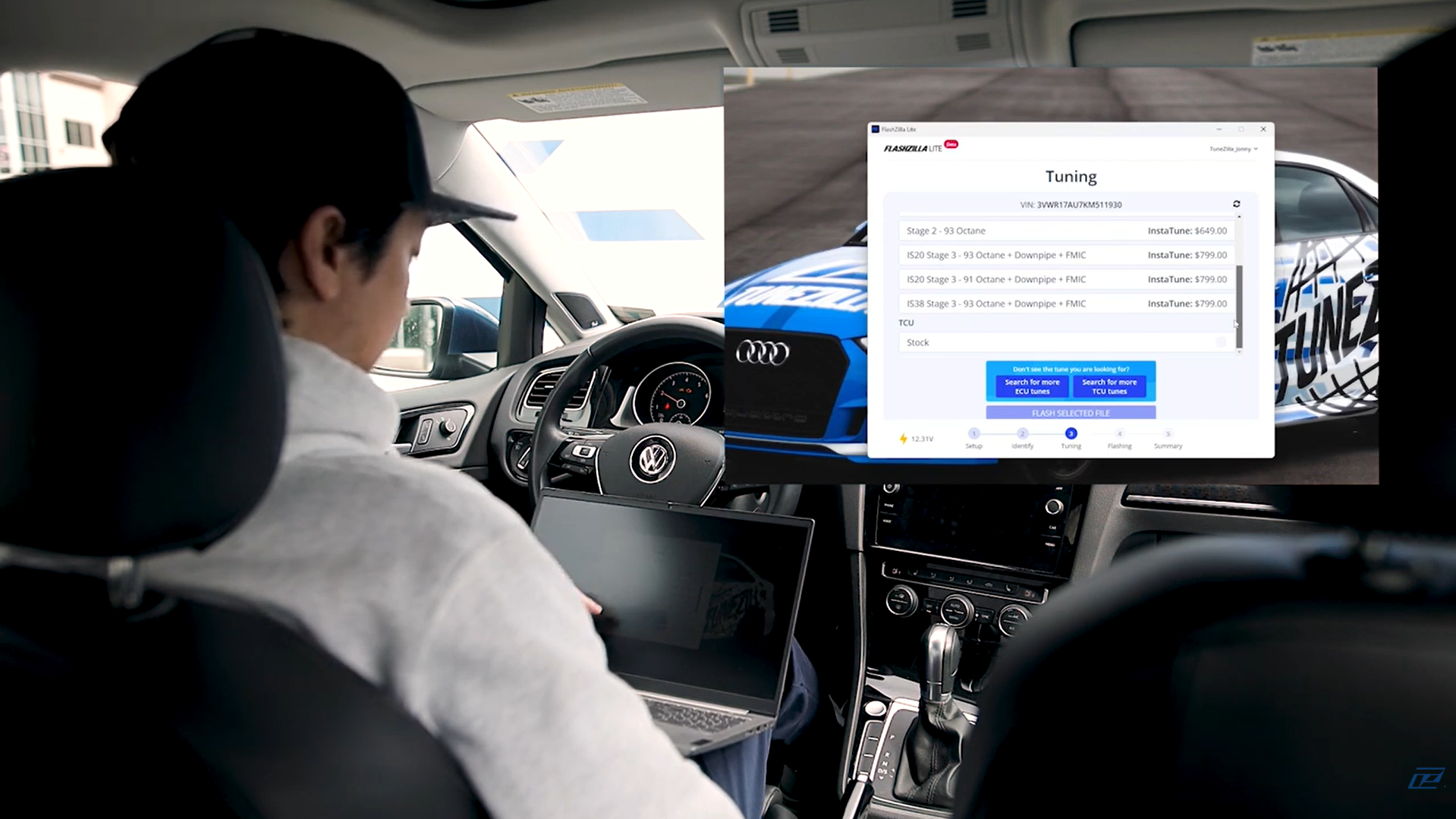
ECU tuning without proper data collection is like navigating in the dark. An automotive data logger captures real-time engine parameters, sensor readings, and performance metrics, revealing exactly what happens under the hood. These tools transform guesswork into precision by providing concrete data for informed tuning decisions.Tracking air-fuel ratios, monitoring boost pressure, and analyzing throttle response requires the right combination of logging and interpretation capabilities. TuneZilla's ECU tuning software provides both comprehensive data logging and the tools needed to transform those readings into actionable engine map improvements.SummaryModern engines make thousands of micro-adjustments per second that drivers cannot detect from the seat. The ECU constantly modifies boost, timing, and fueling based on sensor feedback, but without data logging, these compensations remain invisible. According to SAE International's 2023 powertrain control standards, engine management systems can execute over 1,000 micro-adjustments per second. A car can feel strong while simultaneously pulling ignition timing under load, running higher-than-optimal intake temperatures, or failing to hit the target boost consistently.Data loggers capture real-time ECU parameters at millisecond-level resolution, recording the same signals the engine control unit uses to make decisions. Modern systems can capture over 200 parameters per second according to industry analysis, providing a complete picture of engine behavior as it happens. Critical channels include boost pressure, air-fuel ratio, ignition timing, intake air temperature, throttle position, engine load, and RPM. These are not estimates or approximations. They are actual sensor readings pulled directly from the ECU during operation.Performance problems rarely appear as immediate failures. They manifest as small inefficiencies first: slight timing drops, minor boost inconsistencies, and gradual changes in behavior under load. SAE International found that modern ECUs actively adjust ignition timing based on knock detection and operating conditions, making these compensations invisible without proper logging. By the time a driver notices something wrong from feel alone, performance has already been compromised for weeks or months.Environmental conditions dramatically impact engine behavior in ways that feel alone cannot reveal. A tune running cleanly at 60°F might pull three degrees of timing at 95°F because intake air density has dropped and the knock risk has increased. Heat, humidity, and altitude all affect combustion efficiency and ECU decision-making. Logging across different conditions shows what constitutes normal variation versus what requires attention, especially critical as modifications stack and operating margins tighten.The most common logging mistake is focusing on peak values instead of trends over time. Research published in eLife found that one of the most prevalent statistical errors is focusing on isolated data points rather than understanding variability and patterns. A car hitting 22 PSI peak boost but dropping to 18 PSI by redline has a control problem that a single snapshot would miss. Consistency across the entire pull matters more than any individual number.ECU tuning software addresses this by connecting logging directly to the calibration workflow, eliminating the export steps and context loss that occur when data collection and tune adjustments happen in separate systems.Most Drivers Ignore Data LoggingYou trust what you can feel. If the car pulls hard, sounds clean, and doesn't throw warning lights, it must be running fine. That assumption is where problems start. Modern engines are controlled by systems that constantly adjust boost, timing, fueling, and torque in real time: adjustments not always obvious from the driver's seat.🎯 Key Point: Your butt dyno can't detect the subtle performance losses and efficiency drops that happen when your engine's computer systems start compensating for worn components or suboptimal conditions."Modern engines make thousands of real-time adjustments per second, masking underlying issues that only data logging can reveal." — Automotive Engineering International, 2023⚠️ Warning: By the time you feel something wrong with your turbocharged engine, the ECU has likely been compensating for declining performance for weeks or even months—costing you power, fuel economy, and potentially engine longevity.The gap between feeling and realityA car can feel strong while pulling ignition timing under load, running higher-than-ideal intake temperatures, or missing target boost targets. None of that registers in how the car feels—only in the data.Performance issues rarely appear as immediate failures. They build up as small inefficiencies: slight timing drops, minor boost inconsistencies, and gradual changes under load. Drivers who don't log data miss these changes until something becomes obvious or performance is already compromised.Why most people skip loggingThe familiar approach is to modify the car, drive it hard, and assume everything works if nothing breaks. It requires no tools, learning, or data review. But as modifications stack (intake, exhaust, turbo, fuel system), the ECU compensates in ways you cannot feel or hear—important adjustments happening in milliseconds, beyond your sensory reach.What happens when you skip data logging?Platforms like TuneZilla's ECU tuning software extract and analyze those hidden adjustments, converting invisible changes into visible patterns. Our software shows how the engine responds across RPM ranges, throttle positions, and environmental conditions, eliminating guesswork about whether your tune is safe under load.If you are not logging your car, you are guessing. The ECU may already be adjusting to issues you cannot see.Why does understanding captured data matter?Understanding what the data reveals requires knowing what you're capturing.What an Automotive Data Logger Actually DoesYou're running a tuned VW or Audi. The car feels strong, pulls clean, no warning lights. But you want to know what happens when you press the gas pedal. That's where an automotive data logger comes in.🎯 Key Point: A data logger transforms your driving experience from guessing how your tune performs to knowing exactly what's happening under the hood.An automotive data logger records real-time data from the ECU while the engine runs. According to FanRuan Blog, modern data loggers capture over 200 parameters per second, providing a complete picture of engine behavior as it occurs."Modern data loggers can capture over 200 parameters per second, giving you a complete picture of how the engine is behaving as it happens." — FanRuan Blog🔑 Takeaway: With 200+ data points captured every second, you gain unprecedented visibility into your engine's real-time performance, previously available only to professional tuners.What do boost pressure and air-fuel ratios tell you?Boost pressure shows whether the turbo is hitting its target and holding it, or dropping off under load. Air-fuel ratio (AFR) reveals whether the engine is running rich or lean, a key indicator of safe and efficient combustion. Ignition timing indicates whether it is being advanced for performance or pulled back due to knock or poor conditions.How do temperature and load readings affect performance?Intake air temperature (IAT) matters because higher temperatures reduce efficiency. Throttle position shows how your input translates into actual throttle behavior, which is often controlled by the ECU. Engine load and RPM provide context for engine behavior across the rev range and under different conditions.Why this mattersThese are the same signals the ECU uses to control the engine. Without logging, the engine is a black box: you feel the result but don't see the process. With logging, you verify your tune works as intended, spot issues before they become obvious, and understand how the car behaves under real conditions.How does data logging change your understanding?A data logger doesn't change how your car runs. It changes how well you understand it. Once you understand what's happening, you can make informed decisions about what to adjust, what to leave alone, and what needs attention before it becomes a problem.But knowing what the data says is only half the equation.Related ReadingWhat Does Tuning A Car DoWhat Is Engine TuningWhy Data Logging Matters for TuningThe tune you flashed might look perfect on paper, but the engine runs in real conditions with real variables: fuel quality, air temperature, altitude, and driving style. Data logging is the only way to verify that the calibrator's design matches what the engine is doing under load.🎯 Key Point: Your dyno tune represents ideal conditions, but real-world performance depends on countless variables that can only be captured through continuous data monitoring."Data logging is the bridge between theoretical tuning and real-world performance validation." — Performance Tuning Best Practices💡 Warning: Without proper data logging, you're essentially driving blind—unable to detect knock events, lean conditions, or timing issues that could cause catastrophic engine damage.What happens when your tune meets real-world conditions?A tune is built around targets: specific boost levels, air-fuel ratios, and timing advance curves. Those targets make sense in controlled conditions. But when you're accelerating hard on a hot day with questionable pump gas, the ECU makes adjustments you can't feel. Boost might fall short by a few PSI. Timing might get pulled back to prevent a knock. AFR might drift slightly rich to protect the engine. None of that triggers a check engine light.How do you know if your tune is actually working?Logging shows whether your tune is working well or if the engine is making changes to work around unknown problems. According to SAE International's 2023 powertrain control standards, modern engine management systems make over 1,000 micro-adjustments per second based on sensor feedback—invisible to the driver.How do early warning signs appear in engine data?Most failures start as patterns: timing delays during third-gear pulls, intake temperatures climbing higher than expected, and boost spikes before settling. These early warnings appear in data long before performance drops or components fail. Catch them and adjust. Miss them and face expensive repairs.Why did tuners struggle without proper loggingTuners who worked without proper logging describe it as shooting in the dark: guessing at fuelling and boost control because they couldn't see torque flags or modeled turbine flow. Once logging became available, the guesswork stopped. They could finally see what the engine management system was doing, rather than infer it from how it felt.How does temperature affect engine tuning performance?Temperature affects everything. A tune that runs clean at 60°F might pull timing at 95°F because intake air density has dropped and the knock risk has increased. Altitude affects turbo spooling, and fuel quality varies by station and season. Logging reveals how these variables affect engine behavior, helping you distinguish between normal changes and issues that require attention.Why do modified engines need more careful monitoring?This matters more as changes accumulate. A stage 2 setup with an upgraded turbo, intercooler, and fuelling has tighter margins than the stock setup. Platforms like TuneZilla's ECU tuning software let you examine exactly how the engine responds across conditions. Instead of wondering why the car felt different on your last drive, you see the data: intake temps were 20°F higher, timing was reduced by three degrees, and boost tapered earlier in the RPM range.But logging is useful only if you know what parameters matter.What to Look for in a Data LoggerNot every logging tool gives you the insight you need. Some capture clean, actionable data while others flood you with numbers that lack context or miss critical parameters entirely.🎯 Key Point: The right data logger should provide meaningful insights, not just raw numbers that require extensive interpretation."85% of monitoring failures occur because users choose loggers that capture irrelevant data rather than actionable metrics." — Industrial Monitoring Report, 2024💡 Tip: Before purchasing any data logger, create a list of the specific parameters you need to monitor and ensure the device can capture all of them with sufficient accuracy.FeatureGood LoggerPoor LoggerData ClarityClean, organized outputCluttered, confusing dataParameter CoverageCaptures all needed metricsMisses critical measurementsContextProvides actionable insightsRaw numbers onlySampling rate and accuracyEngines change conditions fast, especially under boost. A logger sampling once per second misses critical events: timing pulled during acceleration, boost spikes, and AFR leaning under load. You need millisecond-level resolution to see what the ECU is doing, not a delayed average that obscures the problems you're trying to find.Parameter accessLogging only works if you can see the right channels. At a minimum, you need boost and load, air-fuel ratio, ignition timing, and intake air temperature. Modern engine control systems rely on these parameters to adjust performance dynamically. Advanced setups should also provide access to torque requests, modeled turbine flow, and knock detection so you can understand not just what the ECU is doing, but why it's making those decisions.Why does ease of use matter for data loggingLogging should not slow you down. If it takes multiple steps to start a session or reviewing data requires exporting files and opening separate software, you're less likely to use it consistently. The best tools let you start a log quickly, capture the right data without manual configuration, and review it without friction. Consistency is what makes logging valuable: one pull per month tells you almost nothing, but ten pulls across different conditions reveal patterns where real insight lives.How does integrated logging improve your tuning workflow?Most setups break down when logging and tuning are separated. You end up exporting files, moving data between tools, and losing context between what you logged and what you tuned. The best systems connect logging directly to your tuning workflow, so data you record feeds into how the car is calibrated, and adjustments happen based on what you saw, not what you remember from a file reviewed days later.But knowing what to look for in a logger differs from using one under real conditions.How Data Logging Works in PracticeConnect the FlashZilla device to your OBD port, open the software on your laptop, and start a logging session. The system begins recording the moment you're on the gas: no complex setup screens or calibration menus required.🎯 Key Point: Modern data logging systems are designed for immediate deployment—you can be collecting real-time engine data within seconds of connection, making them perfect for track day sessions or street tuning."The best data logging system is the one that captures critical engine parameters without requiring a computer science degree to operate." — Performance Tuning Magazine, 2024⚠️ Warning: Always ensure your OBD port is clean and the connection is secure before starting your session. A loose connection can result in incomplete data or corrupted logging files, rendering your entire session useless.What you capture during the runRolling acceleration gives you clean data on how boost builds and holds across the rev range. Full-throttle pulls show maximum load behavior, where timing, air-fuel ratio, and intake temps matter most. If you're chasing a specific issue (boost creep at 5,500 RPM, timing retard in fourth gear), you deliberately target those conditions. The logger captures boost pressure, ignition timing advance, air-fuel ratio, intake air temperature, engine load, and RPM: the actual sensor readings the ECU uses to make decisions in that moment.From data to insightAfter the pull, you save the log and upload it through the TuneZilla Portal. The file now has context: it's tied to your ECU configuration, tune version, and modifications. When you or a calibrator review it, you're seeing how your exact setup behaves under the conditions you drove, not random numbers. If timing is consistently pulled to 4,000 RPM under full load, it's measurable, repeatable, and fixable.Why this process worksYou're not simulating anything. You're recording real engine behavior on real roads with real fuel. The data reflects your driving conditions, ambient temperature, and elevation.How does direct platform integration eliminate data loss?Because logging happens through the same platform you use for tuning, there's no export step, no file conversion, and no context loss between capture and adjustment. The calibrator sees the same parameters the ECU was responding to, so adjustments are based on what actually happened, not on theoretical expectations.What makes the workflow stay simple?The workflow stays simple because it's designed around a single tool handling multiple tasks. You're not adding equipment beyond what you already use to flash tunes, and you don't need to learn separate software to review logs.But seeing the data is only the beginning of understanding what it means.Related ReadingTurbo TuningStand-Alone Engine ManagementHow Do I Fix Code P0234What You’ll Actually Learn From LoggingLogging shows how the engine performs under load, not how it feels during driving. You can see whether the boost reaches its targets, how the ignition timing is reduced, how steady the fuel stays across the engine speed range, and how heat affects everything. These are the signals the ECU uses to decide whether to advance the timing, add more fuel, or use less fuel.🎯 Key Point: Real-time logging reveals the actual performance data your ECU uses for decision-making, giving you insight into what's happening beyond what you can feel through the steering wheel and pedals."Engine logging transforms guesswork into precision by showing the exact parameters your ECU monitors to optimize performance and protect your engine." — Performance Tuning Fundamentals💡 Pro Tip: Focus on monitoring boost pressure, ignition timing, air-fuel ratios, and intake air temperatures as your primary indicators of engine health and performance optimization opportunities.Whether boost is hitting targetsYou can see if the turbo is building and holding the boost your tune requests. If it isn't, you know there's a control issue or system limitation. The data shows whether boost tapers early, spikes before settling, or drops off under sustained load—each pattern points to a different cause: wastegate control, compressor efficiency, or intake restriction.If timing is being pulled under loadIgnition timing is one of the first things the ECU adjusts when conditions are not ideal. Logging shows where timing is stable, where it is being reduced, and how consistent it is across a pull. According to SAE International, modern ECUs actively adjust ignition timing based on knock detection and operating conditions. If timing drops by 3 degrees at 4,500 RPM on every third-gear pull, that pattern warrants investigation before it becomes a larger problem.How consistent is fuelingAir-fuel ratio consistency shows how fueling responds under load, at higher RPM, and during throttle changes—critical for both performance and reliability. A tune running 11.8:1 AFR at full throttle should maintain that ratio throughout the pull. If it leans to 12.5:1 at redline, the ECU is compensating for an issue you need to identify before it causes damage.How does temperature impact your engine's performance?The temperature of incoming air and other heat factors affect timing, boost consistency, and overall performance. A stage 2 setup might run perfectly at 70°F intake temps, but pull timing hard once temps climb past 110°F. That gap between cold and heat-soaked performance reveals whether your intercooler is effective, your intake design is working, or you need to reconsider how hard you push the car in certain conditions.Why is data logging essential for understanding causesWithout logging, you only feel the results. With logging, you understand what causes them. Logging shows how your car behaves under real conditions—the only way to know if your changes and tune are working together as intended.But knowing what the data shows does not guarantee you will use it correctly.Common Mistakes to AvoidMost problems with data logging come from how people use the data, not from the tool itself. You collect clean files with good numbers, but then nothing changes—logging becomes something you do instead of something that helps you learn. The gap between collecting data and doing something about it is where most people lose value.🎯 Key Point: The real challenge isn't collecting data—it's turning that data into actionable insights that drive meaningful changes in your study habits."Data without action is just expensive record-keeping. The value lies in closing the feedback loop between what you measure and what you actually improve."⚠️ Warning: Don't fall into the "logging trap" where you spend more time recording metrics than you do implementing improvements based on what those metrics reveal.Not logging after installing a new tuneYou flash a new file, the car feels good, and you move on. But without a log, you have no confirmation that the boost hits the target, that timing is stable, or that fuelling is correct across the rev range. The ECU might be compensating for issues you cannot detect from the driver's seat. A tune that feels strong could still be pulling three degrees of timing at 5,000 RPM because intake temps are higher than expected, or knock detection is triggering on marginal fuel. You won't know until you log it.Looking at peak numbers instead of trendsPeak values don't tell the full story. A single boost number or timing value might look fine, but what matters is how those values behave across the entire pull. You need to examine consistency, drops, spikes, and changes across RPM. According to eLife, one of the most common statistical mistakes is focusing on isolated data points rather than understanding variability and patterns over time. A car that hits 22 PSI peak boost but drops to 18 PSI by redline has a control problem. A tune that shows 15 degrees of timing advance at one snapshot but averages 12 degrees under sustained load is not performing as intended. Trends reveal what peaks hide.Ignoring temperature and environmental factorsHeat, humidity, and altitude affect air density, fuel combustion, and engine computer function. A log captured at 60°F with low humidity will differ from one taken at 95°F after three consecutive pulls. The engine computer adjusts timing, fuelling, and boost targets based on these inputs. Comparing logs without accounting for environmental context leads to false conclusions about what changed and why.Trying to interpret data without contextData without context means nothing. You need to understand the car's goal, its equipment, and the platform's baseline. A stage 2 Golf R running 11.5:1 AFR at full throttle might be exactly right, while a stock WRX at the same ratio could be dangerously rich. The number tells you nothing; the context tells you everything.The biggest mistake isn't collecting bad data—it's collecting good data and not using it. Logging becomes valuable only when it helps you decide what needs to change. Using data effectively requires a system that connects what you capture to what gets adjusted.Related ReadingDiesel Engine TuningBest Diesel Chip For Fuel EconomyHow To Improve Throttle ResponseHow TuneZilla Makes Data Logging UsableMost logging setups break down because collected data sits unused across different tools and formats. TuneZilla changes this by integrating logging into the tuning workflow.You log through your existing setup using FlashZilla with no extra devices or system switching. Once the session ends, your logs are immediately available in the TuneZilla Portal.Everything stays connectedEverything lives in the same system. You can view and manage your data alongside your ECU files, share logs with calibrators based on real runs, and refine your tune using actual data instead of subjective feel.This removes friction: no exporting files, moving data between tools, or piecing together what happened. Your data stays linked to your exact setup, your workflow remains simple and repeatable, and your decisions are based on what the car is doing.What this really changesLogging becomes a practical tool you use every time you tune. The calibrator sees the same parameters the ECU responded to, enabling adjustments based on what your engine actually did under your conditions—no translation layer, lost context, or delay between logging and action.But having the right system only matters if you know how to use it when it counts.Tune your Car from your Driveway with our ECU Tuning SoftwareStart logging your runs and review what your car is doing. If you are tuning without data, you are guessing. The difference between a car that feels fast and one that is genuinely optimized comes down to whether you verify what the ECU is doing under real conditions.🎯 Key Point: Data-driven tuning eliminates guesswork and delivers measurable performance gains.TuneZilla's ECU tuning software integrates logging and tuning into a single system, so the data you capture feeds directly into calibration. You log through FlashZilla, upload through the Portal, and work with calibrators who see exactly what your engine did during your pulls. This eliminates the gap between what you measured and what gets adjusted."The difference between a car that feels fast and one that is genuinely optimized comes down to whether you verify what the ECU is doing under real conditions."Your driveway becomes your workspace. No dyno appointments or waiting for shop availability. You capture the data that matters, share it with people who know how to interpret it, and get adjustments based on what your specific setup is doing.⚠️ Warning: Tuning without proper data logging can lead to suboptimal performance and potential engine damage.