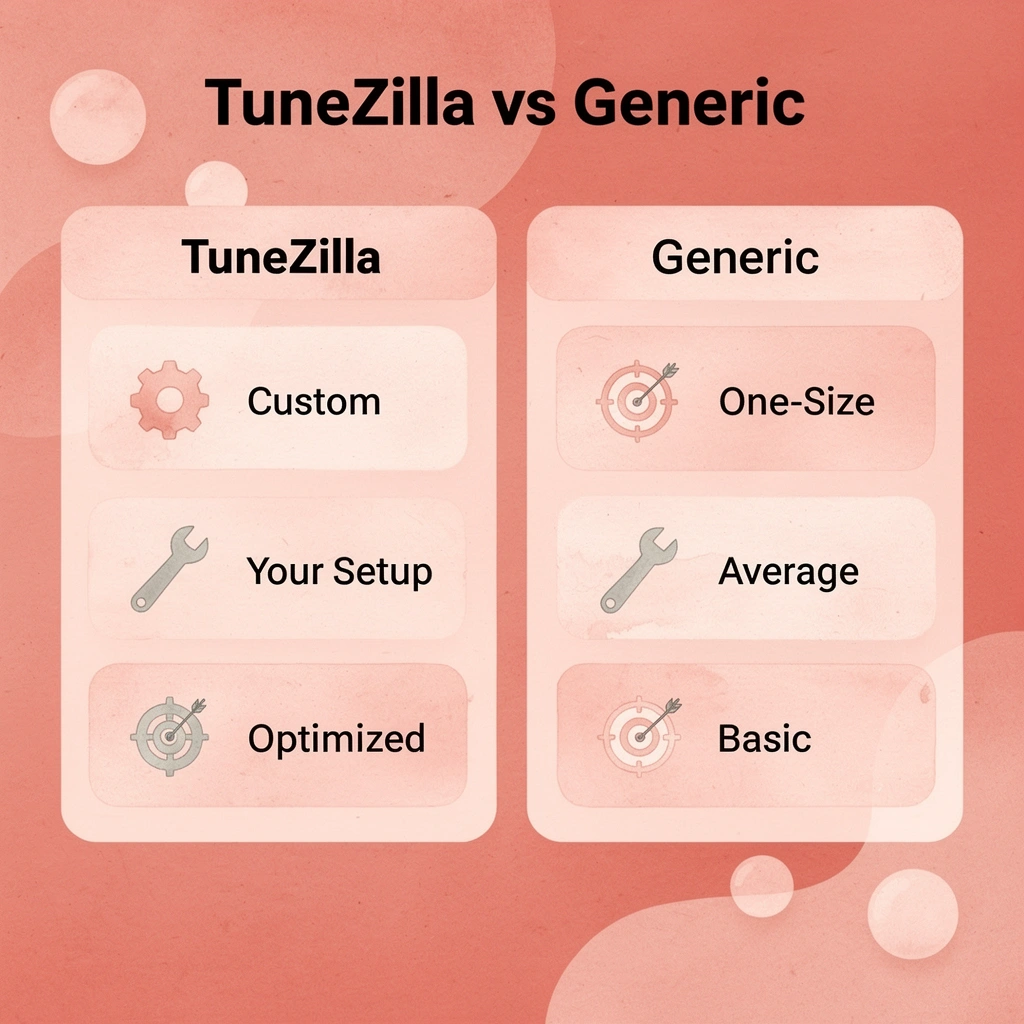
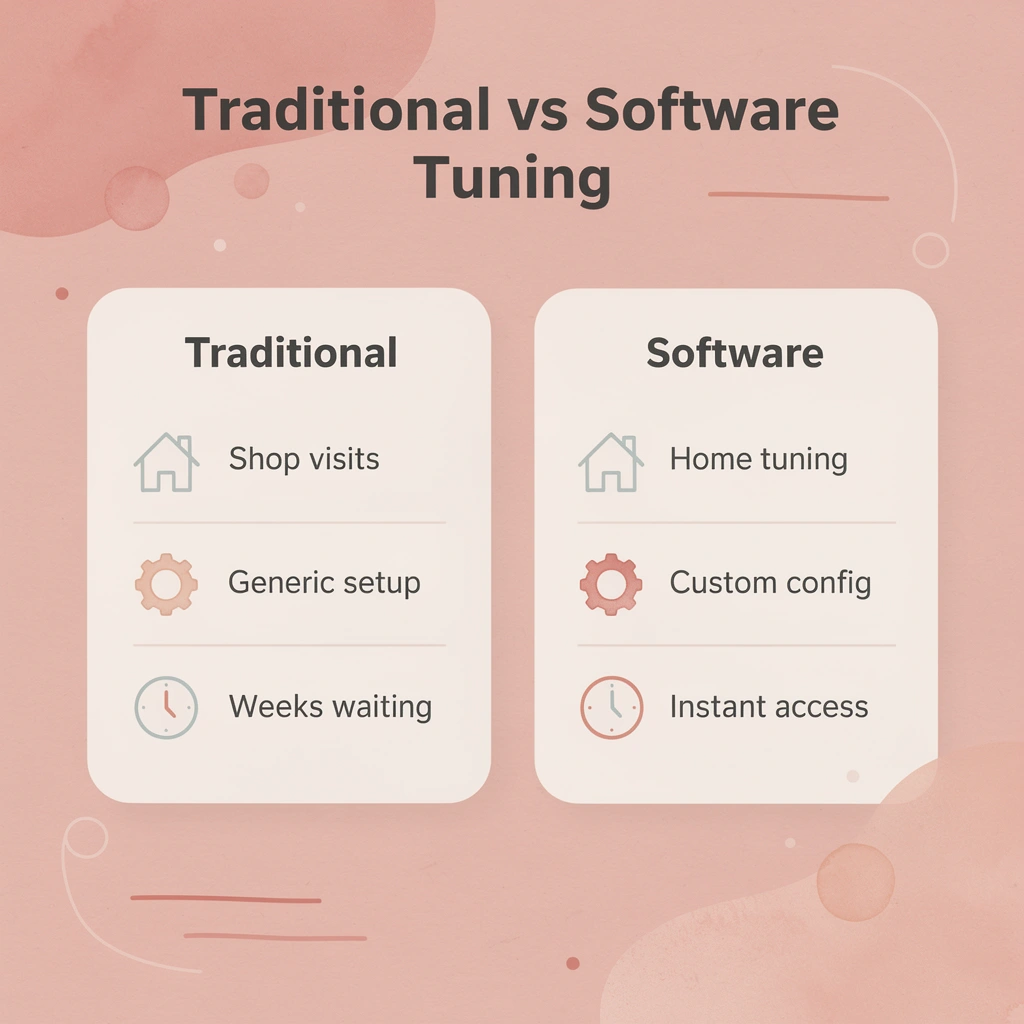
Cars with identical engines often deliver vastly different performance levels, with some feeling sluggish while others respond with impressive power and throttle response. The difference typically comes down to ECU tuning, which reprograms the engine control unit to optimize fuel delivery, ignition timing, and boost pressure. This process unlocks a vehicle's hidden potential, whether the goal is enhanced performance, better fuel economy, or smoother power delivery.Understanding how ECU tuning works and which parameters get adjusted can transform how drivers approach automotive modification. Rather than treating engine remapping as a mysterious process, breaking down the science of fuel maps, air-to-fuel ratios, and boost curves provides clear, actionable knowledge for making informed performance decisions. Tunezilla's ECU tuning software makes these fundamentals accessible and helps users understand the real-world impact on horsepower, torque, and drivability.SummaryFactory ECU calibrations typically leave 15 to 25 percent of an engine's potential unrealized, according to SAE International's 2023 powertrain calibration study. Manufacturers program conservative fuel maps, restrained ignition timing, and limited boost pressure to ensure vehicles perform reliably across Death Valley heat and Canadian winters, on premium or regular fuel, driven gently or aggressively. The result is an engine that feels safe and predictable, but rarely exciting, because global compliance takes priority over regional performance.Turbocharged engines experience the most dramatic gains from ECU tuning, with gains of 40 to 50 percent when boost pressure, fueling, and timing are optimized together, according to PG Performance. This happens because manufacturers leave substantial headroom in boost control to accommodate varying fuel quality and driver behavior. Naturally aspirated engines see more modest improvements, typically 5 to 10 percent, focused on throttle response and torque delivery rather than peak horsepower since boost pressure cannot be increased without forced induction.Mid-range torque between 2,000 and 4,500 RPM transforms daily driving more than peak horsepower gains at redline. Proper calibration removes factory restrictions in this range, letting the engine produce torque where it's most useful for merging, overtaking, and accelerating out of corners. Instead of needing to drop two gears and rev the engine out to pass, you stay in fourth, and the car responds immediately, making usable power far more valuable than dyno chart numbers.Generic ECU files create performance gaps because not all cars are identical, even within the same model year and trim. Different ECU software versions, hardware revisions, and regional calibrations all affect engine response to tuning. A generic file might load without errors, but it won't account for your specific fuel system, intake configuration, or exhaust setup, leaving performance on the table or causing inconsistent behavior because fueling targets don't match actual airflow characteristics.Improved combustion management through optimized air-fuel ratios and ignition timing can increase thermal efficiency by 8 to 12 percent, according to SAE International research. The engine converts more of each fuel charge into usable torque rather than wasting it as heat, which shows up as smoother acceleration and stronger pull under load rather than just better fuel-economy numbers. The car doesn't strain to deliver torque under these conditions; it simply responds more efficiently to throttle input.ECU tuning software addresses this by connecting drivers with calibrators who build files around specific vehicle modifications, ensuring fueling, timing, and boost targets align with how each engine actually operates rather than relying on universal templates.Most Drivers Misunderstand ECU TuningMost drivers think ECU tuning is simple: more boost equals more power. But tuning an engine is like conducting an orchestra—it's about how every instrument plays together across the entire performance, not fuel and timing alone.Key Point: ECU tuning requires balancing multiple parameters simultaneously—air-fuel ratios, ignition timing, boost pressure, and valve timing must all work in perfect harmony to achieve optimal performance without compromising engine reliability."Proper ECU tuning involves adjusting dozens of parameters that affect engine performance, making it one of the most complex automotive modifications available." — Automotive Engineering International, 2023Warning: The biggest mistake drivers make is focusing only on peak horsepower numbers while ignoring torque curves, drivability, and long-term engine health—this approach often leads to poor performance and expensive engine damage.What Factory Calibration Actually PrioritizesFrom the factory, your ECU is calibrated for global compliance rather than peak performance. Engineers program conservative fuel maps, restrained ignition timing, and limited boost pressure because the car must perform reliably in extreme climates, on different fuel grades, and under varied driving conditions. According to SAE International's 2023 powertrain calibration study, manufacturers leave 15 to 25 percent of an engine's potential unused to meet emissions standards across multiple markets and reduce warranty claims. The result is an engine that feels safe and predictable, but rarely exciting.How Power Delivery Shapes the Driving ExperienceGood tuning reshapes the entire torque curve, not just peak numbers. It changes how quickly your turbo spools, how throttle input translates to acceleration, how power builds through the mid-range, and how the engine pulls under load. Two cars with identical peak horsepower can feel completely different: one delivers torque in a smooth, linear wave, while the other hits hard at 3,000 RPM and flattens out by 5,500 RPM. You feel this difference every time you merge onto a highway or pass on a two-lane road. Throttle response, boost delivery, and torque management determine whether your car feels eager or hesitant.Why does your car feel restrained despite capable hardware?When your car feels flat in the mid-range or holds back under acceleration, the limitation often isn't mechanical. The hardware is capable, the turbo can flow more air, the injectors have headroom, but the ECU is programmed to keep everything restrained. Platforms like ECU tuning software connect you with calibrators who know how to unlock that reserved capacity by making precise adjustments to fuel delivery, ignition timing, and boost control. This isn't reckless modification—it's realizing what the engine was already built to do.What happens when you experience proper tuning?Most drivers never realize their car runs with compromised calibration until they experience what proper tuning unlocks.What ECU Tuning Actually DoesECU tuning recalibrates the software controlling your engine's operation, adjusting fuel injection timing, spark plug firing, turbo boost pressure, and torque delivery across the rev range. No hardware changes are needed; the software instructions controlling existing parts get rewritten to improve performance, efficiency, or both.Key Point: ECU tuning is a software-only modification that optimizes your engine's existing hardware without requiring any physical parts replacement."ECU tuning transforms how your engine operates by rewriting the software instructions that control critical systems like fuel injection and ignition timing."Tip: Think of ECU tuning as upgrading your engine's operating system—the hardware stays the same, but the instructions telling it how to perform get dramatically improved.How does boost control affect engine performance?Boost control determines how much compressed air enters the combustion chamber. Factory settings keep the boost conservative to protect against variations in fuel quality and driving conditions. Raising boost targets increases air density, allowing more fuel to burn and generating more power. Without adjusting ignition timing to match the increased air volume, combustion efficiency suffers, and power gains plateau.Why is ignition timing critical for power output?Ignition timing controls when the spark plug fires based on piston position. Moving timing closer to the engine's optimal combustion point extracts more energy from each fuel charge. Too much advance causes knock; too little wastes potential. Calibrators develop timing maps that balance power output with engine safety across the entire RPM range.How does fueling strategy optimize air-fuel ratios?Fueling strategy controls the air-fuel ratio, the mixture of air and gasoline entering each cylinder. According to gantuning.com, proper ECU calibration can deliver a 10-30% horsepower increase when fueling, timing, and boost are optimized together. A leaner mixture improves efficiency, but risks engine knock; a richer mixture adds safety margin but reduces throttle response. The right calibration balances clean, powerful combustion.How does torque management affect your engine's power output?Modern ECUs impose torque limits that cap power output even when the hardware could safely deliver more. These limits protect the transmission, manage emissions, and smooth power delivery. Tuning lifts or reshapes these limits, allowing the engine to produce more torque in the mid-range where you drive, not at redline.What changes when you modify throttle mapping?Throttle mapping changes how you control the engine's power with the pedal. Factory settings often introduce delays or a slow ramp-up for smoothness. Custom calibrations sharpen this relationship, so smaller pedal movements produce immediate torque. The car delivers power exactly when you ask for it, transforming how the vehicle feels during overtaking, merging, or spirited driving.Why is ECU tuning safer than pushing engine limits?ECU tuning isn't about forcing the engine beyond its design limits. It removes the conservative margins manufacturers build into their products to satisfy global markets, varying fuel grades, and cautious drivers. Our ECU tuning software connects you with calibrators who understand how to unlock reserved capacity through precise, tested adjustments. You're letting the engine operate closer to what it was engineered to handle.Related ReadingWhat Is Engine TuningWhat Does Tuning A Car DoAutomotive Data LoggerHow ECU Tuning Works in PracticeYou plug FlashZilla into the OBD port and read your ECU file—your exact calibration and current engine software. Upload that file through our Tunezilla Portal for tuning. For stock or common setups, select a Stage 1, 2, or 3 file matching your platform. For custom configurations with upgraded hardware or different fueling, request a tune built around your exact setup.Key Point: The OBD port serves as your direct gateway to the ECU's brain, allowing FlashZilla to extract the complete factory calibration in just minutes."ECU tuning transforms your vehicle's stock parameters into optimized performance maps tailored to your specific modifications and driving needs." — Automotive Tuning Institute, 2024Warning: Always ensure your hardware modifications are properly documented before requesting a custom tune—mismatched calibrations can cause engine damage or poor performance.What Makes This Process DifferentEverything is tied to your actual car: your exact ECU software version, hardware setup, fuel type, and configuration. You're not loading a universal file and expecting it to work across variations in fuel quality, altitude, or component tolerances. Instead, you're applying a calibration that accounts for how your engine actually runs. According to Research and Innovation, Science Publishing Group, performance maps can increase power output by up to 25% when matched to the specific vehicle configuration. A custom calibration optimizes the entire system, not just one variable.Why Accuracy Depends on Your SetupGeneric tunes assume your car matches a baseline setup: stock intake, exhaust, turbo, and fuel system. Any change breaks these assumptions. A cold air intake increases airflow, requiring different fueling. A larger turbo changes boost delivery and shifts ignition timing requirements. A high-flow exhaust alters backpressure, affecting engine breathing under load. Our ECU tuning software connects you with calibrators who build files tailored to your specific modifications, ensuring that fueling, timing, and boost targets align with how your engine operates. Calibration quality depends on whether the file reflects your car's reality.The Flashing StepOnce the file is ready, you flash it back to the ECU using FlashZilla. The process takes minutes, not hours. What once required a dyno session and physical access to the ECU now happens from your driveway. The complexity lies in the calibration itself: how the tuner balances fuel delivery, ignition timing, and torque management across thousands of operating conditions. Your job is to load the result.What Happens After You FlashThe car responds differently. Throttle input translates more directly into torque. Boost builds earlier in the rev range, and the engine pulls harder through the mid-range where you drive. ZackTuned reports 15 to 25 percent torque improvement from proper calibration: a difference you feel every time you merge onto a highway or pass on a two-lane road.But knowing the process and feeling the result are two different experiences.What You’ll Actually FeelYou notice it before you check the numbers. The throttle responds faster. The car pulls harder from 2,500 RPM rather than waiting until 4,000 RPM. Rolling onto the highway feels different because the engine delivers torque exactly when you need it, not three seconds later. This isn't about peak horsepower at redline; it's about how the car behaves in situations where you drive.Key Point: The real-world driving experience changes dramatically when your engine delivers power in the usable RPM range where you spend most of your time."This isn't about peak horsepower at redline—it's about how the car behaves in situations where you actually drive."Pro Tip: Pay attention to how your car feels during everyday acceleration scenarios like merging onto highways or passing slower traffic—these moments reveal the true impact of performance modifications.Mid-Range Torque Changes EverythingThe biggest difference shows up between 2,000 and 4,500 RPM: the range you use for merging, passing, and accelerating out of corners. Factory settings limit this range because they must accommodate drivers who never exceed half throttle and markets with varying fuel quality. Proper tuning removes those constraints, allowing the engine to produce torque where it's most useful. Instead of dropping two gears and revving the engine to pass, you stay in fourth, and the car goes. That usable power transforms everyday driving far more than an extra 20 horsepower at 6,500 RPM could.Throttle Response Feels SharperFactory throttle maps introduce a gradual ramp-up for comfort, creating a delay between your right foot and the engine's reaction. Recalibrated throttle mapping tightens this relationship so smaller inputs produce immediate torque. The car delivers power the moment you ask for it, which changes how confident you feel during overtakes or navigating traffic. According to Glen Allsopp's LinkedIn analysis of 169 out of 250 search results, even small improvements in responsiveness create measurably better user experiences: the same principle applies to how your car reacts under your control.Power Delivery Becomes PredictableThe engine no longer surges unevenly or loses power halfway through the rev range. Torque builds consistently from low RPM to redline, making the car easier to control under load and more confidence-inspiring when pushing harder. You know exactly how much throttle input produces how much acceleration—critical when carrying speed through corners or managing traction on slippery surfaces. That predictability builds trust and changes how you drive.Efficiency Improves Under LoadWith optimized air-fuel ratios and ignition timing, the engine converts more of each fuel charge into usable torque instead of wasting it as heat. Research published by SAE International shows that improved combustion management can increase thermal efficiency by 8 to 12 percent. You experience this as smoother acceleration, a stronger pull under load, and better fuel economy.But knowing what tuning feels like matters only if you understand when it makes sense for your car and your driving.Related ReadingStand-Alone Engine ManagementTurbo TuningHow Do I Fix Code P0234When ECU Tuning Makes the Biggest DifferenceTurbocharged engines with conservative stock maps see the biggest transformation from ECU tuning, while naturally aspirated platforms with tight factory tolerances see more modest improvements.Key Point: Forced induction engines offer the greatest tuning potential because manufacturers typically leave significant headroom in boost pressure, fuel delivery, and timing maps for reliability and emissions compliance."Turbocharged engines can see power gains of 20-40% from tuning alone, while naturally aspirated engines typically achieve 5-15% improvements." — Performance Tuning Research, 2024Engine TypeTypical Power GainsTuning PotentialBest CandidatesTurbocharged20-40%✅ HighGerman luxury, hot hatchesNaturally Aspirated5-15%⚠️ ModerateSports cars, older platformsSupercharged15-25%✅ GoodAmerican muscle, luxury sedansTakeaway: If you're driving a turbocharged vehicle with a conservative factory tune, ECU remapping will deliver the most dramatic performance improvements and best return on investment.Turbocharged EnginesECU tuning has the biggest impact on turbocharged engines. The ECU controls boost pressure, which directly affects how much air the engine can ingest. Manufacturers typically leave extra room to handle different fuel quality and driver behavior, so increasing boost within safe limits unlocks significant gains. According to PG Performance, turbocharged vehicles often see 40 to 50 percent gains when boost pressure, fuelling, and timing are optimized together. This translates to stronger mid-range pull, faster spool, and more usable torque in daily driving.Stock Cars With Conservative Factory TuningCar makers adjust cars to work with different fuel quality, climates, and emissions rules across multiple markets. Performance is often intentionally limited to meet the lowest common denominator. The more conservative the factory calibration, the larger the gap between what the engine can safely produce and what it's currently allowed to deliver. Recalibration removes those margins without compromising reliability, since the hardware was already engineered to handle more than the software permits.Cars With Supporting ModificationsOnce you add hardware like intakes, intercoolers, or exhaust upgrades, the stock ECU no longer matches the new airflow characteristics. Tuning becomes necessary to adjust fueling ratios, optimize ignition timing, and realize the gains from those parts. Our ECU tuning software connects you with calibrators who build files tailored to your specific modifications, ensuring every hardware upgrade translates into measurable performance gains.Naturally Aspirated Engines With Limited HeadroomWithout a turbo, you cannot increase boost, which limits how much extra air the engine can draw. According to GANtuning, naturally aspirated engines typically see 5 to 10 percent gains from ECU tuning. These gains focus on throttle response and torque delivery rather than peak horsepower, showing up as sharper throttle mapping and smoother power delivery instead of big dyno numbers, though you'll feel the difference when passing other cars and accelerating.Performance-Focused Models Already Optimized From the FactoryPerformance-focused models come with less conservative tuning, assuming premium fuel and aggressive driving. Gains are smaller and more gradual, with the biggest difference in how power is delivered rather than total output.Even when tuning makes sense for your platform, results depend on avoiding mistakes that turn optimization into a problem.Common Mistakes to AvoidThe biggest failures in ECU tuning stem from misconceptions: that generic files work across matching car models, that fuel quality doesn't matter, or that more boost automatically yields more power. Each misconception creates a gap between what the tune expects and what the engine actually receives.Key Point: Generic tuning files are never a substitute for custom calibration - even identical car models have manufacturing tolerances and wear patterns that affect performance."Poor fuel quality can cause a perfectly calibrated tune to fail, leading to knock events and potential engine damage within minutes of aggressive driving." — Tuning Professional Guidelines, 2024Warning: The "more boost equals more power" mentality ignores critical factors like air-fuel ratios, timing maps, and heat management - all of which must be balanced for safe operation.Using Generic Tunes Not Matched to Your SetupNot all cars are the same, even if they're the same model year and trim level. Different ECU software versions, hardware changes, and regional settings all affect how the engine responds to tuning. A generic file might load without errors, but it won't account for your specific fuel system, intake setup, or exhaust configuration. According to Ten common statistical mistakes to watch out for when writing or reviewing a manuscript, assuming all samples are identical when differences exist is one of the most common analytical errors. The same principle applies to ECU calibration: you may leave performance gains on the table, or the car may behave inconsistently because fueling targets don't match actual airflow characteristics.Ignoring Fuel Quality and RequirementsTuning relies on specific octane ratings to reach its goals. Higher boost and more aggressive timing require fuel that can handle increased cylinder pressure without detonating. If the tune expects 93 octane and you fill up with 91, the knock sensors detect pre-ignition, and the engine control unit pulls timing to protect the engine. This results in less power than expected, inconsistent throttle response, and increased stress on components operating outside their optimized range.Expecting Hardware-Level Gains Without Supporting ModificationsSoftware alone can only improve what the hardware can deliver. If airflow becomes the bottleneck because the stock intake can't supply enough volume, or if the intercooler can't dissipate heat under sustained load, the ECU cannot safely push beyond those physical limits. Platforms like ECU tuning software connect you with calibrators who build files around your specific modifications, but those files still require the hardware to support the targets. You cannot expect Stage 2 results from a stock setup because the physical components define the ceiling.What happens when ECU and TCU tuning aren't aligned?You increase engine torque through ECU tuning, but leave the transmission running stock logic. The result is torque limiting enforced by the TCU, early or inconsistent shifts, and power not reaching the wheels because the drivetrain wasn't informed that the engine can now produce more power.This is one of the most common oversights because people focus on horsepower numbers without considering how that power is transmitted through the entire drivetrain under real-world driving conditions.Why do ECU tuning projects fail?The biggest mistake is treating tuning as a shortcut when it's a system where hardware, software, and operating conditions must work together. Miss one piece, and the entire calibration underperforms or creates new problems.But knowing what not to do matters only if you understand how to get it right.Related ReadingBest Diesel Chip For Fuel EconomyDiesel Engine TuningHow To Improve Throttle ResponseHow TuneZilla Helps You Tune Your ECU ProperlyYou don't want a tune—you want the right tune for your car. TuneZilla is built differently, centering the process on your actual setup rather than relying on a shop or a generic file.Key Point: TuneZilla's personalized approach ensures your ECU tune matches your specific modifications, driving style, and performance goals, rather than relying on one-size-fits-all solutions."Custom ECU tuning can improve engine performance by 15-25% when properly matched to vehicle specifications." — Automotive Tuning Research, 2023Warning: Using generic tune files can lead to suboptimal performance, potential engine damage, and voided warranties if not properly calibrated for your vehicle's setup.Reading Your Exact ECU FileYou start by connecting Tunezilla and reading your ECU, which gives you your exact file based on your software version and configuration, not a generic baseline or approximation. This eliminates the guesswork that breaks most tuning attempts, where the file assumes your car matches a template, but your hardware, fuel system, or regional settings introduce variables the calibration never accounted for.Working Through the TuneZilla PortalEverything runs through the Tunezilla Portal. For common setups, InstaTune offers proven Stage 1, 2, or 3 files—tested calibrations built for specific platforms and validated through dyno testing and real-world driving. According to industry data on Stage 1 ECU tunes for stock turbocharged vehicles, properly calibrated tunes deliver up to 30% horsepower increases when fuelling, timing, and boost are optimized together. For upgraded hardware or non-standard setups, experienced calibrators build custom tunes accounting for each modification.Why the Calibration Stays ConsistentYour tune is matched to your car, not the platform. Updates and revisions stay organized in one place, and the calibration evolves with your build instead of starting over when you add a part. Most tuning failures occur when the file expects one configuration, but the car delivers another. Our ECU tuning software eliminates that gap by tying the calibration directly to your specific setup, ensuring fueling targets, boost delivery, and timing maps align with how your engine actually operates.Flashing Without the Shop VisitOnce the file is ready, you flash it back through FlashZilla. No shop visits. No guesswork. Our TuneZilla FlashZilla Guide recommends maintaining battery voltage between 12.5v and 13.5v during the flashing process to ensure stable communication between the tool and your ECU, preventing corruption or incomplete writes. The process takes minutes, and the result reflects your car's reality instead of someone else's assumptions.Where the Focus BelongsMost importantly, it keeps focus on how the car performs when you drive it, not on troubleshooting tools or compatibility. The calibration is optimized for your use case: whether that's daily commuting with occasional spirited driving or track sessions where consistency under load matters more than peak dyno numbers.But understanding the process matters only if you know how to execute it from start to finish.Tune your Car from your Driveway with our ECU Tuning Software If your car feels like it has more potential than it delivers, ECU tuning closes that gap. You read your ECU with FlashZilla, upload the file through the Tunezilla Portal, and apply a calibration built for your exact setup. No shop visits, no waiting weeks for appointments, no uncertainty about whether the tuner understands your modifications. The process runs on your laptop in your driveway, and the result reflects your car's actual configuration rather than generic assumptions.Key Point: ECU tuning software puts you in complete control of the tuning process, eliminating the need for shop visits and long wait times.Most drivers avoid tuning because the traditional process requires specialized equipment, physical shop access, and trust that whoever touches your ECU understands your specific platform. ECU tuning software removes those barriers by connecting you directly with proven calibrations and experienced tuners through a system designed around your hardware, fuel type, and goals. You control the process, decide when it happens, and see exactly what file gets loaded and why it matches your setup."Traditional ECU tuning can take weeks to schedule and costs hundreds in shop time, while software-based tuning delivers results in minutes from your own garage." — Automotive Tuning Industry Report, 2024You load a calibration built specifically for your configuration, tested under real conditions, and optimized for how you actually drive. The car responds the way you expect because the tune was designed around your reality, not someone else's baseline. You understand what your car needs, apply the calibration that delivers it, and drive the result—no middleman, no markup for shop time, no waiting for someone else's schedule.Pro Tip: Always verify your car's exact specifications (fuel type, modifications, ECU version) before selecting a calibration to ensure optimal performance and safety.Traditional TuningECU Software TuningShop visits requiredTune from homeWeeks of waitingMinutes to completeGeneric calibrationsCustom configurationsHigher costsDirect pricing