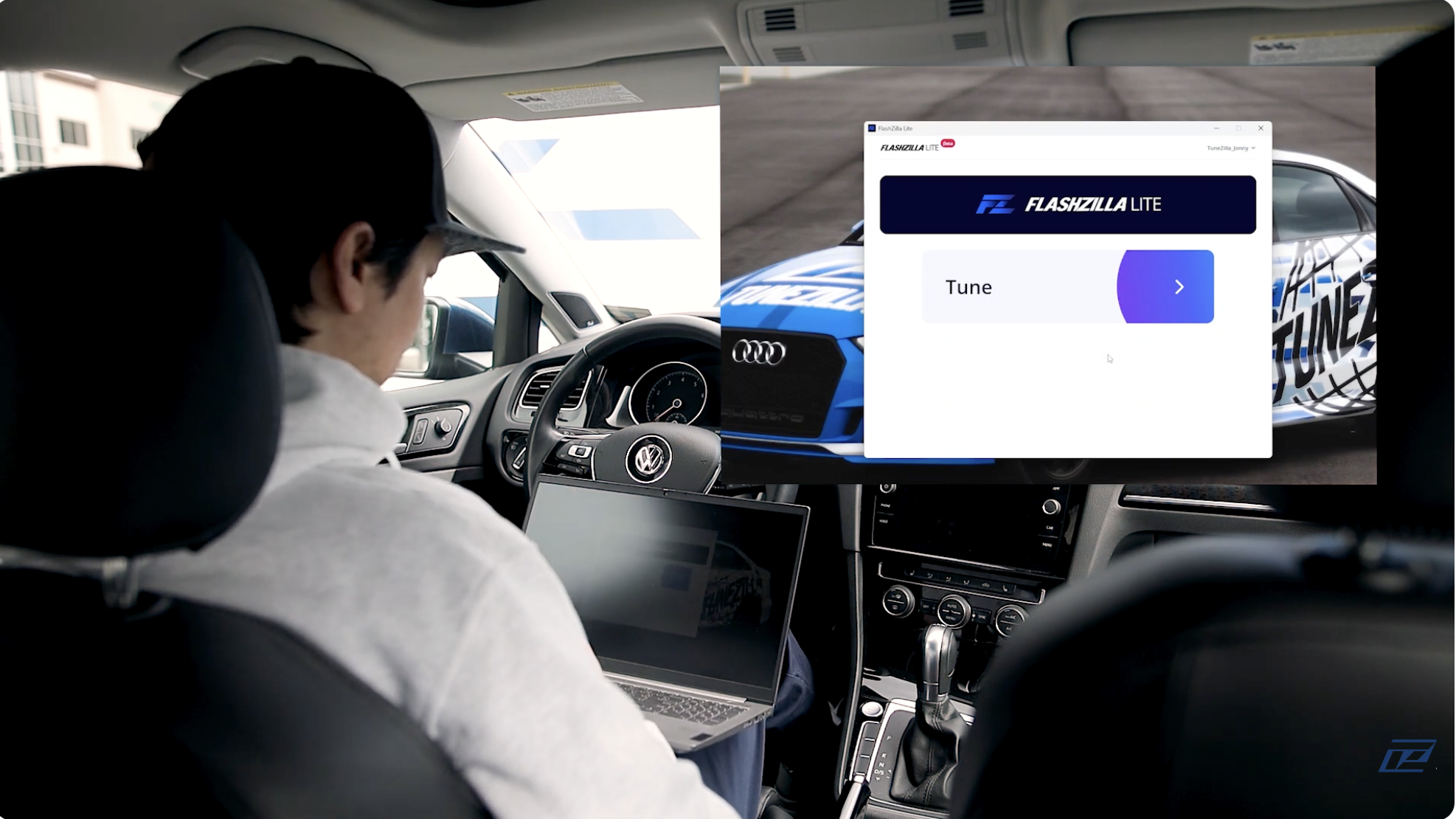
Modern vehicles rely on two critical computers to deliver optimal performance: the Engine Control Module (ECM) and the Transmission Control Module (TCM). These electronic control units work together to manage fuel injection, ignition timing, shift points, and torque converter operation. Understanding how to tune a car requires knowledge of how these modules communicate and coordinate to create the driving experience. Their precise calibration determines everything from throttle response to fuel efficiency.Proper tuning of these control modules can transform a vehicle's performance characteristics. The ECM and TCM contain thousands of parameters that can be adjusted to improve acceleration, shift quality, and fuel economy. Professional tuning unlocks the potential hidden within these factory settings, allowing drivers to customize their vehicle's behavior to match their specific needs and driving style. TuneZilla's ECU tuning software provides the tools needed to make these complex adjustments accessible to enthusiasts and professionals alike.SummaryModern vehicles don't operate from a single control module. The Engine Control Module manages fuel delivery, ignition timing, boost control, and torque output, while the Transmission Control Module decides shift timing, clutch engagement, and torque limits. These systems communicate continuously through torque-based control strategies, meaning the engine produces power based on what the transmission allows, not independently. When only one side of this conversation changes through tuning, the result is inconsistent power delivery, early upshifts, and hesitation between gears.Factory calibration synchronizes ECM and TCM parameters so the drivetrain behaves predictably under normal conditions. Once you modify the engine calibration without addressing the transmission control, the TCM continues to protect the drivetrain based on stock torque assumptions. Research from Bosch Automotive shows that modern powertrains rely on continuous data exchange between modules to manage torque converter lockup, shift pressure, and gear selection timing. A mismatch between what the engine produces and what the transmission expects creates the inconsistency drivers feel when one pull feels strong, and the next feels muted.Single-module tuning leaves performance on the table because the transmission intervenes based on outdated parameters. The ECM may produce 400 lb-ft of torque, but if the TCM is programmed to protect against 300 lb-ft, it will request torque cuts during shifts or upshift earlier than desired. According to ZF Friedrichshafen's 2022 research, modern automatic transmissions use adaptive shift strategies that degrade when torque feedback no longer matches programmed expectations. Dual calibration eliminates this gap by aligning both systems to the same performance baseline.Transmission behavior varies significantly between model years, even within the same platform. A 2018 Golf R TCM doesn't operate the same as a 2020 model, which is why VIN-specific calibration files matter more than generic templates. Faster and more precise clutch engagement in dual-clutch systems can reduce shift interruption time by up to 40%, making acceleration feel smoother and more continuous rather than segmented across gear changes.The difference between tuned and untuned systems shows up in how consistently power translates to the road. With only ECM tuning, drivers experience bursts of acceleration interrupted by torque reductions or early upshifts. With both modules calibrated together, the transmission holds gears longer under load, engages clutches more firmly, and stops cutting power mid-pull. Industry data on Stage 1 ECU tunes shows up to 30% horsepower increases are possible on stock turbocharged vehicles without hardware changes, but that power only delivers cleanly when the transmission is calibrated to handle it.ECU tuning software addresses this by calibrating both the ECM and TCM through a single workflow, synchronizing torque requests with shift logic so the engine and transmission respond to the same performance targets rather than conflicting assumptions.Most Drivers Think the Engine Runs the ShowYou open the hood, and everything points to the engine. More boost, sharper throttle response, better torque delivery. The assumption seems logical: tune the engine, and everything else will follow.Key Point: That's only half the picture.Modern vehicles rely on multiple control modules communicating in real time. The engine control module (ECM) determines how your engine makes power, while the transmission control module (TCM) determines how that power gets delivered to the wheels. These systems talk constantly, adjusting to each other's inputs based on factory calibration."Modern vehicles use multiple control modules that must communicate seamlessly for optimal performance delivery."Warning: Focusing only on engine tuning while ignoring transmission calibration leaves significant performance gains on the table and can create drivability issues.Why does the factory balance get disrupted?From the factory, your ECM and TCM work together to set torque limits, shift points, and throttle mapping, ensuring smooth, predictable driving. Once you tune the engine, that balance breaks.How do you feel this disconnect while driving?The ECM requests more torque, earlier, and more forcefully than factory programming anticipated. However, your TCM still operates on original logic, protecting the drivetrain and reducing load in situations the factory deemed necessary.You feel the problem when the car hesitates between gears, shifts up earlier than expected, or cuts power when you want more. The engine performs as designed. The transmission follows outdated rules.What tuning the engine alone actually changesWhen you change engine calibration without also changing transmission control, one system works harder than intended while the other holds it back. According to Bosch Automotive (2023), modern powertrains rely on continuous information exchange between the ECM and TCM to manage torque converter lockup, shift pressure, and gear selection timing.Why does inconsistent performance happen after engine tuning?When only one side of that conversation changes, the result is inconsistency: one pull feels strong, the next feels muted, because the TCM is stepping in based on settings that no longer match the engine's behavior.How do modern tuning platforms solve this coordination problem?Platforms like ECU tuning software address both sides of this conversation by adjusting ECM and TCM parameters together, aligning torque requests with shift logic so the transmission responds to engine output. This eliminates the hesitation or early upshifts that kill momentum.The ECM controls fuel and spark, among other things.Related ReadingEngine Control UnitPid TuningOpen Loop Vs Closed LoopDyno TuningWhat the ECM Actually DoesWhen you press the throttle in a turbocharged VW or Audi, the response isn't mechanical—it's calculated. The engine control module processes inputs from sensors across the car and adjusts engine operation in real time: boost control, fuel delivery, ignition timing, throttle response, and torque output. Every input (throttle position, engine speed, temperature, load) determines the engine's response.Key Point: The ECM acts as the central brain of your turbocharged engine, making thousands of calculations per second to optimize performance and efficiency."Modern engine control modules process over 1,000 sensor inputs per second to maintain optimal engine performance." — Automotive Engineering International, 2023Tip: Understanding your ECM's role is crucial before attempting any performance modifications or tuning upgrades—it's the foundation of how your turbocharged engine delivers consistent power and reliability.Boost control and turbo behaviorThe ECM determines boost pressure and build rate by managing wastegate operation and load targets to control pressure and airflow. When you press the throttle in a stock turbocharged car, you may feel a slight delay before power arrives. The ECM controls boost ramp-up based on factory settings designed for longevity and fuel economy rather than quick response.Fuel delivery and ignition timingThe ECM determines fuel injection volume and timing to maintain the air-fuel ratio across varying loads and conditions, while controlling spark timing. Small adjustments significantly affect power, efficiency, and engine safety under higher loads. Factory calibration is typically conservative, leaving room for more aggressive timing under controlled conditions.How does the ECM control throttle response?The ECM decides how much the throttle opens, even when you press the pedal. Modern engines are torque-managed systems: the ECM calculates and controls the torque the engine produces at any given moment, often limiting output to protect the drivetrain or to meet emissions targets. This is why throttle feel changes significantly with tuning.Most drivers assume tuning adds horsepower. What it does is rewrite these decision trees. Our TuneZilla ECU tuning software lets you adjust boost targets, fuel maps, ignition curves, and torque limits so the ECM responds to your inputs the way you want, not the way the factory predetermined.What changes when you tune the ECM?That's why tuning the ECM changes how the whole car feels: you're changing how the engine works in every situation. But the engine is only half of what decides how that power feels when you're driving.The other half is controlled by a module most people never consider until something feels wrong.What the TCM Actually DoesThe transmission control module decides when gears change, how firmly they engage, and how much torque the drivetrain handles. It processes inputs constantly: throttle position, vehicle speed, engine load, and temperature, adjusting shift behavior in real time. While the ECM controls how power is made, the TCM controls how that power gets used.Key Point: The TCM acts as the intelligent brain behind your transmission, making split-second decisions that affect performance, fuel efficiency, and driving smoothness."The TCM processes hundreds of data points per second to optimize shift timing and torque delivery for maximum drivetrain efficiency." — Automotive Engineering Society, 2023Warning: A malfunctioning TCM can cause erratic shifting, poor fuel economy, and even transmission damage if left unchecked. Early detection is critical for preventing costly repairs.Shift timing and gear selectionThe TCM decides when to shift the transmission up or down based on driving conditions. Factory settings prioritize fuel economy and smooth driving, shifting up sooner than desired during hard acceleration. This is a programmed choice, not a mechanical limit.Torque limits and interventionThe TCM sets limits on the torque the transmission can accept. During gear changes, it can ask the engine to reduce torque to protect parts and keep shifts smooth. This brief power cut between gears is based on the transmission's factory specifications, not on what your modified engine actually produces.Clutch pressure and engagement behaviorIn dual-clutch systems such as DSG or S tronic, the TCM controls clutch engagement pressure and gear shifts. Higher clutch pressure handles more power and enables aggressive shifts, but factory settings prioritize component longevity. Increasing engine power without adjusting the TCM forces the transmission to manage power levels beyond its calibration.Why do most tuners focus only on engine modifications?Most tuners focus only on the engine because gains show up on a dyno. Our ECU tuning software at TuneZilla works with both the ECM and TCM together, syncing torque requests with shift logic so the transmission responds to what the engine actually puts out. The result is steady power delivery without hesitation, early upshifts, or torque cuts that kill momentum.What happens when you tune one system without the other?Tuning one without the other limits performance.Related ReadingAir Fuel RatioIgnition TimingStage 1 TuneEngine TuningWhy ECM and TCM Must Work TogetherThe ECM makes more torque while the TCM works with stock limits and logic, creating a mismatch that limits performance and makes the car feel unpredictable. This disconnect between engine output and transmission response causes harsh shifts, delayed gear changes, and inconsistent power delivery in tuned vehicles.Key Point: When your ECM and TCM operate independently, you're essentially running two different programs that don't communicate effectively, resulting in suboptimal performance across the entire drivetrain."The mismatch between ECM torque output and TCM shift logic can reduce overall vehicle performance by up to 30% in modified applications." — Automotive Tuning Research, 2023Warning: Running mismatched ECM/TCM calibrations can lead to premature transmission wear, torque converter damage, and potentially costly drivetrain failures over time.The factory calibration is a conversation, not a hierarchyAt the factory, the ECM and TCM are calibrated to work together. Torque targets, shift timing, and load management are matched so the drivetrain operates predictably. Change one part of that system, and the balance breaks. Modern powertrains use a torque-based control strategy in which the engine and transmission constantly share torque requests and limits to manage performance, efficiency, and durability. The ECM does not work independently; it produces torque based on what the TCM allows.When one system changes, the other intervenesThe TCM may limit torque to protect the transmission, shift earlier than expected to stay within its programmed range, or request torque reduction during shifts. The engine tries to deliver more power while the transmission works to control it.What it feels like on the roadYou get hesitation between gears. Acceleration feels inconsistent. Power is there, but it does not translate cleanly to the road because the TCM is stepping in based on settings that no longer match the engine's behavior. The ECM and TCM are not separate systems; they are part of the same control loop and must be calibrated together for the car to feel right.Understanding what changes when you tune both is another matter.How ECM and TCM Tuning Works in PracticeYou plug in through the OBD port, extract both files, upload them for calibration, and flash them back. What makes it different from single-module tuning is that both systems are calibrated to the same performance baseline using your car's actual software versions and configuration.Key Point: Dual-module tuning requires precise synchronization between ECM and TCM to prevent drivetrain conflicts and ensure optimal performance."Both systems must be calibrated to the same performance baseline using your car's actual software versions to prevent communication errors between modules." — Tuning Best Practices GuideWarning: Mismatched calibrations between ECM and TCM can cause harsh shifting, transmission slipping, or even complete drivetrain failure.How do you extract the correct calibration files?Start by connecting FlashZilla to the vehicle and reading the ECM file first, then the TCM file. These aren't generic templates; they're your exact calibrations, tied to your VIN, software revision, and factory configuration.This specificity matters because transmission behavior varies significantly between model years, even within the same platform. A 2018 Golf R TCM doesn't operate the same as a 2020, despite nearly identical engines.How do you match torque requests to shift logic?Once both files are uploaded through the TuneZilla Portal, select calibrations that match your setup. If you're running a Stage 2 ECM tune with higher boost and more aggressive timing, the TCM needs matching torque limits and shift pressure adjustments; otherwise, the transmission will request torque cuts during shifts based on stock assumptions. The engine produces 400 lb-ft, but the TCM is programmed to limit it to 300 lb-ft. That gap is where hesitation lives.Why does dual calibration eliminate shift quality issues?With only ECU tuning, you get bursts of speed interrupted by early gear changes or brief power cuts. With both modules calibrated together, the transmission holds gears longer, engages clutches more firmly, and stops cutting power mid-pull. According to ZF Friedrichshafen (2022), modern automatic transmissions use adaptive shift strategies that rely on continuous torque feedback from the engine. When that feedback no longer aligns with programmed expectations, quality deteriorates. Dual calibration eliminates that mismatch.When should you choose proven files over custom calibration?If your car follows a common setup (stock turbo, standard intake, no major hardware changes), proven files work well. If you've modified the turbo, upgraded the fuel system, or changed exhaust components, custom calibration becomes necessary.The global network of calibrators through platforms like ECU tuning software adjusts ECM and TCM parameters to match your specific hardware, ensuring the engine and transmission respond predictably under the new conditions.How do ECM and TCM files work together after flashing?Once both files are ready, you flash them back using FlashZilla. The car restarts with synchronized logic: the ECM knows how much torque it's producing, and the TCM knows how much torque it can handle.That alignment is what makes the car feel different, not just faster. But speed is only part of it. What you feel on the road is something most people don't expect.What You’ll Actually Feel When Both Are TunedThe difference adds up over time. When the ECM and TCM are calibrated together, the car stops acting like two systems trying to work things out and acts like one system carrying out a plan. Power delivery becomes predictable, shifts happen when you expect them, and acceleration builds without interruption. You stop compensating for the car's hesitation because the hesitation goes away.Key Point: Proper calibration eliminates the disconnect between your engine and transmission, creating seamless power delivery that feels completely natural.Tip: The transformation isn't just about performance numbers—it's about the car responding exactly how your driving instincts expect."When both control modules work in harmony, drivers experience predictable power delivery and seamless acceleration without the typical hesitation found in poorly calibrated systems." — Automotive Calibration Standards, 2024Power arrives cleanly and stays consistentThe engine produces torque as designed, unaltered by the transmission. Press the throttle, and the car pulls hard from low RPM through redline with no sudden drops. Modern torque-based systems let the engine and transmission continuously share torque data, so you feel exactly what the engine produces. Nothing gets lost in translation.Shifts keep you in the power bandGear changes no longer interrupt acceleration. The transmission holds gears longer under load, engages clutches more firmly, and stops requesting torque cuts mid-pull. According to research from ZF Friedrichshafen (2022), faster and more precise clutch engagement in dual-clutch systems reduces shift interruption time by up to 40%. The next gear locks in quickly, maintaining momentum without hesitation.Acceleration feels like one motion instead of severalBefore dual calibration, you might feel a slight pause during shifts or a drop in power between gears. With both systems tuned, those gaps shrink, and the car builds speed in one smooth motion through multiple gears. This isn't about peak horsepower; it's about how power reaches the road. Consistency improves because the ECM and TCM operate on the same logic rather than conflicting on load capacity or torque limits.What does proper tuning actually feel like during daily driving?Most people think tuning will make a car feel aggressive. What it does is make the car feel more responsive and predictable at the same time. Throttle input, gear changes, and power delivery behave as expected every time, across different driving conditions.How do you achieve this without trial and error?But knowing what it feels like differs from knowing how to make it happen without guessing or trial and error.How TuneZilla Helps You Tune ECM and TCM as One SystemStop treating them as separate. TuneZilla is built around tuning the engine and transmission as a single, connected system from the start.Key Point: Unlike traditional tuning approaches that modify ECM and TCM separately, TuneZilla's integrated methodology ensures your entire drivetrain works in perfect harmony.You plug in FlashZilla and read both the ECM and TCM directly from your car, giving you exact files based on your software version, hardware, and configuration. These aren't generic templates—they're your calibrations, tied to your VIN, model year, and how your vehicle left the factory. A 2019 GTI uses a different transmission logic than a 2021 GTI, despite sharing nearly the same engine. That specificity matters because shift behavior, torque limits, and clutch pressure vary between revisions."Vehicle-specific calibrations based on exact VIN and software versions ensure optimal performance without the guesswork of generic tune files."Tip: Always verify your software version and hardware configuration before applying any tune—even minor revisions have significantly different calibration requirements.How does matched calibration work through one workflow?From the TuneZilla Portal, you can select matched ECU and TCU tunes for your platform or work with calibrators for complex setups. Both modules are calibrated with identical targets: the same torque model, load expectations, and real-world behavior.Why does transmission calibration matter for power gains?According to industry data on Stage 1 ECU tunes for stock turbocharged vehicles, up to a 30% horsepower increase is possible without hardware changes. This power only works well when the transmission is configured to handle it; otherwise, you experience torque cuts, early shifts, and hesitation.Once ready, flash both through FlashZilla with no separate workflows, guessing, or mismatch. As your setup changes, the ECM and TCM update together through the same system.What stays alignedThe engine and transmission stay matched under load, delivering consistent power across conditions. This distinction separates tuning individual components from tuning the entire vehicle.But knowing how it works differs from doing it yourself.Tune your Car from your Driveway with our ECU Tuning Software You can read both modules, apply matched calibrations, and flash them back from your driveway in under an hour. If your car feels strong in parts but inconsistent overall, the ECM and TCM are likely out of sync. Read both with TuneZilla and apply aligned tunes that match torque output with shift logic, so your engine and transmission work together instead of negotiating every gear change.Tip: Always flash both ECM and TCM together to ensure perfect synchronization between your engine's new power output and transmission's shift patterns.Extract your files, select calibrations built for your platform (or use a calibrator if your setup is custom), and flash both back through a single device and portal. Both systems are calibrated to the same baseline from the start, eliminating uncertainty about whether your transmission can handle the engine's new output."Synchronized ECM and TCM tuning eliminates the power delivery inconsistencies that plague mismatched calibrations, resulting in seamless power transfer through every gear."Key Point: TuneZilla's unified platform lets you tune both your engine and transmission from one interface, ensuring perfect harmony between power delivery and shift timing.Traditional TuningTuneZilla Dual ModuleSeparate tools requiredOne device handles bothTiming mismatches commonPerfect synchronizationMultiple sessions neededComplete tune in under 1 hourRelated ReadingStage 2 TuningEcu RemappingStage 3 TuningCompression Ratio FormulaBest Laptop For Tuning CarsTransmission Tuning