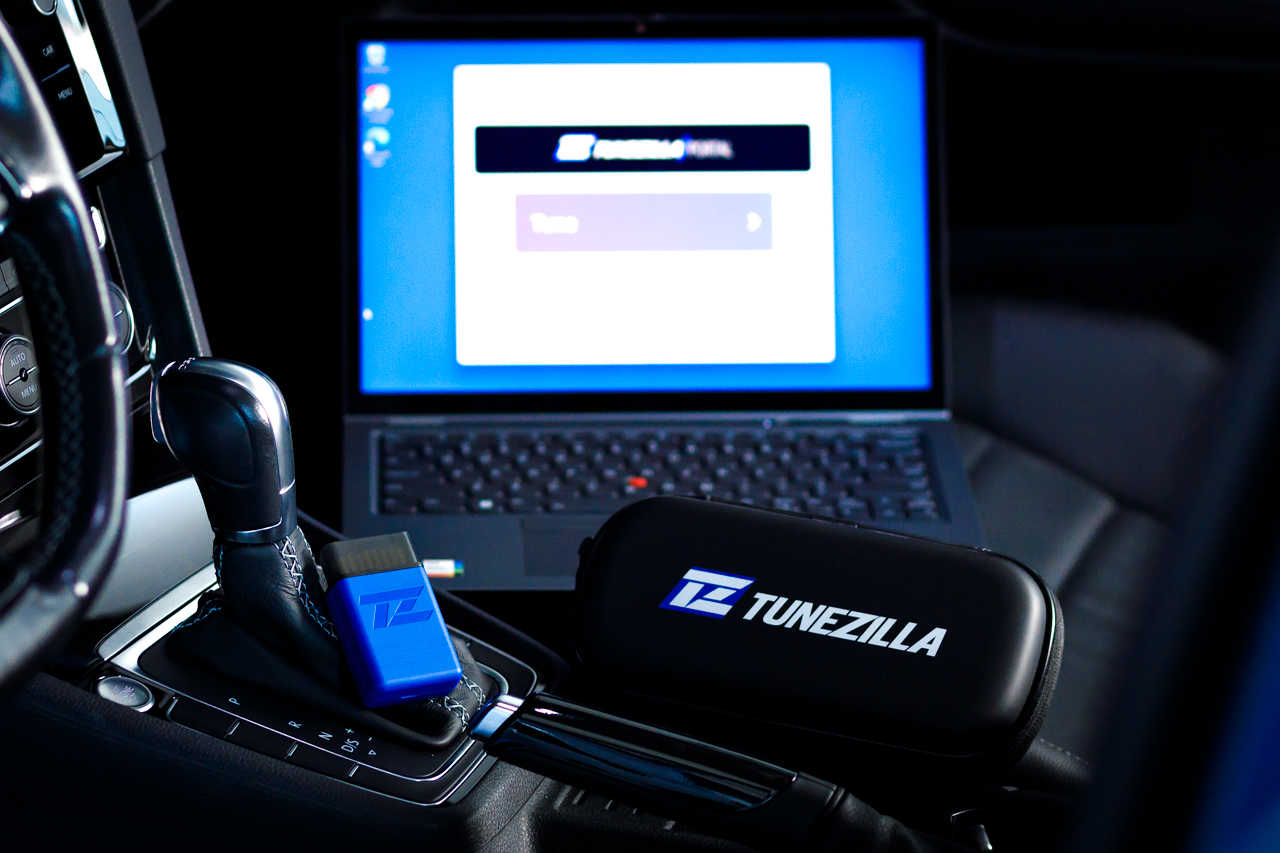
Ever wondered why your engine feels sluggish despite all those bolt-on mods? The air-fuel ratio is the invisible force behind every combustion event, determining whether your engine produces maximum power or just wastes fuel and heat. When you're learning how to tune a car, understanding stoichiometric ratios, lambda values, and fuel mixture becomes the foundation for extracting real performance gains, whether you're targeting peak horsepower or smooth daily drivability.TuneZilla's ECU tuning software gives you direct control over fuel maps and ignition timing, letting you adjust the mixture your engine receives at every throttle position and RPM point. Instead of guessing what's happening inside your cylinders, you can monitor oxygen sensor feedback, target specific AFR values for different load conditions, and make precise changes that transform how your engine breathes and burns fuel.SummaryModern engines calculate fuel delivery using mass airflow sensors and pre-programmed maps that assume stock hardware. When you install a cold air intake, high-flow exhaust, or a larger turbo, airflow exceeds the factory calibration, but the ECU continues to inject fuel based on outdated assumptions. Research from the Aircraft Owners and Pilots Association found that lean mixtures significantly increase cylinder head temperatures and detonation risk under high stress conditions.Factory ECU adaptive systems operate within narrow boundaries, typically adjusting fuel trims by up to 25% from baseline. A 2023 SAE International Journal of Engines study found that modern ECUs can mask fueling issues for extended periods through adaptive strategies, but this compensation occurs at the expense of performance, efficiency, and long-term durability.Maximum power for gasoline engines typically occurs at an air-fuel ratio of 12.5:1 to 13.0:1 under full load, significantly richer than the 14.7:1 stoichiometric point. According to Sage Metering's combustion efficiency analysis, maintaining 2% to 3% excess oxygen optimizes thermal efficiency during cruise by ensuring complete fuel burn, but this advantage disappears under heavy load. Stock calibrations break down after hardware changes because load calculations assume factory intake restriction, turbo efficiency, and exhaust backpressure. A high-flow intake reduces restriction, causing the engine to pull more air at the same throttle position while the ECU calculates a lower load than actually occurs.Professional tuners typically target a 12.5:1 air-to-fuel ratio under full load for turbocharged engines to balance power output with thermal protection, according to DSPORT Magazine. Achieving that target requires rewriting fuel maps to match actual airflow measurements rather than relying on adaptive corrections.ECU tuning software recalibrates fuel delivery and ignition timing maps to match actual hardware configurations, whether that includes a simple intake or a full turbo upgrade with larger injectors.The Hidden Problem With DIY Engine Performance ModsPerformance upgrades change how much air enters your engine, but your factory ECU still injects fuel based on stock airflow assumptions. The result isn't more power. It's an imbalance that can cost you reliability, efficiency, and in severe cases, the engine itself.Why Hardware Upgrades Break CalibrationWhen you bolt on a cold air intake, the engine pulls in cooler, denser air. Install a high-flow downpipe, and exhaust gases exit faster, reducing backpressure and altering how the turbo spools. Swap in a larger turbo, and you're forcing significantly more air into the cylinders under boost.Each of these modifications increases airflow. But your ECU doesn't automatically know that happened.Modern engines calculate fuel delivery using mass airflow sensors, throttle position, and pre-programmed maps that assume stock hardware. When airflow increases beyond what the factory calibration expects, the ECU can't compensate properly. It continues injecting fuel based on outdated assumptions, which pushes your air-fuel ratio outside the safe range.The Thermal Limits of Engine ComponentsRunning too lean means there's more air than fuel in the combustion chamber. Combustion temperatures spike. Detonation becomes likely under load. According to research from the Aircraft Owners and Pilots Association, lean mixtures significantly increase cylinder head temperatures and the risk of knock, particularly under high-stress conditions. The same physics apply to turbocharged cars pushing boost after hardware upgrades.The damage isn't always immediate. Sometimes it's a gradual loss of power as the engine runs inefficiently. Other times, it's catastrophic. Pistons crack. Valves burn. Turbo bearings fail due to excessive exhaust-gas temperatures. The upgrade that was supposed to unlock performance instead creates the conditions for failure.What Actually Happens After You Install That IntakeYou feel the difference right away. Throttle response sharpens. The engine sounds more aggressive. But the butt dyno lies.Without recalibration, that cold air intake often delivers less power than stock, not more. The ECU sees unexpected airflow readings and pulls timing to protect the engine. Fuel trims swing as the system tries to correct for conditions it wasn't programmed to handle. You might notice hesitation during acceleration or a check engine light triggered by fuel system adaptation limits.The common pattern surfaces across forums and builds threads. Someone installs an intake, downpipe, and intercooler. They expect a noticeable jump in power. Instead, they get flat acceleration, poor throttle response, and fuel economy that somehow got worse. The hardware works. The calibration doesn't.The Myth of Unlimited ECU AdaptationMost enthusiasts handle this by assuming the parts need time to “break in” or that the gains are too subtle to feel. It's easier to believe that than to accept the upgrade path requires another step. But time won't fix a calibration mismatch. The ECU will continue operating under incorrect assumptions until the fuel and ignition maps are corrected.The familiar approach avoids the complexity of tuning. No laptop. No learning curve. Just bolt-on parts and hope the engine adapts. As modifications stack and boost pressure climbs, that hope turns into risk. Combustion becomes unstable. Exhaust temps climb beyond safe thresholds. The engine operates under constant stress, and eventually, something gives.Volumetric Efficiency (VE) and the Ideal Gas ProblemECU tuning software recalibrates fuel delivery and ignition timing to match your actual hardware, whether you're running a simple intake or a full turbo upgrade. Instead of guessing how the ECU will react: You control the maps directlySetting target air fuel ratios for every load conditionEnsuring the engine runs safely across the entire RPM rangeThe Difference Between Potential and DamageHardware upgrades raise your engine's ceiling. Tuning determines whether you reach it or break through the floor. A larger turbo can support 400 horsepower. But if your fuel system still delivers for 250, you'll hit fuel cut under full boost or run dangerously lean trying to make power the engine can't sustain. The turbo isn't the limiting factor anymore. The calibration is. Professional tuners prioritize air-fuel ratio control before chasing peak numbers. They know that stable combustion at 300 horsepower is worth more than unstable combustion at 350. The builds that last are the ones in which every hardware change is matched with calibration adjustments that keep the engine within its safe operating window.Fuel Trim Buckets and the 25% Safety CeilingThe risk compounds with each modification. One upgrade might push you slightly lean under certain conditions. Add a second, and those conditions become more frequent. By the third or fourth mod, you're spending significant time in dangerous territory without realizing it, because: The engine still startsStill revsStill feels strong until the moment it doesn'tThat's the hidden cost of skipping calibration. You don't see the problem until it becomes expensive.The Belief That Holds Many Tuners BackThe ECU compensates for minor changes, so most enthusiasts assume it will handle any bolt-on modification. This works until it doesn't. The engine runs, idles normally, and accelerates without throwing codes, which creates the illusion that everything is calibrated correctly, even when combustion conditions have shifted outside safe parameters.Why Can't the ECU Fix What it Wasn't Designed forFactory engine management systems adapt within narrow boundaries. Oxygen sensors detect rich or lean conditions and adjust fuel trims accordingly. Mass airflow sensors measure incoming air and signal the ECU to modify injection duration. Knock sensors detect detonation and adjust ignition timing when combustion becomes unstable.These corrections work when modifications stay close to stock specifications. A drop-in air filter that increases airflow by 5% falls within the ECU's adaptive range. The system compensatesFuel delivery adjusts slightlyThe engine continues operating as intendedMAP Sensor Clipping and Resolution LimitsInstall a larger turbo that doubles boost pressure, and the factory calibration hits its limit. The ECU wasn't programmed to handle that volume of air. Fuel maps designed for 15 PSI can't deliver the correct mixture at 25 PSI. The oxygen sensors detect the lean condition and try to compensate, but fuel trims max out before reaching the target stoichiometric ratio. The engine runs because the ECU prevents it from completely failing, not because it's operating optimally.LSPI and the Limits of Factory Knock ControlMany tuners interpret normal operation as confirmation that tuning isn't necessary. The car starts every morning. Power feels adequate. No warning lights appear on the dashboard. According to a 2023 study published in the SAE International Journal of Engines, modern ECUs can mask fueling issues for extended periods through adaptive strategies, but this compensation often occurs at the expense of: PerformanceEfficiencyLong-term durabilityThe engine survives, but it doesn't thrive.What Running Fine Actually Costs YouPerformance suffers first. That cold air intake and high-flow exhaust should unlock noticeable gains, but without recalibration, the ECU often pulls timing and richens the mixture to stay conservative. Throttle response feels sluggish. Boost builds slower than it should. Peak power comes in flat because the engine operates in a protective mode designed to prevent damage, not maximize output.Fuel economy drops next. When the ECU can't maintain proper stoichiometry, it defaults to running rich rather than risk detonation. Extra fuel gets dumped into the cylinders as a safety margin. Some burn incompletely, wasting energy and sending unburned hydrocarbons through the exhaust. You're paying for fuel that never contributes to power.Cylinder Bore Wash and Oil DilutionHeat builds in places it shouldn't. Lean conditions under boost raise exhaust gas temperatures beyond what turbo bearings and catalytic converters were designed to handle. Rich conditions flood cylinders with excess fuel that washes oil off cylinder walls, accelerating wear. The engine doesn't fail immediately. It degrades incrementallyLosing compressionDeveloping hot spotsStressing components in ways that only become obvious during a teardownThe Threshold of MAF/MAP ScalingOne enthusiast installed headers, a downpipe, and an upgraded intercooler, expecting significant gains. The car felt slightly faster, so he assumed the modifications delivered. Six months later, during a routine oil change, his mechanic noticed spark plugs covered in carbon deposits and exhaust tips coated in black soot. Both symptoms pointed to rich running conditions the ECU created while trying to compensate for increased airflow, which it couldn't measure accurately. The hardware worked. The calibration didn't keep up.The Gap Between Adaptive Correction and Actual CalibrationAdaptive fuel trims adjust within a percentage range, typically plus or minus 25% from baseline. When modifications push airflow beyond that window, the ECU runs out of adjustment room. It continues trying to correct, but the math no longer works. Commanded fuel delivery doesn't match the actual air volume, and the mixture drifts.Short-term fuel trims react to immediate sensor feedback. Long-term fuel trims learn patterns over time and adjust baseline values. Both systems assume the engine operates within factory parameters. They correct for sensor drift, fuel quality variations, and minor vacuum leaks. They weren't designed to recalibrate an engine running 40% more airflow than stock.Injection Window and Spray DynamicsECU tuning software rewrites the fuel and ignition maps to match your actual hardware configuration. Instead of relying on adaptive corrections that max out under modified conditions, the ECU operates from a baseline calibrated for your: IntakeExhaustTurboInjectorsTarget air-fuel ratios are set precisely for each load point, ignition timing advances where the engine can safely handle it, and boost control maps reflect your turbo's actual flow characteristics.Wideband UEGO vs. Narrowband SensorsProfessional calibrators don't guess at these values. They use wideband oxygen sensors to measure real-time air-fuel ratio across: The entire RPM rangeAdjust maps on a dyno under controlled loadVerify combustion stability through knock detection and exhaust gas analysisThe process transforms adaptive guesswork into deliberate control.When Compensation Becomes a LiabilityThe engine's safety systems exist to prevent catastrophic failure, not optimize performance. When the ECU detects a knock, it pulls the timing aggressively. When fuel trims reach their limit, the mixture defaults to rich. When boost exceeds expected levels, it activates overboost protection and cuts power.Each intervention protects the engine in the moment, but sacrifices the performance you installed those parts to achieve. You're driving a car that's constantly fighting itself, hardware trying to make power while software applies the brakes.Thermal Fatigue and Micro-Fracture PropagationThe most dangerous scenario happens when modifications push the engine into conditions the ECU can't detect. Lean mixtures under high load don't always trigger knock sensors before damage occurs. Exhaust gas temperatures can climb beyond safe thresholds without setting a code. By the time symptoms become obvious, the engine has already operated outside its safe window for hundreds or thousands of cycles.Tuners who wait until problems arise before addressing calibration often discover the cost when it's too late to prevent them. The cracked piston didn't fail because of faulty parts. It failed because combustion temperatures spiked repeatedly in conditions the factory calibration couldn't control.Related Reading• Engine Control Unit • Open Loop Vs Closed Loop • Pid Tuning • Dyno Tuning What Air-Fuel Ratio Actually MeansAir-fuel ratio measures the mass of air entering the combustion chamber relative to the mass of fuel injected. For gasoline engines, Wikipedia's technical reference on air-fuel ratio confirms that the stoichiometric point is 14.7:1, meaning 14.7 pounds of air mix with 1 pound of fuel to achieve complete combustion under ideal conditions. This number represents the chemical balance in which oxygen molecules perfectly react with fuel molecules, leaving no excess air or unburned fuel after ignition. The ECU doesn't aim for this ratio constantly. It adjusts based on what the engine demands at that exact moment.Why Engines Move Away From StoichiometricUnder cruise conditions with light throttle input, the ECU targets stoichiometric or slightly lean mixtures. Combustion stays efficient. Catalytic converters operate within their designed temperature range. Fuel economy peaks because every drop of gasoline burns completely, converting as much chemical energy as possible into mechanical work.Apply full throttle at big boost, and the ECU shifts to a rich setting, sometimes as far as 11.5:1 or 12:1. The extra fuel doesn't burn completely. It evaporates inside the combustion chamber, absorbing heat before it can damage pistons or valves. This cooling effect matters more than perfect efficiency when cylinder pressures climb and exhaust gas temperatures approach material limits.The Mechanics of Engine Knock and Structural ResonancesLean operation moves in the opposite direction, increasing the air-to-fuel ratio beyond stoichiometric. More air means higher combustion temperatures. In naturally aspirated engines operating under light load, this can improve fuel economy. In turbocharged engines, increasing boost creates conditions for detonation. The air-fuel mixture ignites unevenly, pressure waves collide within the cylinder, and metal components repeatedly absorb shock loads they weren't designed to handle.Coefficient of Thermal Expansion and Piston-to-Wall ClearanceOne rider discovered this after running straight gas in a two-stroke engine that required oil mixed into the fuel. The mixture ran extremely lean because the fuel lacked lubrication and proper combustion chemistry. After several kick-start attempts, the engine seized. The piston expanded from heat faster than the cylinder could dissipate it, the metal surfaces made contact, and the engine locked. The damage didn't come from mechanical failure. It came from combustion temperatures, the lean mixture created without enough fuel to cool the process.What the ECU Actually ControlsFuel injectors open for precise durations measured in milliseconds. The ECU calculates how long to hold each injector open based on mass airflow sensor data, throttle position, engine speed, and target air-fuel ratio stored in its calibration maps. When airflow doubles after a turbo upgrade, injector pulse width must increase proportionally to maintain the correct mixture.Stock injectors have physical limits. They can only flow a certain volume of fuel over a given period. Push them beyond 80% duty cycle, and fuel delivery becomes inconsistent. The ECU commands more fuel, but the injectors can't respond fast enough. The mixture goes lean, not because the calibration failed, but because the hardware reached its ceiling.BSFC and Thermal Efficiency LimitsIgnition timing works alongside fuel delivery to control combustion. Advancing timing makes the spark plug fire earlier in the compression stroke, giving the air-fuel mixture more time to burn before the piston reaches top dead center. This increases efficiency and power, but only if the mixture can handle the additional heat and pressure without detonating. Retarding timing reduces combustion temperatures and prevents knock, but it also reduces power and increases exhaust-gas temperature because combustion occurs later into the expansion stroke.Volumetric Efficiency and the Airflow ModelECU tuning software adjusts both fuel maps and ignition tables to match your hardware's actual airflow characteristics. Instead of relying on mass airflow sensor corrections that max out under modified conditions, the calibration starts from accurate baseline values for your configuration on: IntakeTurboExhaustTarget air-fuel ratios are defined for every load cell in the map, ensuring the engine runs the correct mixture whether you're cruising at partial throttle or holding full boost in third gear.Where Measurement HappensWideband oxygen sensors sit in the exhaust stream, measuring the ratio of oxygen remaining after combustion. If excess oxygen appears, the mixture runs lean. If little oxygen remains, the mixture runs rich. The sensor converts this chemical analysis into a voltage signal that the ECU interprets as an air-fuel ratio value.Lambda and the Physics of Universal TuningFactory narrowband sensors only detect whether the mixture sits above or below stoichiometric. They work for emissions control but provide no precision data for tuning. Wideband sensors measure across the full 10:1 to 20:1 range, giving tuners real-time feedback during calibration sessions. Without this data, you're adjusting maps blind, hoping that injector pulse-width changes produce the mixture you intended.Injector Duty Cycle and ScalingTuners log air-fuel ratio under different load conditions, comparing commanded values against measured results. If the ECU targets 12.5:1 at full boost but the wideband reads 13.2:1, fuel delivery needs to be adjusted. Either the injector pulse width increases, the fuel pressure rises, or larger injectors are installed if the current ones can't deliver enough volume.The gap between theory and measurement reveals where calibration breaks down. You can calculate the perfect air-fuel ratio for a given airflow and fuel flow rate, but until a sensor confirms what's actually burning inside the cylinders, you're working from assumptions that may not match reality.Related Reading• Engine Tuning• Compression Ratio Formula• Ignition Timing• Stage 1 TuneHow Air Fuel Ratio Affects Power, Efficiency, and Engine SafetyRunning slightly richer mixtures under load allows the engine to produce strong power while reducing the risk of detonation. Extra fuel absorbs heat during combustion and helps stabilize the burn process when cylinder pressure increases. This is especially important in turbocharged or high-performance engines where boost pressure increases both airflow and combustion temperatures.Power Output Under Different MixturesMaximum power for gasoline engines typically occurs at a 12.5:1 to 13.0:1 ratio under full load, significantly richer than stoichiometric. Not all of the additional fuel burns. Some evaporates inside the combustion chamber, pulling heat away from metal surfaces before temperatures reach levels that trigger knock. This cooling effect matters more than combustion efficiency when you're holding full throttle at a big boost.Knock Sensor Resonance and the Feedback LoopLean mixtures reduce power because combustion temperatures climb faster than the engine can handle. The air-fuel charge ignites unevenly. Pressure spikes inside the cylinder create shock waves that collide with piston crowns and cylinder walls. Power drops not because the mixture lacks fuel, but because the ECU pulls timing aggressively to prevent damage. You lose the performance you were chasing while increasing the risk of catastrophic failure.Compression Ratios and the Unleaded CompromiseThe muscle car era demonstrated this clearly. After 1974, emissions regulations forced manufacturers to run leaner mixtures and retard timing to reduce hydrocarbon emissions. Performance collapsed. A Dart with a 360 cubic-inch V8 lost 25 horsepower from 1973 to 1974, despite having the same displacement and similar compression ratios. The engine hardware remained capable. The calibration strangled it. Enthusiasts who removed catalytic converters and re-jet carburetors to enrich the mixture immediately regained lost power, proving the hardware wasn't the limiting factor.Efficiency Gains and Their LimitsAccording to Sage Metering's analysis of combustion efficiency, maintaining 2-3% excess oxygen during combustion optimizes thermal efficiency in industrial applications by ensuring complete fuel burn while minimizing heat loss. The same principle applies to automotive engines during cruise conditions. Slightly lean mixtures extract more energy from each unit of fuel because combustion completes without wasting excess fuel as a cooling agent.Boundary Layer Instability and Heat TransferModern ECUs target stoichiometric ratios during highway driving for this reason. The catalytic converter operates most efficiently at 14.7:1, and fuel economy peaks because every hydrocarbon molecule reacts with an oxygen molecule. No fuel gets wasted. No excess air dilutes the combustion event.This efficiency advantage disappears under heavy load. As boost climbs and cylinder pressures increase, lean operation pushes combustion beyond safe thermal limits. The engine makes less power, not more, because it spends energy fighting detonation instead of driving the crankshaft. Fuel economy suffers because the ECU richens the mixture defensively or pulls timing to reduce combustion intensity, both of which waste fuel without producing proportional power.What Happens When Temperatures ClimbCombustion temperature determines whether engine components survive or fail. Aluminum pistons soften around 1,200 degrees Fahrenheit. Exhaust valves begin to warp at temperatures above 1,400 degrees. Turbo bearings fail when exhaust gas temperatures exceed their lubrication limits. Lean mixtures push all three scenarios closer to reality.The damage progresses gradually. Pistons develop hot spots where material begins to break down. Valve seats erode as exhaust gases carry away microscopic metal particles with each combustion cycle. Turbo bearings wear faster because oil breaks down under excessive heat, losing its ability to create a protective film between moving surfaces.Latent Heat of Vaporization (Lv) and Charge CoolingRich mixtures prevent this by introducing fuel that evaporates rather than burns. The phase change from liquid to vapor absorbs thermal energy that would otherwise be transferred to metal components. Peak combustion temperatures drop. Exhaust gas temperatures stay within safe ranges. The engine operates under high stress without crossing thresholds that cause permanent damage.Why Modifications Demand RecalibrationStock calibrations assume specific airflow characteristics. A factory turbo produces a known boost curve. Stock injectors flow a measured volume. The intake manifold creates a predictable pressure distribution across cylinders. The ECU's fuel and ignition maps reflect these assumptions.Swap the turbo for a larger unit, and airflow doubles under boost. The ECU still injects fuel based on stock airflow calculations. The mixture goes lean because fuel delivery didn't scale with the hardware change. Combustion temperatures spike. Detonation becomes likely. The engine makes less power than it did stock because the calibration fights the modification instead of supporting it.Speed Density vs. Mass Air Flow (MAF) Metering StrategiesECU tuning software recalibrates fuel maps to match your actual hardware, setting target air fuel ratios for every load condition based on measured airflow rather than factory assumptions. Instead of relying on adaptive corrections that max out under modified conditions, the ECU operates from a baseline built for your configurations on: TurboInjectorsIntake configurationThe engine runs the mixture it needs at every throttle position and boost level, delivering power safely rather than compensating for mismatched components.The Relationship Between Boost and Fuel DemandBoost pressure directly increases air density inside the combustion chamber. More air molecules occupy the same volume. Fuel demand scales proportionally. If boost doubles, fuel delivery must double to maintain the same air-fuel ratio.Stock fuel systems quickly reach their limits. Injectors max out their duty cycle. Fuel pressure regulators can't maintain adequate rail pressure under high flow demand. The mixture leans out not because the calibration failed, but because the hardware can't deliver enough fuel to match the airflow increase.Injector Duty Cycle and the 80% Safety RuleProfessional tuners prioritize fuel system capacity before chasing boost targets. Larger injectors. Higher flow fuel pumps. Adjustable regulators that maintain pressure under load. These upgrades ensure the engine can deliver the correct mixture across the entire operating range, not just at low boost, where stock components still function adequately. The gap between hardware capability and calibration accuracy determines whether modifications unlock performance or create failure conditions. But most tuners discover this gap only after the engine reveals it through symptoms that signal deeper problems.Why Proper ECU Tuning is Critical for AFR ControlThe ECU calculates fuel delivery based on sensor inputs and pre-programmed maps. When hardware changes, those calculations become inaccurate. Tuning rewrites the maps so fuel delivery matches actual airflow, maintaining target air-fuel ratios across all operating conditions, rather than relying on adaptive corrections that max out under modified setups.Fuel Maps Determine Mixture AccuracyStock calibrations define how much fuel the ECU injects at specific combinations of engine: SpeedLoadThrottle positionEach cell in the fuel map represents a different operating condition. At 3,000 RPM and 50% throttle, the ECU references one cell. At 5,500 RPM and full boost, it references another.Long-Term Fuel Trims (LTFT) and the Fuel Trim Limit CELInstalling a larger turbo changes how much air enters the engine at each of those points. The fuel map still commands injection duration based on stock airflow assumptions. The ECU detects higher-than-expected manifold pressure and attempts to compensate via fuel trims, but those corrections operate within narrow bounds. When airflow exceeds what the factory calibration anticipated by 30% or 40%, fuel trims max out before reaching the target ratio.Closed-Loop vs. Open-Loop Control StrategiesAccording to DSPORT Magazine, professional tuners typically target a 12.5:1 air-to-fuel ratio under full load for turbocharged engines to balance power output with thermal protection. Achieving that target requires rewriting fuel maps to match actual airflow measurements, not relying on adaptive corrections to bridge the gap between stock calibration and modified hardware.Ignition Timing Must Follow Fuel DeliveryAdvancing spark timing increases efficiency and power by initiating combustion earlier in the compression stroke. Retarding timing reduces combustion intensity and prevents knock when mixtures run lean or cylinder pressures climb beyond safe thresholds. The ECU adjusts timing based on knock sensor feedback and programmed limits within the calibration.Stock timing maps assume factory boost levels and airflow characteristics. Push boost higher, and combustion pressure increases faster than the factory calibration expected. The ECU detects knock and aggressively pulls timing. Power drops even though hardware supports higher output because the calibration prioritizes protection over performance.Maximum Brake Torque (MBT) and the Ignition Timing CurveProfessional tuning recalibrates both the fuel and ignition tables. Fuel maps ensure the engine runs rich enough under load to prevent detonation. Ignition maps advance timing where the mixture can handle additional heat without knock. The engine operates at the edge of its performance envelope safely instead of constantly triggering protective interventions that sacrifice power.Load Calculations Breakdown After ModificationsThe ECU estimates engine load using: Manifold absolute pressureThrottle positionAirflow sensor dataThat load value determines which cells in the fuel and ignition maps get referenced. Factory load calculations assume stock intake restriction, turbo efficiency, and exhaust backpressure.The Impact of High Flow Intakes on Load Scaling and ECU Map SelectionA high-flow intake reduces restriction. The engine pulls more air at the same throttle position. The ECU calculates a lower load than the actual one because its calculations assume stock airflow resistance. It references fuel map cells designed for lighter conditions. The mixture leans out not because the map is wrong for that load cell, but because the ECU selected the wrong cell entirely.Calibrators address this by adjusting load scaling tables so the ECU correctly interprets airflow after modifications. Manifold pressure readings get translated into accurate load values. The correct fuel map cells get referenced. Target air-fuel ratios match actual operating conditions rather than being based on mismatched assumptions about how much air the engine moved.Boost Control Requires Precise Fuel System CapacityBoost pressure directly multiplies air density. Double the boost, and fuel demand doubles to maintain the same air-fuel ratio. Stock fuel systems reach their flow limit quickly. Injectors hit maximum duty cycle. Fuel pumps can't maintain rail pressure under sustained high flow demand.The ECU commands more fuel, but the hardware can't deliver it. The mixture goes lean because physical limitations prevent adequate fuel flow, not because the calibration failed to request it. Tuners see this in logs when the commanded pulse width increases, but the measured air-fuel ratio stays leaner than the target.Injector Characterization Data and Dead Time (Latency)Upgrading injectors and fuel pumps solves the hardware constraint. Recalibrating injector scaling tables tells the ECU how much fuel the new injectors flow per millisecond of pulse width. The calibration translates target air fuel ratios into accurate injector commands that match the upgraded hardware's actual flow characteristics. The fuel system delivers what the engine needs across the entire boost range, rather than running out of capacity halfway to redline.Why Adaptive Corrections Can't Replace Proper CalibrationShort-term fuel trims react to oxygen sensor feedback in real time. Long-term trims learn patterns and adjust baseline values. Both systems correct for minor variations such as: Fuel-quality differencesSensor driftSmall vacuum leaksThey operate within a correction range, typically plus or minus 25% from the programmed baseline.The Limits of Factory ECU Adaptive Corrections and Safety DefaultsOne rider installed an intake and exhaust, expecting noticeable gains, but found throttle response felt inconsistent and fuel economy dropped. The ECU's adaptive corrections maxed out while trying to compensate for the airflow that the factory calibration never anticipated. Fuel trims stayed pegged at their upper limit under acceleration. The engine ran rich because the ECU defaulted to safety margins rather than risk lean conditions it couldn't measure accurately.ECU Adaptive Limits and Fuel Trim FatigueThe familiar approach treats tuning as optional until problems surface. No warning lights appear. The engine starts reliably. Power feels adequate. But the ECU operates in constant compensation mode, fighting hardware changes instead of working with them. Performance suffers. Efficiency drops. Components wear faster under conditions that the calibration creates while trying to prevent worse outcomes.The Adaptive Learning ThresholdECU tuning software rewrites fuel and ignition maps to match your actual hardware configuration, eliminating reliance on adaptive corrections that max out under modified conditions. Target air-fuel ratios are programmed for each load cell based on measured airflow characteristics rather than factory assumptions. The engine runs the mixture it needs at every throttle position and boost level without constantly triggering protective strategies that sacrifice performance.How TuneZilla Makes AFR Tuning AccessibleThe barrier used to be cost and complexity. Professional ECU calibration required dyno time, specialized equipment, and technicians who understood fuel mapping at a level most enthusiasts never reached. TuneZilla removes that barrier by putting calibration tools directly in drivers' hands, whether they're installing their first intake or building a 500-horsepower street car.Flash Calibrations Through Your Obd PortThe FlashZilla device connects to the vehicle's OBD port, the same diagnostic port mechanics use to read fault codes. No soldering. No ECU removal. No shipping your computer to a remote tuner and waiting days for it to return. Plug in the device, load the calibration file, and the ECU receives updated fuel and ignition maps in minutes.This eliminates the logistical friction that kept many enthusiasts from tuning properly. The car stays in your garage. You control the timing. If you need to return to stock calibration for an emissions test or dealer service, you flash the factory file back just as quickly. The process becomes reversible and repeatable instead of permanent and intimidating.Off-The-Shelf Maps For Common ModificationsInstaTune provides pre-developed calibrations for popular modification combinations. Tunes optimize fuel delivery and timing for vehicles running intake and exhaust upgrades. Maps account for downpipes and intercoolers. Calibrations support larger turbos and upgraded fuel systems.These maps are developed by experienced calibrators who understand how specific hardware changes affect airflow and fuel demand. Instead of guessing at injector pulse width or ignition advance, the calibration starts from known values tested across multiple vehicles with similar setups. Target air fuel ratios stay within safe ranges under boost. Timing advances where the engine can handle it without triggering knock. The calibration matches the hardware instead of fighting it.The Role of Data Logging in Remote DiagnosticsAccording to TuneZilla's InstaTune platform, support is available 24/7, so technical questions don't have to wait until business hours or the next dyno appointment. Drivers get answers when they need them, not when a shop schedule opens up.Custom Calibration Through Remote TunersHeavily modified builds require individual attention. A custom turbo setup that flows 40% more air than stock can't rely on off-the-shelf maps designed for different hardware. TuneZilla connects these builds with calibrators experienced in specific platforms and modification levels.The process works through file exchange. Upload your current ECU file or describe your hardware configuration. The calibrator analyzes your setup and develops a base map tailored to your injectors, turbo, fuel system, and target power level. You flash the calibration, log the air-fuel ratio, and record knock activity during test drives, then send those logs back for refinement.Transient Response and Road Load SimulationThis iterative approach replaces the single-dyno-session model with progressive tuning that accounts for real-world driving conditions. The calibrator observes: How the engine behaves under actual loadAdjusts maps based on measured dataEnsures the air-fuel ratio stays controlled across the entire operating rangeThe engine gets tuned for the roads you drive, not just the dyno conditions of a single afternoon.File-Based Tuning for Existing CalibrationsSome vehicles already run modified calibrations from previous tuners or standalone engine management systems. TuneZilla's platform accepts these files for review and optimization. Calibrators identify areas where fuel delivery drifts from target ratios, where timing could advance safely, or where boost control needs refinement.Volumetric Efficiency (VE) and the Ideal Gas Law in Engine CalibrationOne driver uploaded a file from a tune he'd been running for two years. The calibration produced decent power, but fuel trims stayed maxed under boost, and exhaust gas temperatures exceeded safe thresholds. The revised map corrected fuel delivery in the cells where: The engine spent most of its time under loadDropped EGT by 150 degreesAdded 18 horsepower by advancing timing in areas where the previous calibration left it conservativeThe hardware hadn't changed. The calibration finally matched the engine's capabilities.Recalibration When Modifications ChangeBuilds evolve. An intake and exhaust become a bigger turbo. Upgraded injectors get installed to support more boost. Each hardware change shifts airflow characteristics and fuel demand. Instead of paying for a completely new tune, TuneZilla offers recalibration for $100, allowing the existing calibration to adjust for new components without starting from scratch.The Synergy of Hardware Foundation and Software RecalibrationThis pricing structure acknowledges that tuning isn't a one-time event for most enthusiasts. Performance builds grow incrementally. The calibration should adapt as the hardware does, maintaining proper air-fuel ratio control through each upgrade stage without requiring a full dyno retune every time a part changes.The familiar approach treated tuning as a final step after all modifications were complete. That worked when builds stayed static, but most enthusiasts add parts over months or years as their budgets allow. Waiting until everything is installed means running mismatched calibration through multiple stages, each one pushing the engine further from safe operating conditions.Related Reading• ECM and TCM• Transmission Tuning• Best Laptop For Tuning Cars• Stage 2 Tuning• Stage 3 Tuning• Ecu RemappingTune Your Car From Your Driveway With Our ECU Tuning Software The laptop connects to your OBD port. The calibration file loads in under five minutes. Your air-fuel ratio shifts from a factory compromise to optimized performance without leaving your garage or scheduling dyno appointments weeks in advance.The Benefits of DIY Professional ECU Tuning and Off-the-Shelf MapsIf you're upgrading your car and want to ensure your air-fuel ratio stays dialed in correctly, TuneZilla lets you flash professional ECU tunes directly from your driveway. Plug into your OBD port, load a calibrated tune through FlashZilla, and unlock more power without the shop markup or hassle. Whether you choose off-the-shelf maps for common modifications or custom calibration for aggressive builds, you're accessing the same expertise that used to require expensive equipment and specialized knowledge. The engine runs the mixture it needs at every load point, combustion stays stable under boost, and you control when the work happens, rather than waiting for shop availability.