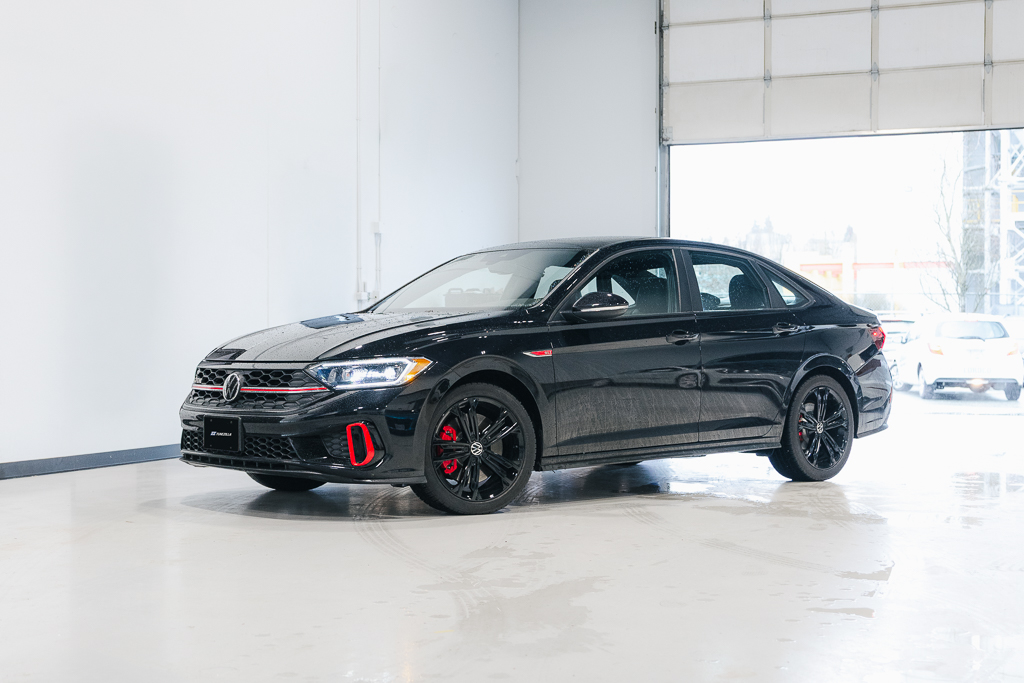
The Volkswagen Jetta GLI has always lived in the shadow of its Golf GTI cousin, but under the hood, it shares the same EA888 Gen 3 platform that built a generation of tuners. That foundation is exactly why we keep coming back to it.From the factory, the GLI puts down somewhere in the neighborhood of 215 wheel horsepower and 239 wheel torque on our hub dyno at TuneZilla headquarters. Healthy numbers for a daily, but the 2.0T leaves a lot on the table. Here is how we think about taking it further, stage by stage, without turning a perfectly civilized sedan into a science project.Stage 1 GLI tune: software-only power gainsStage 1 is software only. No hardware required to load the file and feel a real difference.That said, we tell every GLI owner the same thing before they flash. Open up the factory airbox. Pull the snow guard, cut open the front vent, and clear out the secondary grill cover. None of that is mandatory, but it lets the engine breathe the way it wants to once the tune asks more of it. A higher-flowing filter helps too, whether you stay with the stock airbox or move to an aftermarket intake.Stage 1 is where most owners land and stay happy. It is also where you learn whether you actually want to keep going.Stage 2 GLI tune: Downpipe, Intercooler, and a DSG TuneStage 2 is the point where the car needs help getting air in and out. That means a downpipe and an intercooler.The downpipe matters because the exhaust gases need somewhere to go. The factory unit is restrictive, and once you ask the turbo to work harder, that restriction becomes the ceiling. A high-flow catted downpipe is the middle ground most owners want. Catless is louder and freer, but it is a lifestyle choice as much as a power choice.The intercooler does the quieter work. It keeps intake air temperatures down across the power band, which means the power you make on the first pull is closer to the power you make on the fifth. On a hot day in traffic, that difference is the whole game.If the car has a direct-shift gearbox (DSG), the transmission gets tuned too. This is not optional. The factory transmission control unit (TCU) is calibrated for factory torque, and asking it to manage stage 2 numbers without a matching tune is how clutches get cooked. Pair the engine control unit (ECU) and TCU and the car drives the way it should.Stage 2 is also where owners need to re-examine maintenance. Colder-range spark plugs, fluid changes on schedule, and a little more attention than the dealer interval suggests. This will lead to a happy and healthy car.Stage 3 GLI tune: Turbo Upgrades and MO POWAStage 3 means a turbo upgrade, and the choice of turbo dictates everything else.The IS38, lifted from the Golf R and Audi S3, is the gentle entry point. It bolts up cleanly, it does not demand fueling upgrades on pump gas, and it gives the GLI a top end the factory IS20 cannot reach. If you want to run ethanol, that changes—more on that in a moment.The Garrett Power Max 2260 and the Turbo Concepts TC-600 are the bigger swings. Both require a downpipe, an intercooler, colder plugs, and the fueling upgrades the IS38 lets you skip. Intake and cat-back are recommended but not required.These are not turbos you bolt on for a casual gain. They reshape the car. We have research and development hours on each specific configuration, which is why we publish recommended hardware lists for stage 3. Deviate from the list, and we can still help, but it becomes a custom tune project rather than a packaged one—different timeline, different price.Fuel system upgrades for stage 3 and E85 tunesThe factory fuel system was built for factory power. Once a bigger turbo is installed, the injectors and low-pressure fuel pump (LPFP) get maxed out. From there, no amount of tuning matters because there is no fuel left to give.Two upgrades solve it. A higher-flowing LPFP and multi-port injection (MPI), which adds a second set of port injectors to supplement the direct injection that the EA888.3 was born with. We recommend 980cc MPI port injectors paired with a Hellcat 525 or Audi RS3 LPFP, depending on the build.Ethanol changes the math again. Ethanol burns at a different rate than gasoline and demands far more volume. Our flex fuel files are calibrated to take advantage of up to E60, which is enough to hit max power on the upgraded turbos. The 2260 and TC-600 both need MPI and an LPFP. The IS38 only needs them if you want the flex file.What a TuneZilla GLI tune actually changesA lot of tuning content focuses on peak numbers. We care more about what the car feels like at every throttle position between idle and redline.Our GLI files raise the rev limiter, sharpen throttle response, recalibrate boost targets, and clean up the fuel trims the factory leaves conservative. We lower the high oil pressure switch point for engine longevity, which is the kind of detail that does not show up on a dyno chart but matters at 80,000 miles.Then there are the features owners actually play with day to day. On-and-off crackles. Map switching between files. Ethanol content displayed in the gauge cluster. The performance monitor was reconfigured to show real boost readings instead of the factory approximation. Left-foot braking for boosted rolls or track days. Hard-cut limiters for owners who want them.True flex fuel is the headline feature for owners running ethanol. The car reads the blend and adjusts in real time, so a half-tank of E85 mixed with a top-off of 91 octane does not require a different file.How TuneZilla flashes the GLI over OBDThe whole tuning process happens over OBD with our FlashZilla Pro tool and a Windows laptop. Driveway, garage, parking lot—wherever the car is. No shop visit, no shipping, no downtime beyond the flash itself. The tool handles the ECU and, on DSG cars, the TCU.If your specific file is not in the portal when you check, that is not a problem. It just means we need to build it for your car, which is part of the normal process.Tuning a 2025 GLI and the SFD2 lock challengeVolkswagen rolled out its software protection feature (SFD) a few years ago to prevent tampering with ECU coding and adaptations. The first version, SFD1, is straightforward and requires the hood to be open. SFD2 is the newer protection, and it changes the workflow. On 2023 and newer GLIs, the ECU needs to be unlocked by a third-party tool like OBDeleven, The TCU on these cars is closer to the MK8 GTI/R, which means it currently requires a bootloader swap or an unlock with a tool like Autotuner before tuning. OBD-based TCU flashing for this generation is something we are actively working on.If you are reading this and you own a 2025 or later GLI, check the catalog or reach out to support. The landscape moves quickly, and what is true today may not be true in three months.Custom TuningMost owners are best served by the packaged tunes we have already developed. They are tested, they are proven, and they save the cost of bench time on a calibrator.Custom tuning exists for the builds that fall outside the lines of our pre-developed files. Including unusual hardware combinations, swap projects, and specific goals that the packaged files were not built around. The process runs through our ticket system. We ask about modifications and goals, we put together a plan, and we calibrate using dyno pulls or street logs. It costs more because it takes more, and our calibrators have the discretion to decline projects where the hardware or goals do not line up with what the platform can safely deliver.The point of all thisThe GLI is a good car from the factory. It becomes a great one with the right software and the right hardware, in that order. The platform rewards patience and punishes shortcuts, and most of what we do is keep owners from learning that the hard way.The numbers are there if you want them. So is the drivability. The trick is not having to choose.