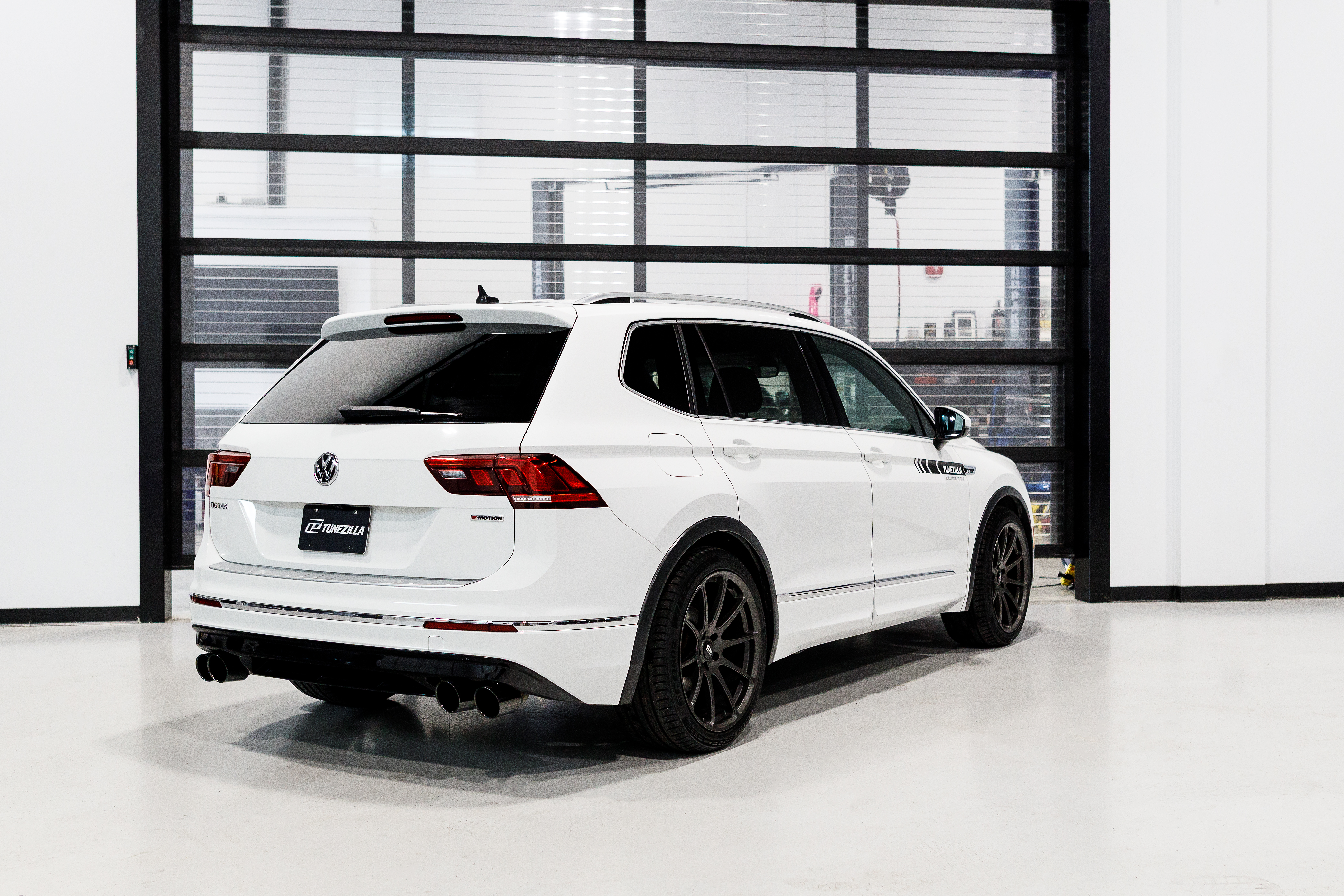
If you own a VW Tiguan, there's a good chance you've heard a loud whooshing noise on cold mornings, like many other cars in the VW family. That sound is your secondary air injection system doing its job. The problem is that the SAI system has a well-documented habit of failing—and when it does, the repair bill can be crazy. We've seen this issue come through our network enough times to know that a tune-based SAI delete isn't just a shortcut. It's the smarter long-term fix.How the SAI system works—and why SAI deletes existThe SAI pump activates during cold starts and pushes fresh air into the exhaust. That burst of oxygen helps the catalytic converter reach operating temperature faster, which reduces cold-start emissions. It's an emissions compliance device, and on paper, it does its job well. In practice, it's a system that quietly deteriorates until it becomes a serious headache.Carbon buildup and the reason Tiguan owners need SAI deletesThe root of the problem is the combination valve. When it wears or fails, exhaust gases flow backward through the SAI circuit and into the cylinder head's air injection ports. Those gases carry soot and unburnt fuel residue. As the exhaust gas dries inside those ports, it leaves behind carbon deposits that accumulate over time. Eventually, the ports clog entirely.This isn't a fringe issue. VW is aware of the problem and has issued internal service notes to dealership staff. Despite that, the automaker has never issued a formal recall. Manufacturers typically reserve recalls for defects that present a direct safety hazard. An emissions system that slowly clogs itself with carbon doesn't meet that threshold—even though the resulting repair can cost owners hundreds or thousands of dollars.What happens without an SAI delete: codes, rough idle and costly repairsThe first sign is usually a check engine light. The most common diagnostic trouble codes tied to SAI failure are P0411 (incorrect flow detected), P0491 (insufficient flow, bank 1) and P2440 (switching valve stuck open). Any of these will cause a failed emissions inspection.Beyond the CEL, you may notice rough idling or slight hesitation during the first minute of driving while the engine is still in cold-start mode. Once the engine reaches operating temperature, those symptoms typically disappear—which is why many owners ignore the problem until it escalates.In more severe cases, the carbon buildup migrates into the cylinder head itself. At that point, you're no longer dealing with a simple sensor code or a bad pump. You're looking at cylinder head removal, manual cleaning and, in some cases, full head replacement. That kind of repair can run anywhere from $200 to well over $1,000 in parts and labor. At a dealership, the bill climbs even higher. We've seen quotes north of $2,000 for related work on Audi's 3.0 TFSI platform—and the Tiguan's 2.0T architecture faces the same underlying issue.How SAI deletes work with FlashZilla ProHere's where an SAI delete changes the equation entirely. Rather than chasing the mechanical failure—cleaning ports that will clog again if the root cause isn't addressed—a tune removes the SAI logic from the ECU software. The system is simply told that the SAI circuit no longer exists. No more pump activation, no more backward exhaust flow, no more carbon accumulation in the ports.The process is straightforward. You plug a FlashZilla Pro into your Tiguan's OBD port, connect it to a Windows 10 or 11 laptop, and flash the SAI delete calibration. No dealership visit required. No special tools beyond the FlashZilla Pro itself. The entire process can be done at home. However, if you would rather have a TuneZilla authorized shop do the install, if that makes you more comfortable, we do have a wide range of dealers.While the tune handles the software side, most owners also choose to block off the SAI ports in the cylinder head with block-off plates. This is optional from a drivability standpoint—the tune alone eliminates the system's function—but blocking the ports adds an extra layer of protection against any residual exhaust intrusion. Some owners go a step further and remove the pump, valve and associated hoses entirely to free up engine bay space. Others leave the hardware in place with no issues. It comes down to personal preference.SAI delete cost vs. shop repair: why the tune winsThis is where the math gets compelling. A full SAI delete through TuneZilla runs $349 as a standalone calibration. If you're already upgrading to a stage 1 or stage 2 tune, the SAI delete is a $99 add-on. Either way, you're looking at a one-time cost that permanently eliminates the problem.Compare that to the shop repair route. Even a best-case scenario—where a technician can access the ports and manually scrape out the carbon—costs a few hundred dollars in labor. If the buildup is severe enough to require cylinder head removal, you're into four figures. And here's the part that makes the repair route especially frustrating: unless you also address the failed combination valve and the conditions that caused the clogging in the first place, the carbon will come back. You'll be paying for the same repair twice.A tune doesn't just fix the symptom. It removes the mechanism that causes the problem. That's the difference between a repair and a solution.Why an SAI delete is the only fix that lastsVW's SAI system was designed to meet emissions targets, and it does—until it doesn't. The combination valve fails, carbon builds up and owners are left holding a repair bill for a system that was always going to degrade. VW knows about it but hasn't recalled it. Dealers will fix it, but they'll charge accordingly.An SAI delete through TuneZilla costs a fraction of the repair, takes minutes instead of days and ensures the problem never comes back. If your Tiguan is throwing SAI codes or you'd rather get ahead of the issue before it escalates, this is the fix that makes sense.