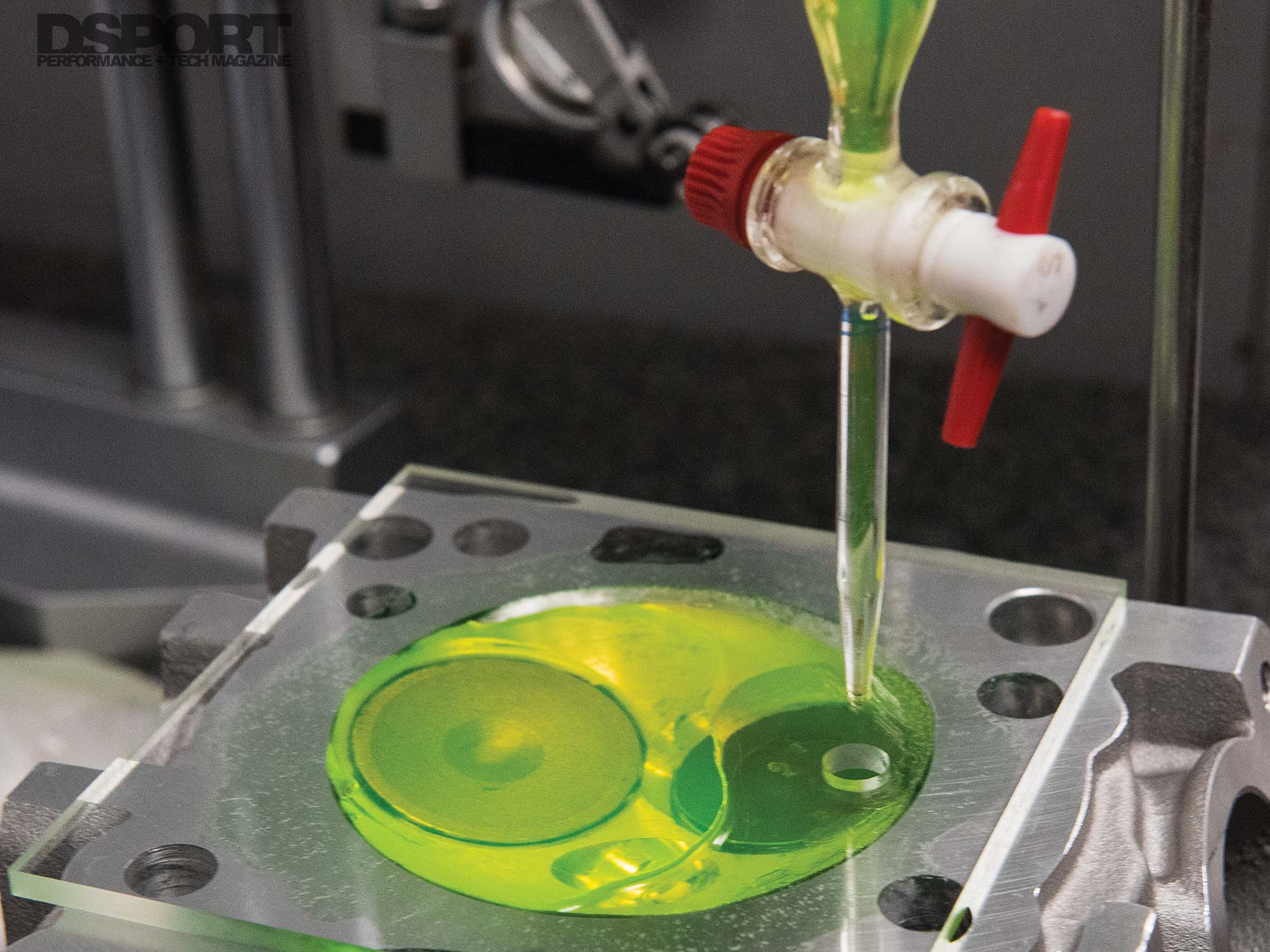
Ever wondered why some engines deliver explosive power while others feel sluggish, even with similar displacement? The answer often lies in understanding compression ratio, a fundamental metric that determines how much your engine squeezes the air-fuel mixture before ignition. When you learn to tune a car effectively, understanding the compression ratio formula becomes essential because it directly affects combustion efficiency, horsepower output, and even fuel economy. This article breaks down the compression ratio calculation, explains what the numbers actually mean for your engine's performance, and shows you how to use this knowledge to make smarter tuning decisions.Once you understand the relationship among cylinder volume, piston position, and compression ratios, you'll want tools to help you apply this knowledge in practice. TuneZilla's ECU tuning software lets you optimize engine parameters to work in harmony with your compression ratio, whether you're adjusting ignition timing, fuel maps, or boost levels. Instead of guessing at settings, you can make informed changes that extract maximum power while keeping your engine safe and reliable.SummaryThe compression ratio determines how much thermal energy your engine extracts from every combustion event by forcing the air-fuel mixture into a smaller volume before ignition. Higher compression ratios, between 11:1 and 13:1, deliver sharper throttle response and stronger mid-range torque than older designs at 9:1 or 10:1 because the engine converts more chemical energy into mechanical work rather than wasting it as heat. Small modifications shift the compression ratio faster than most builders expect. Milling 0.030 inches off a cylinder head to improve flow reduces combustion chamber volume enough to push a 10.5:1 motor to 11.2:1, which changes how combustion behaves under load and raises knock risk. Forced induction multiplies compression challenges because boost pressure raises effective compression far beyond the static number stamped on engine specs. A motor with 9:1 static compression running 15 psi of boost can see effective ratios exceeding 18:1 during peak load, which is why turbocharged builds typically start with lower compression pistons between 8.5:1 and 9.5:1.Ignition timing becomes critically sensitive above 11:1 compression because the mixture heats up faster under higher pressure, leaving less margin between optimal spark advance and destructive detonation. Adding two degrees of timing to a 9:1 motor might produce no issues, but the same adjustment on a 12:1 engine causes audible pinging under load.Factory ECU calibrations become obsolete when compression ratios change through head work, piston swaps, or forced-induction upgrades because timing maps and fuel tables were written for stock clearance volume and naturally aspirated intake pressure. ECU tuning software addresses this by letting you flash ignition and fuel maps calibrated for your actual clearance volume, charge temperature, and boost levels, adjusting parameters within safe detonation boundaries rather than guessing how much timing or boost your modified compression ratio can tolerate.The Biggest Misunderstanding About Compression RatioMost people treat compression ratio like a footnote in the owner's manual. It sits there alongside bore, stroke, and displacement, another static number that defines what the engine is. But compression ratio isn't just a descriptor of your engine. It's a live variable that shapes how combustion happens, how much power you extract from every drop of fuel, and how close you can push your tune before things go wrong.Understanding Effective Compression RatiosThe misunderstanding runs deeper than ignoring the number entirely. People assume compression ratio is locked in at the factory, a permanent characteristic stamped into the engine block when it was cast. That's partially true for the mechanical design, but it misses how compression behavior changes under real-world conditions.Temperature, altitude, fuel quality, boost pressure in forced induction setups, and even carbon buildup all shift the effective compression your engine experiences. A motor designed to run safely at 11:1 compression at sea level with 93 octane can behave like a 12:1 or higher engine in different conditions, and that's when knock becomes a real threat.Why Compression Ratio Controls Your Tuning CeilingHigher compression squeezes more energy out of the air-fuel mixture before the spark plug fires. That's why naturally aspirated engines with ratios around 12:1 or 13:1 deliver sharper throttle response and better fuel economy than older designs sitting at 9:1. The tighter you compress that mixture, the more violently it wants to ignite. When combustion timing is dialed in perfectly, that violence becomes controlled power. When it's not, you get detonation, the uncontrolled explosion that sounds like marbles rattling in a tin can and destroys pistons in seconds.Defining Tuning BoundariesThis is where tuning becomes critical. You can't just add timing or boost without understanding what your compression ratio allows. According to Will Colahan on Substack, diesel engines can safely run compression ratios as high as 18:1 because diesel fuel ignites under pressure alone, without a spark. Gasoline engines can't tolerate that. Push a gas motor past its knock threshold, and you're not just losing power.You're courting catastrophic failure. The compression ratio sets the boundary for how aggressive your tune can be, how much timing you can add, and how much boost a turbocharged setup can handle before the engine starts eating itself.What Changes When You Understand the FormulaOnce you see compression ratio as a dynamic force rather than a static spec, tuning stops feeling like guesswork. You start to recognize why your engine responds differently on a cold morning than on a hot afternoon, why it pings on pump gas but runs clean on E85, and why adding a few pounds of boost suddenly makes the motor knock when it was fine before.The formula itself, how cylinder volume at the bottom dead center compares to combustion chamber volume at top dead center, becomes a lens for understanding what's actually happening inside your engine during every combustion cycle.Calculating Combustion VolumePlatforms like TuneZilla's ECU tuning software let you adjust ignition timing, fuel delivery, and boost parameters in response to your compression ratio's demands. Instead of running a generic map and hoping for the best, you can build a tune that respects the thermal and pressure limits imposed by your engine's compression. That's the difference between unlocking real performance and just making noise until something breaks.But knowing the compression ratio exists is only the beginning. The formula that defines it reveals exactly how combustion chamber size, piston design, and cylinder volume interact to create that number.Related ReadingEngine Control UnitOpen Loop Vs Closed LoopPid TuningDyno TuningThe Compression Ratio Formula ExplainedThe compression ratio formula compares the total cylinder volume at the piston's lowest point to the volume remaining when the piston reaches the top. You calculate it by dividing the sum of the swept volume and the clearance volume by the clearance volume alone. That relationship, expressed as CR = (Swept Volume + Clearance Volume) ÷ Clearance Volume, determines how tightly the air-fuel mixture gets squeezed before ignition.Defining Cylinder VolumesSwept volume measures the space the piston displaces as it travels from top dead center to bottom dead center. This dimension comes directly from bore and stroke, the physical measurements of your cylinder.Clearance volume is what remains when the piston reaches the top of its stroke: the combustion chamber carved into the cylinder head, the thickness of the head gasket, any dish or dome machined into the piston crown, and the deck height between the piston and the block surface. These components combine to create the space where combustion pressure builds.How Small Changes Create Big ShiftsA cylinder with a swept volume of 500 cc and a clearance volume of 50 cc produces an 11:1 compression ratio. The mixture compresses to one-eleventh of its original volume before the spark plug fires. That sounds straightforward until you realize how sensitive the formula becomes to minor alterations. Shaving 0.030 inches off the cylinder head during a rebuild reduces the clearance volume, which raises the ratio.Measuring Compression VariablesInstalling pistons with a deeper dish increases clearance volume, dropping the ratio. According to Grassroots Motorsports, even a seemingly modest target like a 10:1 compression ratio requires precise measurement of every clearance volume component because each one shifts the final number.The frustration comes when you think you've built an engine to a specific compression ratio, only to discover that thermal expansion, carbon deposits, or an incorrectly calculated head gasket volume have changed the actual compression ratio. Teams often report discovering their true compression ratio only after detonation shows up on the dyno, forcing them to retune or swap components. That's not a tuning problem. That's a measurement problem that the formula exposes.Why the Formula Matters When you TuneUnderstanding this formula changes how you approach ECU calibration. When you know your clearance volume sits at 50 cc, and your swept volume is fixed by bore and stroke, you can predict how modifications will shift your compression behavior. Mill the head by 10 cc, and you've just increased your ratio from 11:1 to 12.2:1. That's not a subtle change. That's a complete recalibration of ignition timing, fuel delivery, and knock thresholds.Platforms like TuneZilla's ECU tuning software let you adjust timing maps and fuel curves to match the compression ratio your engine actually runs, not the number you hoped for. Instead of guessing whether your motor can handle another degree of timing advance, you calculate the thermal and pressure limits your clearance volume creates, then tune within those boundaries. That's how you extract power without courting failure.But knowing the formula only gets you halfway there, because compression ratio doesn't just define how much you squeeze the mixture.Why Compression Ratio Matters for Engine PerformanceIt dictates how much thermal energy your engine extracts from every combustion event. When you increase compression, you force the air-fuel mixture into a smaller volume before ignition, which raises both temperature and pressure during the power stroke. That translates directly into more usable torque at the crankshaft and better fuel economy because the engine converts a higher percentage of chemical energy into mechanical work rather than wasting it as heat in the exhaust.A higher compression ratio means more power, but only if you can manage the combustion stability that comes with it. The thermal efficiency gains are real. Naturally aspirated engines running between 11:1 and 13:1 deliver sharper throttle response and stronger mid-range torque than older designs sitting at 9:1 or 10:1. The difference isn't subtle when you're accelerating onto a highway or climbing a grade. The engine simply does more with the same amount of fuel.Why Higher Compression Creates Knock RiskPush compression too far without adjusting fuel octane or ignition timing, and you cross into detonation territory. Higher cylinder pressure and temperature make the mixture want to ignite before the spark plug fires. When that happens, you get uncontrolled pressure spikes that sound like gravel rattling inside the engine and destroy pistons, rings, and bearings in seconds.Managing an effective compression ratio becomes critical when boost pressure is added, requiring careful balance to avoid exceeding knock limits. Turbocharged and supercharged engines typically run lower static compression ratios, often between 8:1 and 10:1, specifically so they can add boost pressure without triggering knock.Managing Altitude CompensationThe challenge intensifies at high altitudes or under forced induction. Superchargers must compress the intake charge very aggressively to compensate for reduced air density, which compounds detonation challenges even though lower ambient pressure contains less thermal energy to begin with.Intercoolers help control charge temperature, and multi-stage superchargers manage compression more effectively across a range of operating conditions. Some high-performance aircraft engines historically used fuel with octane ratings up to 150 to prevent knock when running aggressive compression ratios at altitude.How This Shapes Your Tuning DecisionsOnce you understand that the compression ratio sets your knock threshold, tuning stops being about adding as much timing or boost as possible. It becomes about calibrating within the thermal and pressure boundaries that your engine's design creates. You can't safely advance ignition timing past the point where combustion temperature triggers pre-ignition, and you can't add boost without accounting for how it raises effective compression.Platforms like TuneZilla's ECU tuning software let you adjust fuel delivery, ignition timing, and boost parameters to match what your compression ratio actually allows, not what you hope it can handle. The difference shows up on the dyno and in long-term reliability.Balancing Operational HeadroomEngines tuned with compression ratio in mind run cleaner, produce consistent power, and avoid the catastrophic failures that come from pushing past detonation limits. You're not guessing whether another pound of boost will hold. You're calculating whether your clearance volume, fuel octane, and charge temperature create the headroom for it.But compression ratio doesn't act in isolation, and that's where tuning becomes less about a single variable and more about how everything interacts under real-world load.Related ReadingStage 1 TuneAir Fuel RatioEngine TuningHow Compression Ratio Interacts With Engine TuningThe compression ratio sets the baseline for every calibration decision you make inside the ECU. When you adjust ignition timing, fuel delivery, or boost levels, you're working within boundaries that compression creates. Higher compression demands tighter control over combustion events because the mixture sits closer to its auto-ignition threshold before the spark plug fires.Lower compression gives you more margin for error but sacrifices thermal efficiency. The ECU doesn't care what you want your engine to do. It responds to what the physics of your compression ratio allow.Ignition Timing Becomes More SensitiveEngines with compression ratios above 11:1 require precise timing control because advancing the spark too far triggers knock almost immediately. The mixture heats up faster under higher compression, which means less time exists between optimal ignition and destructive detonation. You might add two degrees of timing to a 9:1 motor without issue, but the same adjustment on a 12:1 engine causes audible pinging under load.Knock sensors help the ECU pull timing when abnormal combustion starts, but relying on that correction means you've already crossed into dangerous territory. Tuning ignition maps around your actual compression ratio keeps combustion pressure peaking exactly when the piston starts its downward stroke, extracting maximum torque without risking damage.Fuel Delivery Shifts With Compression DemandsHigher compression generates more heat during the compression stroke, increasing the risk of pre-ignition if the mixture is too lean. According to Hot Rod, a 1-point increase in compression ratio can yield approximately 3-4% more power, but only if fuel delivery compensates for the increased thermal load.Tuners often richen the air-fuel mixture slightly under heavy throttle to cool combustion temperatures and prevent knock. That doesn't mean dumping excess fuel into the cylinder. It means calculating the stoichiometric ratio that balances power output with thermal stability based on how much compression your engine actually runs.Boost Pressure Collides With Static CompressionForced induction multiplies the challenges compression ratio creates. When a turbocharger or supercharger compresses intake air before it enters the cylinder, the effective compression ratio climbs far beyond the static number stamped on your engine specs. A motor with 9:1 static compression running 15 psi of boost can see effective ratios exceeding 18:1 during peak load. That's why turbocharged builds often start with lower compression pistons.The static ratio leaves room to add a boost without crossing into detonation. Tuning boost levels without accounting for how they interact with your base compression is how you melt pistons on a dyno pull. Most tuners still treat compression ratio as a fixed spec rather than as the dynamic force that controls every combustion event.Adaptive Calibration MappingPlatforms like TuneZilla's ECU tuning software let you build ignition and fuel maps that respond to what your compression ratio actually demands, adjusting parameters based on real-time sensor data rather than generic tables.Instead of guessing how much timing your engine can handle, you calculate thermal limits based on clearance volume, charge temperature, and fuel octane, then tune within those boundaries from your driveway.But knowing how compression interacts with tuning only matters if you measure it correctly in the first place.Why Compression Ratio Calculations Matter for Engine BuildsEngine modifications shift the compression ratio whether you plan for it or not. Installing pistons with a different crown design, milling the cylinder head to increase flow, or swapping to a thinner head gasket all change clearance volume, which directly alters how tightly the air-fuel mixture compresses. According to SlashGear, even a seemingly modest target like a 10:1 compression ratio requires careful calculation because each component affects the final number. What looks like a simple piston swap can turn your motor from pump-gas-friendly to knock-prone in a single installation.The problem surfaces when builders assume their compression ratio stayed close to stock. You bolt on performance parts expecting sharper throttle response and stronger mid-range torque, then discover pinging under load because your actual ratio climbed higher than your fuel octane can handle. That's not a tuning failure. That's a measurement gap that shows up as detonation damage on your pistons.Clearance Volume Changes Faster Than You ThinkMilling 0.030 inches off a cylinder head to improve sealing or increase flow reduces combustion chamber volume by several cubic centimeters. That sounds minor until you run the formula and realize your 10.5:1 motor just became 11.2:1. Carbon buildup inside the chamber works the opposite direction, filling space and effectively raising compression over time. Both scenarios change how combustion behaves under load, but only one gets accounted for during the build.Builders often discover their true compression ratio after the engine starts knocking on the dyno, forcing component swaps or complete recalibration. Teams report tearing down fresh builds to measure actual clearance volume because the calculated number didn't match real-world behavior. That's expensive confirmation of what the formula already predicted.Why Static Compression Misleads Under BoostForced induction multiplies the challenges compression creates. A naturally aspirated engine running 11:1 compression might handle 93 octane safely, but add 10 psi of boost, and effective compression climbs past 16:1 during peak load. Turbocharged builds typically start with lower static ratios, often between 8.5:1 and 9.5:1, specifically so boost pressure can add cylinder pressure without crossing into detonation territory.Optimizing Thermal BoundariesCalculating both static and effective compression before you spool the turbo prevents the kind of catastrophic failure that ends dyno sessions early. Most tuners still rely on generic maps instead of calculating thermal limits based on actual compression behavior.Platforms like TuneZilla's ECU tuning software let you build ignition and fuel tables that respond to what your clearance volume, charge temperature, and boost pressure actually create, adjusting timing and fueling within safe boundaries rather than guessing how much your motor can tolerate. That's how you extract power without melting pistons during your first wide-open throttle pull.Related ReadingEcu RemappingECM and TCMBest Laptop For Tuning CarsStage 3 TuningStage 2 TuningTransmission TuningHow TuneZilla Helps Optimize Engines for Compression ChangesWhen you change pistons, mill the head, or add forced induction, your ECU doesn't automatically adapt to the new compression behavior. The factory calibration was designed for stock-clearance volume and naturally aspirated intake pressure, not for the thermal and pressure conditions your modified engine now creates.Without recalibrating ignition timing, fueling, and boost control to match your actual compression ratio, you're either leaving power on the table or operating dangerously close to detonation.Reading and Flashing Calibration Files From Your DrivewayMost people assume ECU tuning software requires a shop visit, a dyno session, and hours of waiting while a technician tweaks maps. TuneZilla's FlashZilla device connects directly to your OBD port, letting you read your current ECU file and install updated calibrations without leaving your garage. You're not mailing your ECU to a tuner or scheduling dyno time weeks out. You're flashing new ignition and fuel tables the same afternoon you finish bolting on parts.Validating Component-Specific GainsThe process removes the guesswork that destroys engines during first test drives. Instead of hoping your stock tune can handle the compression increase from thinner head gaskets or domed pistons, you install a calibration file designed for your specific modifications.According to TuneZilla, Stage 1 typically delivers around 155-160 hp, with torque climbing into the mid-260 lb-ft range, while Stage 2 pushes the 2.0L TDI to approximately 175 hp and 308 lb-ft of torque. Those gains come from adjusting timing and fueling to match what the engine's compression and airflow actually support, not from adding boost and praying the knock sensor saves you.Custom Calibration for Complex BuildsOff-the-shelf tunes handle common upgrade paths, but engines with custom compression ratios, aggressive cam profiles, or unique forced-induction setups require calibration tailored to their exact configuration. You read your ECU file with FlashZilla, send it to TuneZilla's network of experienced calibrators, and receive a map tailored to your clearance volume, boost levels, and fuel type.The calibrator analyzes how your compression ratio interacts with charge temperature and intake pressure, then adjusts ignition timing, air-fuel ratios, and boost targets to keep the combustion pressure peak at the exact moment the piston starts its downward stroke.Engineering Safe PerformanceThis approach prevents trial-and-error tuning that ends with melted pistons or cracked ring lands. You're not adding timing until you hear a knock, then pulling it back and hoping you didn't cause damage. You're calculating thermal limits based on your compression ratio, then building maps that operate within those boundaries from the first pull.But having the right calibration file only matters if you understand what happens when you finally spool that turbo or pin the throttle.Tune Your Car From Your Driveway With Our ECU Tuning Software When your compression ratio changes through head work, piston swaps, or forced induction upgrades, your factory ECU calibration becomes obsolete. The timing maps and fuel tables were written for stock-clearance volume and naturally aspirated intake pressure, not for the thermal conditions your modified engine creates. Running outdated calibration files after compression changes is how you turn expensive builds into expensive failures.TuneZilla's FlashZilla device plugs directly into your OBD port, letting you read your current ECU file and install updated calibrations without scheduling dyno time or mailing parts to a remote tuner. You flash new ignition and fuel maps from your garage the same afternoon you finish the build.Precision Calibration PerformanceInstaTune provides off-the-shelf calibrations for common upgrade paths, while custom tuning through TuneZilla's global calibrator network handles unique compression ratios, aggressive cam profiles, or complex forced induction setups. The calibrator calculates thermal limits based on your actual clearance volume, charge temperature, and boost levels, then builds maps that extract power without crossing detonation thresholds.This removes the trial-and-error approach that ends with melted pistons during test drives. You're not guessing how much timing your new compression ratio can tolerate or hoping knock sensors save you before damage occurs. You're installing calibration files designed for the specific combustion behavior your modifications created, tuning within safe boundaries from the first pull. Performance tuning stops being a gamble and becomes a calculated process you control from your driveway.