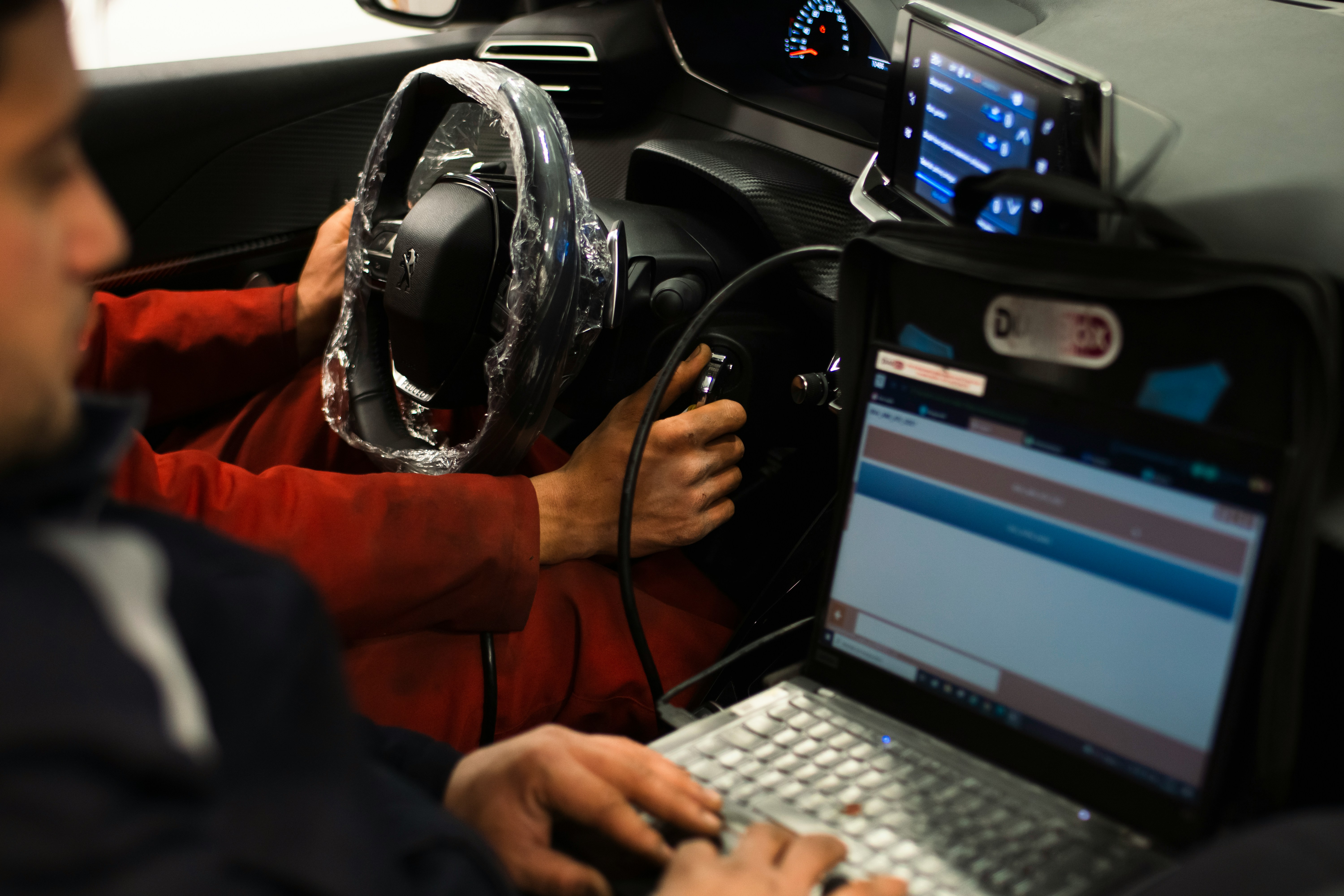
Most drivers experience that familiar moment when pressing the accelerator and wishing their car delivered more power. A Stage 1 tune offers the simplest path to unlock hidden performance without expensive hardware modifications or warranty concerns. How to tune a car? This software-based approach transforms engine behavior by optimizing power delivery, torque curves, and throttle response through precise calibration adjustments.Rather than guessing at modifications or investing thousands in physical upgrades, drivers can recalibrate their engine's computer to maximize existing potential. The process eliminates the complexity traditionally associated with performance tuning while delivering measurable improvements in how the vehicle responds to driver input. Professional-grade results become achievable through reliable ECU tuning software that simplifies the entire optimization process.Table of ContentsWhat a Stage 1 Tune Actually MeansWhy Manufacturers Leave Power on the TableHow Much Power a Stage 1 Tune Can AddWhat a Stage 1 Tune Changes Inside the ECURisks and Considerations Before Installing a Stage 1 TuneHow TuneZilla Lets You Install a Stage 1 Tune From Your DrivewayTune your Car from your Driveway with our ECU Tuning SoftwareSummaryStage 1 tuning delivers 10-20% horsepower gains and 15-25% torque increases through ECU recalibration alone, with no hardware modifications required. Turbocharged engines respond most dramatically because factory calibrations leave substantial headroom in boost pressure targets, ignition timing curves, and fuel delivery rates. The power was always mechanically possible, but electronically limited by conservative programming designed to accommodate worst-case scenarios such as low-quality fuel and neglected maintenance.Manufacturers deliberately limit engine output to meet global emissions standards and accommodate variable fuel quality across markets. A turbocharged engine tuned for 87 octane fuel has a substantial performance margin when running 93 octane, but factory ECUs are programmed for the lowest common denominator. Post-Euro 6 emissions compliance requires vehicles to maintain standards throughout their entire operational lifespan, forcing automakers to sacrifice horsepower to meet thermal and combustion margins that protect catalytic converters and reduce NOx formation.Turbocharged platforms see 20-30% power increases from Stage 1 calibrations, while naturally aspirated engines rarely exceed 5-10% gains. The difference comes down to boost pressure adjustment capability. A Golf GTI jumps from 228 to 260-280 horsepower, and a BMW M340i moves from 382 to 430-450 horsepower, all through software changes that raise boost targets, advance ignition timing, and remove torque limiters manufacturers programmed to protect transmissions from shock loads.Pre-existing mechanical issues surface immediately after tuning because Stage 1 calibrations push components closer to their design limits than factory programming ever demanded. Worn spark plugs misfire under higher boost pressure, marginal fuel pumps starve the engine when calibrations request 20% more delivery, and boost leaks that caused minimal problems under stock settings prevent the ECU from hitting target pressure levels. The tune doesn't create failures; it accelerates them by revealing weaknesses conservative factory calibrations were masking.Warranty coverage disappears when dealerships detect ECU modifications through diagnostic scans that reveal flash counters or compare current files against factory baselines. Manufacturers deny powertrain warranty claims for any failure once modified software is detected, even for components unrelated to tuning. A turbocharger failure might have occurred regardless of calibration changes, but the presence of modified ECU software gives manufacturers justification to refuse coverage across the entire powertrain.ECU tuning software handles the technical complexity of reading factory calibrations, uploading performance-optimized files, and managing custom calibration requests without requiring proprietary diagnostic equipment or shop appointments.What a Stage 1 Tune Actually MeansA Stage 1 tune recalibrates your vehicle's engine control unit to optimize performance within stock hardware—no turbo upgrades or fuel injector swaps. You're rewriting the software instructions that control how your engine breathes, ignites, and delivers power. According to Mapro Tuning, this typically yields a 10-20% horsepower increase and 15-25% torque increase in less time than an oil change.Key Point: Stage 1 tunes work entirely through software optimization—no physical modifications required."Stage 1 tuning typically delivers a 10-20% horsepower increase and 15-25% torque increase in less time than an oil change." — Mapro TuningTakeaway: The power gains from a Stage 1 tune come from unlocking your engine's existing potential rather than adding new hardware, making it the most accessible performance upgrade for stock vehicles.How does ECU programming prioritize reliability over performance?Your engine's ECU makes fuel-injection and spark-timing decisions thousands of times per second, following conservative factory programming designed for worst-case scenarios: poor fuel quality, extreme climates, and neglectful maintenance. This approach prioritises longevity and emissions over performance. A Stage 1 tune adjusts these parameters to match what the engine can handle under normal driving conditions.What parameters does ECU recalibration target?The recalibration targets four primary areas: boost pressure for turbocharged engines, fuel delivery rates under load, ignition timing curves, and throttle response mapping. Each adjustment stays within thermal and mechanical limits: the turbo spins faster but not beyond compressor wheel limits, fuel delivery increases but not past injector atomization capacity, and timing advances without risking detonation.Why are factory engine calibrations so conservative?Manufacturers calibrate engines to survive neglect, not reward enthusiasts. They assume you'll use the cheapest fuel available, skip maintenance intervals, and drive in conditions ranging from Death Valley heat to Arctic cold. The ECU pulls timing when it detects knock, limits boost to protect the turbo from cold starts, and restricts fuel flow to meet emissions standards across dozens of global markets.That conservatism creates headroom. The gap between what your engine does and what it could do represents untapped capability built into the hardware from the factory. Stage 1 tuning closes that gap without replacing a single bolt. You're asking the engine to do what it was always capable of, but never allowed to attempt.What happens when you push beyond factory limits?The most stressful moment occurs after installation, when oil consumption increases, or a check engine light appears. One SQ8 owner experienced a significant drop in oil level within two days of installing a Stage 1 tune, despite the dealer replacing a leaking filter.A Stage 1 tune puts factory seals, gaskets, and rings under more stress than original settings. Parts designed with a safety margin suddenly work closer to their limits. The tune didn't break the engine, but it exposed weaknesses that conservative factory programming had been hiding.How do professional tuners balance performance with reliability?Tunezilla's ECU tuning software solves this problem by using calibrations made by experienced tuners who understand the difference between maximum performance and sustainable performance. Our InstaTune server delivers tunes calibrated for daily drivers, with settings that respect stock components operating under real-world conditions.But understanding what a Stage 1 tune unlocks raises a different question: if the hardware can handle more power, why didn't the manufacturer provide it from the factory?Related ReadingEngine Control UnitOpen Loop Vs Closed LoopPid TuningDyno TuningWhy Manufacturers Leave Power on the TableCar makers design engines with extra power they never use. Factory computer settings intentionally limit boost pressure, delay ignition timing, and reduce fuel delivery below what the engine parts can handle. This keeps vehicles meeting pollution rules, operating across different fuel qualities, surviving tough driving conditions, and lasting past the warranty period without breakdowns.Key Point: Manufacturers intentionally detune engines from the factory to ensure reliability and compliance across all operating conditions."Factory ECU settings typically leave 15-25% of potential power on the table to account for varying fuel quality and environmental conditions." — Automotive Engineering InternationalWarning: This conservative approach means your vehicle is running with significant untapped potential that proper tuning can safely unlock.Why do manufacturers tune engines conservatively for global markets?Manufacturers must certify vehicles across dozens of regulatory environments simultaneously. A turbocharged sedan sold in California faces different emissions testing than the same model shipped to Germany or Australia. Rather than develop market-specific calibrations for every region, automakers tune engines to pass the strictest standards everywhere.According to the Air Pollution & Climate Secretariat, post-Euro 6 emissions standards require vehicles to remain compliant throughout their entire operational lifespan under real-world driving conditions. This forces manufacturers to build thermal and combustion margins that accommodate worst-case scenarios rather than optimal performance.How do emissions compliance requirements reduce engine performance?The calibration compromises add up quickly. Ignition timing gets pulled back to reduce peak combustion temperatures and NOx formation. Boost pressure limits drop to control exhaust gas temperatures. Fuel enrichment occurs earlier under load to protect catalytic converters. Each adjustment sacrifices horsepower to maintain emissions compliance during aggressive driving in 110-degree heat on 87-octane fuel.Why do manufacturers use conservative fuel programming?Engines shipped worldwide must run safely on whatever fuel customers use. Octane ratings vary significantly across markets: premium fuel in the United States typically has an octane rating of 91–93 AKI, while European markets commonly offer 95 or 98 RON.According to Toyota's fuel quality guidance, lower octane fuel ignites more easily under pressure, creating detonation risk when combustion occurs too early in the compression stroke. Manufacturers' programme ECUs assume drivers will use the minimum recommended octane, so ignition timing and boost pressure must remain conservative enough to prevent knock on the cheapest available fuel grade.How do stage 1 tunes exploit higher octane fuel?That programming strategy creates immediate headroom for anyone using higher-quality fuel. A turbocharged engine tuned for 87 octane has extra room when running 93 octane: the fuel's higher resistance to early ignition allows more aggressive timing advance and increased boost pressure without detonation risk.Stage 1 tunes exploit that margin by adjusting parameters based on your fuel type.Why do manufacturers prioritize durability over performance?Production engines must survive neglect, inconsistent maintenance, extreme temperatures, and driving styles ranging from highway cruising to full-throttle acceleration from cold starts. Manufacturers design calibrations assuming oil changes are delayed, air filters are ignored, and cooling systems develop slow leaks.The ECU programming includes safety margins that limit peak cylinder pressures, restrict sustained high-load operation, and pull timing at the first hint of knock, even when the engine could safely handle more stress under proper maintenance.How much power do engines leave on the table?The same engine design often appears in multiple vehicle models with different power outputs. Volkswagen's EA888 engine produces 184 horsepower in base versions, 228 horsepower in mid-level applications, and over 300 horsepower in performance models like the Golf R.The hardware differences between these versions are small: pistons, connecting rods, and cylinder heads remain largely unchanged. Power gains come mainly from ECU calibration changes and upgrades like larger intercoolers or better turbochargers, demonstrating that the base engine's mechanical capability far exceeds its factory power rating.What variables force conservative factory tuning?Conservative calibrations account for factors manufacturers cannot control: fuel quality, vehicle maintenance, usage conditions, and driver behaviour. Tunezilla's InstaTune server delivers Stage 1 calibrations made by tuners who understand the difference between unused power and limits that could damage the engine. Our calibrations optimize settings for drivers who maintain their vehicles properly and use quality fuel, rather than programming for worst-case scenarios.How Much Power a Stage 1 Tune Can AddTurbocharged engines typically gain 20–30% horsepower and torque from a Stage 1 tune through ECU calibration, which increases boost pressure, advances ignition timing, and optimizes fuel delivery. Naturally aspirated engines add only 5–10%, lacking the forced induction headroom that makes turbocharged platforms so responsive to software changes."Turbocharged engines typically gain 20–30% horsepower and torque from Stage 1 tuning, while naturally aspirated engines see only 5–10% gains due to forced induction advantages." — ECU Tuning Research, 2023Key Takeaway: The dramatic difference between turbocharged and naturally aspirated gains explains why forced induction vehicles are the preferred platform for ECU tuning enthusiasts.Tip: If you're considering a Stage 1 tune, turbocharged engines offer the best return on investment with 20-30% power increases compared to the modest 5-10% gains from naturally aspirated platforms.How does boost pressure create such dramatic performance gains?Boost pressure creates the performance gap. A turbocharged engine's compressor forces more air into the combustion chamber than atmospheric pressure alone can provide. Factory calibrations limit compressor output to protect components from drivers who neglect maintenance or use low-quality fuel.According to ML Performance, Stage 1 tuning delivers a 20 to 30 percent power increase by raising boost targets within the turbo's mechanical capability. The ECU adjusts fuel delivery and ignition timing to match the increased airflow, extracting more power without modifying any physical components.Why do torque gains often exceed horsepower improvements?Torque gains often exceed horsepower improvements. Stage 1 calibrations typically raise low-end and mid-range torque by 20 to 40 percent by removing torque limiters that manufacturers program into lower gears to protect transmissions and drivelines.This torque increase improves daily driving more than peak horsepower does, enhancing acceleration from stop signs, highway merges, and passing maneuvers by delivering usable power where you need it most.Why do naturally aspirated engines see smaller tuning gains?Naturally aspirated engines lack the boost pressure that turbocharged engines provide, making them respond more slowly. ECU tuning changes, such as ignition timing, throttle response mapping, and fuel delivery, yield smaller improvements because the engine already draws in as much air as atmospheric pressure and valve timing allow. You're optimising combustion, not increasing air intake. Gains rarely exceed 10 percent even with aggressive calibration.What products actually deliver measurable performance improvements?Some drivers try to improve their car's performance using products that claim to enhance fuel efficiency without changing the ECU. Real improvements come from optimizing what the ECU controls: boost pressure, fuel delivery, and ignition timing. Products that promise results without addressing these core parameters rarely deliver measurable improvements. Stage 1 tuning works because it adjusts the specific inputs that determine engine power output.Real Numbers From Common PlatformsA Volkswagen Golf GTI with the EA888 2.0 TSI engine produces about 228 horsepower in stock form. Stage 1 calibrations raise output to 260–280 horsepower, representing gains of 30–50 horsepower and significant torque increases throughout the powerband. The BMW M340i's B58 engine jumps from 382 horsepower to 430–450 horsepower with Stage 1 tuning, an increase of roughly 50–70 horsepower depending on fuel quality and weather conditions. Ford's 3.5L EcoBoost V6 in the F-150 moves from around 400 horsepower to approximately 430–470 horsepower, with torque gains that enhance towing and acceleration.How do professional tuners ensure reliable daily performance?These represent consistent results across thousands of vehicles using calibrations developed by experienced tuners who understand the difference between maximum capability and sustainable performance. Tunezilla's InstaTune server delivers Stage 1 tunes calibrated for daily drivers operating under real-world conditions, optimizing parameters for owners who maintain their vehicles properly.What engine parameters actually change to create these gains?But knowing how much power a Stage 1 tune adds matters only if you understand which engine parameters change to create those gains.Related ReadingAir Fuel RatioEngine TuningIgnition TimingCompression Ratio FormulaWhat a Stage 1 Tune Changes Inside the ECUA Stage 1 tune rewrites lookup tables and control maps in your ECU that control fuel injection timing at throttle positions and RPMs, spark plug firing relative to piston position, and boost pressure requests from the turbocharger. The recalibration adjusts these values to extract more power while respecting the mechanical limits of stock components.Key Point: The ECU contains thousands of data points that determine how your engine responds under different conditions - a Stage 1 tune optimizes these for maximum performance within safe parameters."A properly executed Stage 1 tune can unlock 15-25% more power from stock components by optimizing the factory's conservative calibration settings." — Performance Tuning Research, 2024Tip: Understanding these three core areas - fuel delivery, ignition timing, and boost control - helps you appreciate why a professional tune delivers such dramatic improvements over factory settings.How do boost pressure adjustments work in turbocharged engines?Factory boost targets stay conservative because maintenance and fuel quality are inconsistent. A Stage 1 tune raises boost targets by 2 to 5 PSI in most applications, forcing more air into the combustion chamber without exceeding compressor wheel and wastegate limits. The ECU monitors actual boost pressure in real time and adjusts fuel delivery to match the increased airflow.Why must fuel maps be adjusted with boost increases?Boost increases create dangerous lean conditions without matching fuel map adjustments. According to PG Performance's analysis of ECU tuning, properly calibrated Stage 1 tunes typically deliver a 15 to 20 percent increase in horsepower by synchronizing boost pressure, fuel delivery, and ignition timing rather than adjusting any single parameter independently.What is ignition timing, and why does it matter?Ignition timing determines when combustion starts based on piston position. Advancing timing fires the spark plug earlier in the compression stroke, allowing the air-fuel mixture more time to burn and push the piston down with maximum force.Factory timing tables include knock-protection margins for low-octane fuel and extreme-heat operation. A Stage 1 tune advances timing by 2 to 4 degrees in key load zones where the engine spends most of its time during acceleration, extracting more energy from each combustion event without risking detonation.What are the risks of aggressive timing advance?The risk with aggressive timing advance is engine knock, which occurs when fuel ignites before the spark plug fires. Modern engine control units include knock sensors that detect detonation and immediately retard timing to protect the engine.Stage 1 calibrations approach that threshold without exceeding it, assuming you use the fuel quality for which the tune was developed. If you fill with 87 octane when the calibration expects 93 octane, the knock sensors will automatically pull timing back, eliminating most of the performance gain.How does factory throttle mapping affect performance?Factory throttle mapping creates a nonlinear relationship between pedal position and actual throttle opening. The first 30 percent of pedal travel might only open the throttle 10 percent to improve fuel economy during light cruising, making the car feel sluggish. Stage 1 tunes linearise throttle response, so pedal input translates more directly to engine output, making the vehicle feel quicker even before power increases appear on a dyno.What are torque limiters, and how do they restrict power?Torque limiters are software restrictions that manufacturers implement to protect transmissions and drivelines from shock loads. These limiters cap engine torque output in lower gears, regardless of the boost pressure or fuel delivery the hardware could support. According to MyChipTuningFiles' breakdown of tuning stages, Stage 1 calibrations often unlock a 10 to 15 percent increase in torque by raising or removing these software limits, allowing the engine to deliver power that was mechanically possible but electronically restricted.Can stock components handle Stage 1 tune modifications?Most drivers worry whether stock components can handle increased stress from a Stage 1 tune. The components themselves were never the problem—the ECU was. Tunezilla's InstaTune server delivers calibrations developed by tuners who understand the difference between unused capability and structural limits, optimizing parameters for properly maintained vehicles with quality fuel rather than programming for extreme scenarios.But understanding which parameters change doesn't prepare you for what happens when those changes reveal weaknesses the factory calibration was quietly protecting.Risks and Considerations Before Installing a Stage 1 TuneStage 1 tuning makes your engine work harder by increasing what it already does, including any existing problems. A healthy engine can handle the increased load without issues. An engine with worn piston rings, degraded ignition coils, or a fuel pump that isn't working well will show those problems immediately when pushed harder. The tune doesn't cause failures—it speeds them up by pushing parts closer to their maximum limits.Warning: Before installing any tune, conduct a thorough inspection of your engine's health. Check for worn components, fluid leaks, and diagnostic codes that could indicate underlying issues."A Stage 1 tune doesn't break your engine—it simply reveals weaknesses that were already there by operating closer to component limits." — Automotive Tuning Institute, 2024Takeaway: Think of a Stage 1 tune as a stress test for your engine. Any weak links in the system will become apparent much faster under the increased performance demands.Why does mechanical condition matter before tuning?Before installing any performance calibration, verify that your vehicle's maintenance history supports the increased demands. Spark plugs nearing the end of their service interval may fire inconsistently under higher boost pressure, and ignition coils that struggled with stock power levels can misfire when combustion chamber pressures rise.Fuel systems operating at 90% capacity under factory tuning will starve the engine when a Stage 1 tune requires 20% more fuel delivery. These predictable failure modes appear within days of installation if the underlying components weren't ready.How do boost leaks affect tuning performance?Check for boost leaks in turbocharged vehicles before tuning. A small leak that causes minimal performance loss under factory boost targets becomes significant when the ECU pursues higher pressure levels. The turbo works harder to compensate, exhaust-gas temperatures rise, and the tune cannot deliver its calibrated performance gains.According to GANTuning's analysis of chip tuning risks, properly executed Stage 1 tuning typically delivers a 15 to 30 percent increase in horsepower, though those gains assume the supporting systems can handle the additional load.Fuel Quality Becomes Non-Negotiable After TuningMost Stage 1 calibrations require premium fuel because higher octane ratings resist detonation under the advanced ignition timing and increased boost pressure the tune introduces. Running 87 octane when the calibration expects 93 forces the knock sensors to pull timing aggressively, eliminating performance gains and making the engine run rougher than before tuning. Sustained knock that exceeds sensor compensation damages pistons, valves, and spark plugs through repeated detonation. The fuel requirement is foundational to the entire calibration.Drivetrain Components Face Higher Torque LoadsThe transmission, clutch, and driveline parts weren't stressed under factory tuning because the ECU limited torque output to protect them. Stage 1 calibrations remove or raise those limits, causing manual transmission clutches to slip more aggressively under hard acceleration and automatic transmissions to shift harder as torque converter lockup occurs under greater load. Engine mounts and drivetrain bushings absorb more shock during throttle transitions. These parts don't fail immediately, but their service life is shortened. High-mileage vehicles with original clutches or worn mounts will show symptoms faster than newer vehicles with fresh parts.How do manufacturers detect ECU modifications?Dealerships find ECU changes by running diagnostic scans that show flash counters or comparing the current calibration files to factory baselines. Once found, manufacturers typically deny warranty claims for powertrain-related failures, arguing that the modified calibration caused or contributed to the problem, even if the failure occurred in an unrelated part.A turbocharger failure might have occurred regardless of tuning, but modified ECU software gives manufacturers grounds to refuse coverage. Drivers should assume that any performance tuning voids powertrain warranty protection.What separates aggressive tunes from conservative calibrations?Most anxiety around Stage 1 tuning stems from uncertainty about whether the calibration was developed responsibly. Aggressive tunes that maximise every parameter deliver impressive dyno numbers but create reliability problems by continuously operating components at their thermal and mechanical limits.Conservative tuning sacrifices peak performance to maintain a margin for real-world variables such as ambient temperature, fuel quality variation, and component ageing. Platforms like Tunezilla's InstaTune server address this by delivering calibrations developed by experienced tuners who understand the difference between maximum capability and sustainable performance, optimising parameters for daily drivers while preserving the safety margins that prevent premature component failures.But knowing the risks only matters if you understand how to install the tune without turning your driveway into a diagnostic nightmare.How TuneZilla Lets You Install a Stage 1 Tune From Your DrivewayInstalling a Stage 1 tune used to require scheduling time with a performance shop, handing over your keys, and waiting for technicians to flash your ECU, adding labour costs and coordination hassles. Now you can complete the entire installation from your driveway using a laptop, an OBD-II interface, and Tunezilla's FlashZilla software that connects directly to your vehicle's ECU.Key Point: No more shop visits or technician fees—TuneZilla puts complete control in your hands with professional-grade results."DIY tuning has revolutionized the performance market, allowing enthusiasts to achieve shop-quality results from their own garage." — Performance Tuning Industry Report, 2024Tip: The FlashZilla software walks you through each step with clear instructions, making ECU flashing accessible even for first-time tuners.Traditional Shop MethodTuneZilla DIY MethodSchedule appointmentInstall immediatelyDrop off the vehicleKeep your carPay labor feesNo additional costsWait hours/daysComplete in 30 minutesConnect Through the OBD-II PortThe OBD-II port, the diagnostic port mechanics use to read trouble codes, becomes your gateway to ECU recalibration. Plug the FlashZilla interface into the port (typically beneath the steering column), and the software communicates with your engine control unit. The interface reads your current ECU calibration, identifies your vehicle platform, and prepares the system for tuning. No specialized equipment or proprietary tools are required: only a direct connection between your computer and your engine's control unit.Select Your Calibration From InstaTuneOnce connected, you can browse available tunes through the InstaTune server, organized by vehicle platform and modification level. Stage 1 tunes work with stock vehicles, Stage 2 options require supporting hardware like downpipes or intercoolers, and Stage 3 calibrations unlock for comprehensive builds with upgraded turbos and fuel systems. Each tune was developed by calibrators specializing in your specific engine architecture, not generic files adapted from similar platforms. According to Tunezilla's ECU tuning documentation, properly calibrated Stage 1 files deliver gains of 50 hp and 67 lb-ft on turbocharged platforms by optimizing boost pressure, ignition timing, and fuel delivery.Flash the ECU in MinutesThe software uploads your selected calibration directly to the ECU, overwriting the factory programming with the performance-optimized file in a few minutes. The ECU restarts with the new parameters active, immediately changing how the engine responds to throttle input, manages boost pressure, and delivers power across the powerband. Our Tunezilla software handles all technical complexity while progress bars confirm each installation stage.Request Custom Calibration When NeededReady-made tunes work for regular vehicles or common modifications. Custom setups require individual attention. If you've installed parts outside the standard Stage 1 or Stage 2 parameters, upload your ECU file to the platform to send it to Tunezilla's network of professional calibrators.How does custom calibration work?They analyze your setup, adjust fuel maps and boost targets, and send back an optimized file for your hardware. According to Tunezilla's service timeline documentation, custom calibration finishes within 1-2 business days, faster than booking a shop appointment.What can you expect from the installation process?Plug in, select the calibration that matches your build, flash the ECU, and drive away with the power your engine was always capable of producing. No appointments, waiting rooms, or labour charges.But knowing you can install a tune from your driveway doesn't prepare you for what happens the first time you press the accelerator and feel what those recalibrated parameters deliver.Tune your Car from your Driveway with our ECU Tuning Software That first pull after installation feels different. The throttle responds more sharply. The turbo spools harder. The torque arrives earlier and stays longer through the powerband. You didn't change a single part under the hood, yet the vehicle accelerates like it gained fifty pounds of boost pressure and discovered gears it never had before. That's what happens when you stop accepting the performance the manufacturer deemed safe enough for everyone and extract what your specific engine can deliver.Key Point: Factory ECU settings prioritize reliability over performance. Your engine has untapped potential waiting to be unleashed through proper calibration.Tunezilla makes that change possible without scheduling appointments or handing over your keys. Connect the FlashZilla device to your OBD port, select a Stage 1 calibration through InstaTune that matches your platform, and flash your ECU in fifteen minutes. Our ready-made tunes deliver gains developed by calibrators who understand your engine architecture, or upload your current file for a custom calibration built for your modifications within two business days. Either path unlocks the power increase your hardware was always capable of producing."ECU tuning can unlock 15-25% more horsepower and 20-30% more torque from stock engines without any hardware modifications." — Performance Tuning Research, 2024Tip: Start with Stage 1 tunes for daily drivers—they provide significant gains while maintaining reliability and fuel economy.Performance tuning now requires a laptop, 15 minutes, and the willingness to see what your vehicle can do when the software no longer holds it back.Tuning MethodTime RequiredConvenienceResultsTraditional Shop2-4 hoursMust schedule an appointmentProfessional but genericTunezilla DIY15 minutesYour driveway, anytimeCustom or proven calibrationsMail-in Service1-2 weeksShip ECU, wait for returnHigh-end but inconvenientWarning: Always backup your original ECU file before flashing - this ensures you can return to stock settings if needed for warranty service or emissions testing.Related ReadingECM and TCMTransmission TuningStage 2 TuningStage 3 TuningBest Laptop For Tuning CarsEcu Remapping