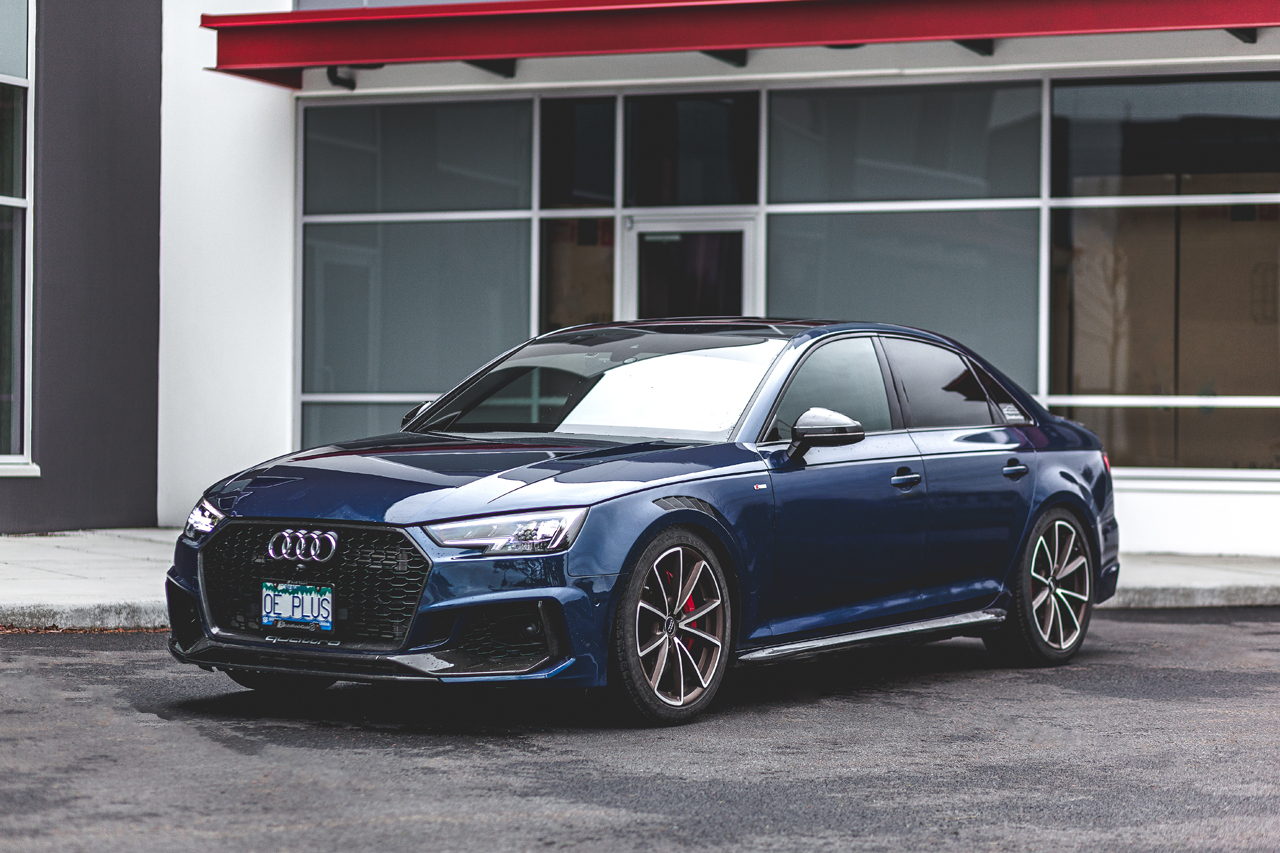
The 2.0L EA888.3 TFSI engine commonly found in the A4, A5, Allroad, and Q5 was developed with precision. It delivers respectable performance for a family sedan. But "adequate" isn't why enthusiasts buy Audis. We understand that car lovers want more than okay. They want their vehicles to genuinely excite them.This is where ECU and DSG tuning fundamentally changes the conversation. We've changed countless base model B9’s into cars that rival higher-trim performance models, and we've done it for a fraction of the cost. The economic advantage is undeniable, but the real story is about what happens to your daily driving experience.Stock 2.0L TFSI is Underperforming By DesignAudi engineered the base 2.0L TFSI as an eco-friendly daily drive engine for average owners. From the factory, your car produces 218 wheel horsepower and 246 pound-feet of torque on 91 octane. The factory software runs conservative boost levels and safe timing maps designed to maintain economy and keep power levels down.This conservative approach creates a fundamental disconnect between what your engine can do and what the factory lets it do. VAG vehicles are known for being undertuned from the factory. Your 2.0L TFSI has tremendous potential locked away in its software.What You Gain: Stage 1 Performance Numbers That MatterMoving to our Stage 1 tune on 91 octane fuel delivers 256 wheel horsepower and 292 pound-feet of torque. That's 38 additional horses and 46 extra pound-feet. Bump up to 93 octane fuel, and you're looking at 270 wheel horsepower and 317 pound-feet of torque.These aren't theoretical numbers. These represent what your stock motor can safely achieve with a simple flash while maintaining all factory safety limits.You're uncovering the performance that your car should have always come with.Peak Power Versus the Power Curve You Actually FeelWe don't chase peak numbers at the expense of everything else. Peak horsepower numbers vary dramatically depending on which dyno you use, testing conditions, and dozens of other variables. The same car tested on different dynos on the same day can show 220 horsepower on one and 250 on another.What matters for your daily driving is the consistent power curve throughout the entire RPM range. A smooth, linear power delivery with gains distributed across the band provides a far better driving experience than something that peaks high and tapers off. This is especially true for a daily driver that doesn't live at full throttle.We focus equally on peak power and maintaining that smooth linear power band. Your Audi will pull harder from low RPM through redline. Low-end torque deserves more recognition than peak horsepower for daily driving enjoyment. Why the DSG Tune Is as Essential as the ECU TuneThis is where many owners cut corners, and it's a mistake that can cost you thousands of dollars in transmission repairs. An ECU tune gives your car more power. A DSG tune makes that power transferable. Without both, you have a fundamental mismatch between engine output and transmission capability.Your stock DSG has a torque limiter value below our ECU tune output. When your engine tries to deliver more torque than the transmission is programmed to accept, the vehicle enters limp mode. You don't get the performance you paid for, and worse, your transmission begins slipping under load or cutting power.Clutch slipping generates extreme heat that degrades the clutch friction material and steel discs. Once these components glaze, they lose their friction properties entirely. The transmission can no longer grip, and you're facing replacement costs that dwarf the tuning investment.The DSG Tune Changes Everything About Your Ownership ExperienceOur DSG tune is a complete rework of factory settings. We've calibrated shift patterns optimized for both acceleration and fuel economy in drive mode. In sport mode, shifts are aggressively recalibrated for the enthusiast driver who wants immediate response.We increase clutch pressure across all driving modes to handle increased torque. Launch control RPM is raised for better acceleration from a standstill. In manual mode, automatic upshifts are disabled, giving you full control. Two-step kickdown launch control is enabled, raising engine RPM when you push the kickdown button.Gear engagement is faster, which means quicker shifts. Torque limiters are raised to match your new engine output. The transmission becomes predictable and responsive, working in harmony with your tuned engine instead of fighting against it.Linear Throttle Response Versus Aggressive FeelSome tuners sell aggressive throttle response as a feature. They argue it feels more engaging, more powerful. We disagree. An aggressive throttle response doesn't improve dyno results. Instead, it's primarily a placebo effect that can actually hurt drivability, especially in slippery conditions.We optimize for linear, OEM-like response that still delivers 100 percent power and 100 percent torque at 100 percent throttle. This approach gives you smoother acceleration and power delivery without harsh, immediate response. You maintain precise control when conditions are tricky. You still get full performance when you demand it.This philosophy makes your 2.0L TFSI engine something you can rip around a track and then cruise home in comfort. It's not a compromise. It's the result of actual dyno testing and real-world validation.Pre-Tune Maintenance: The Critical First StepBefore we even discuss tuning, your car needs proper maintenance. Oil changes, fresh spark plugs, and ignition coils are fundamental. Replace your air filter. Run a full diagnostic scan to ensure no faults or pending codes exist.The biggest thing we see owners neglect is DSG transmission service. Most people are accustomed to standard automatics with 100,000-mile service intervals. A DSG requires service every 40,000 miles. This interval difference matters tremendously for transmission longevity when you're adding significant torque.If you don't have a service record, complete one before tuning. These preventative steps determine whether your tuned car thrives or struggles over the long term.The Economic Case: Base Model Plus Tune Beats S4 StockHere's the simple math that makes base model tuning so compelling. The difference between an A4 and an S4 can exceed ten thousand dollars. Our complete ECU and DSG tune costs just over one thousand dollars.After tuning, your 2.0L A4 delivers performance approaching the larger 3.0L V6 found in higher trims. You also maintain excellent fuel economy compared to larger engines.For someone buying a used base model specifically to tune it, this approach unlocks remarkable value. You're spending less upfront on the vehicle, which leaves more budget for modifications. The parts are cheaper to source. You achieve premium performance at an accessible price.Your Path Forward: One Step at a TimeOur most common advice for first-time tuners is straightforward: Make sure your engine and transmission are in good health. Then flash the tune and enjoy!. Take it one step at a time, starting with Stage 1.Don't break the bank on aftermarket parts initially. Upgrade when you're ready and finances allow. The foundation is proper maintenance and quality software. Everything else builds from there.Your 2.0L TFSI engine was always capable of more. We simply unlock what your factory software kept hidden.